
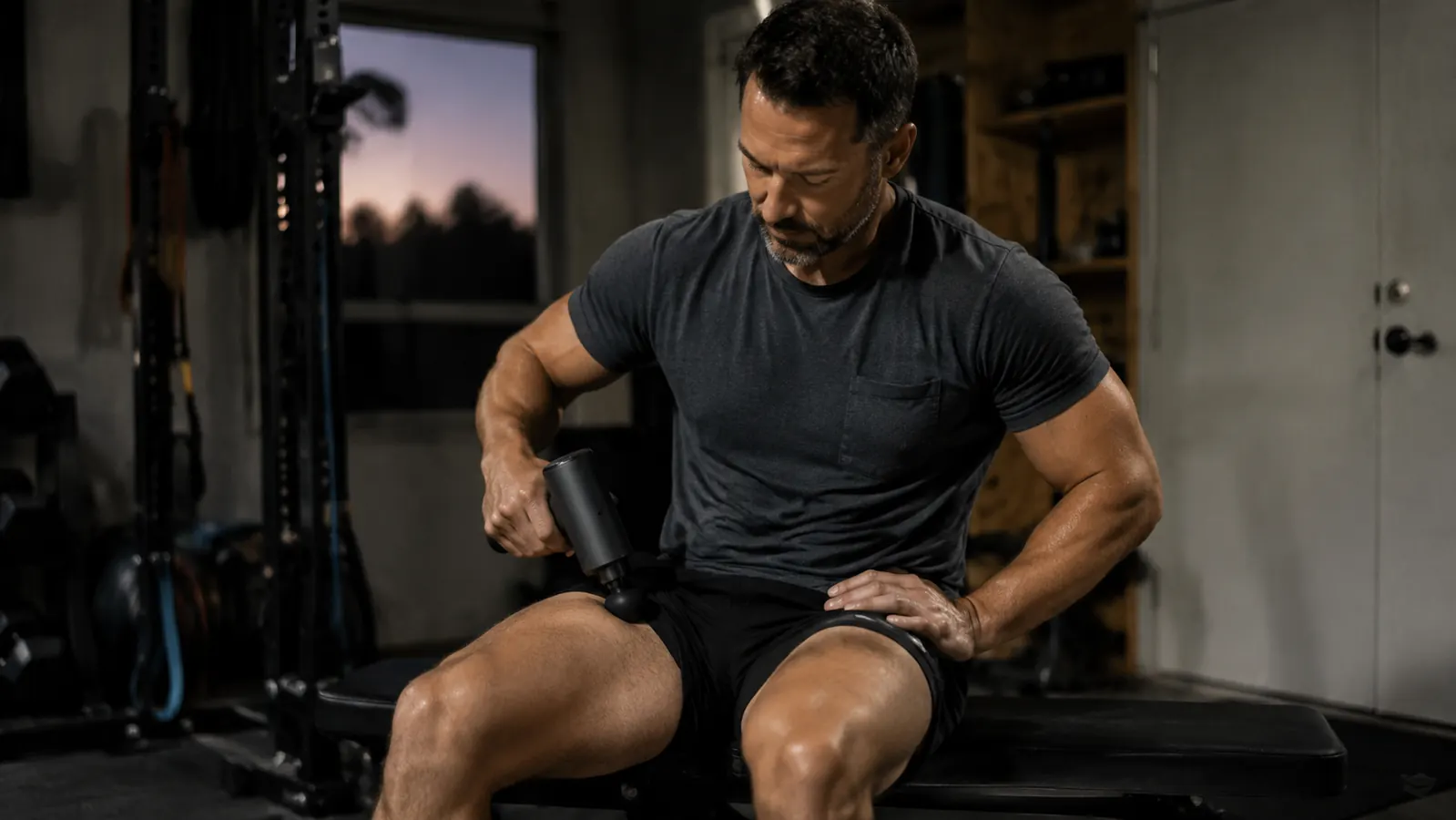
I bought the Lifepro massage gun back in January, mostly because my right shoulder had started seizing up after every push day and I was tired of paying $80 a session for a sports massage I could only afford once a month. Six months later, it's sitting on my nightstand right now, charged, because I use it almost every single day.
This isn't a first-impressions review. I've run this thing through winter strength blocks, a half-marathon training cycle in the spring, and more late nights on the couch after 12-hour work days than I want to admit. I'm 44, I lift four days a week, and I run three to five miles on the other three. My body has opinions, and this massage gun has heard every one of them. So has my wife, who's borrowed it enough times that I've started hiding it in my gym bag just to make sure it's charged when I need it.
The Quick Verdict
A genuinely durable, quiet-enough percussion gun that's held up to daily abuse for six months. Loses half a point for a battery that's noticeably weaker than it was in month one.
Amazon Check Today's Price →Still sore from yesterday's workout? Here's what actually helped.
I was skeptical a $60 massage gun could do what a $400 one does. Six months in, mine's still running strong. Check today's price and see if it's in stock.
Amazon Check Today's Price on Amazon →How I've Actually Used It
My routine is boring but consistent. Post-lift, I hit whatever muscle group I trained for about 90 seconds a side, usually with the flat head. On run days, it's calves and IT band with the bullet or fork attachment before I even get in the shower. And on the nights my lower back tightens up from sitting at a desk all day, I'll lie on the floor and work the flat head into my lats and lower traps for a solid ten minutes while I watch TV.
That's roughly five to seven uses a week since late January. I didn't baby it. It's been dropped on a concrete garage floor twice, left in a hot car for an afternoon once, and thrown in a gym bag with zero padding more times than I can count. I wanted to see if it would survive real life, not a display shelf, because that's the actual test that matters once the return window closes.
It has. No cracks in the housing, no loose attachment heads, no rattling when I shake it. The only thing that's changed in a way I can measure is the battery, which I'll get into below.
Power and the 5 Speed Settings
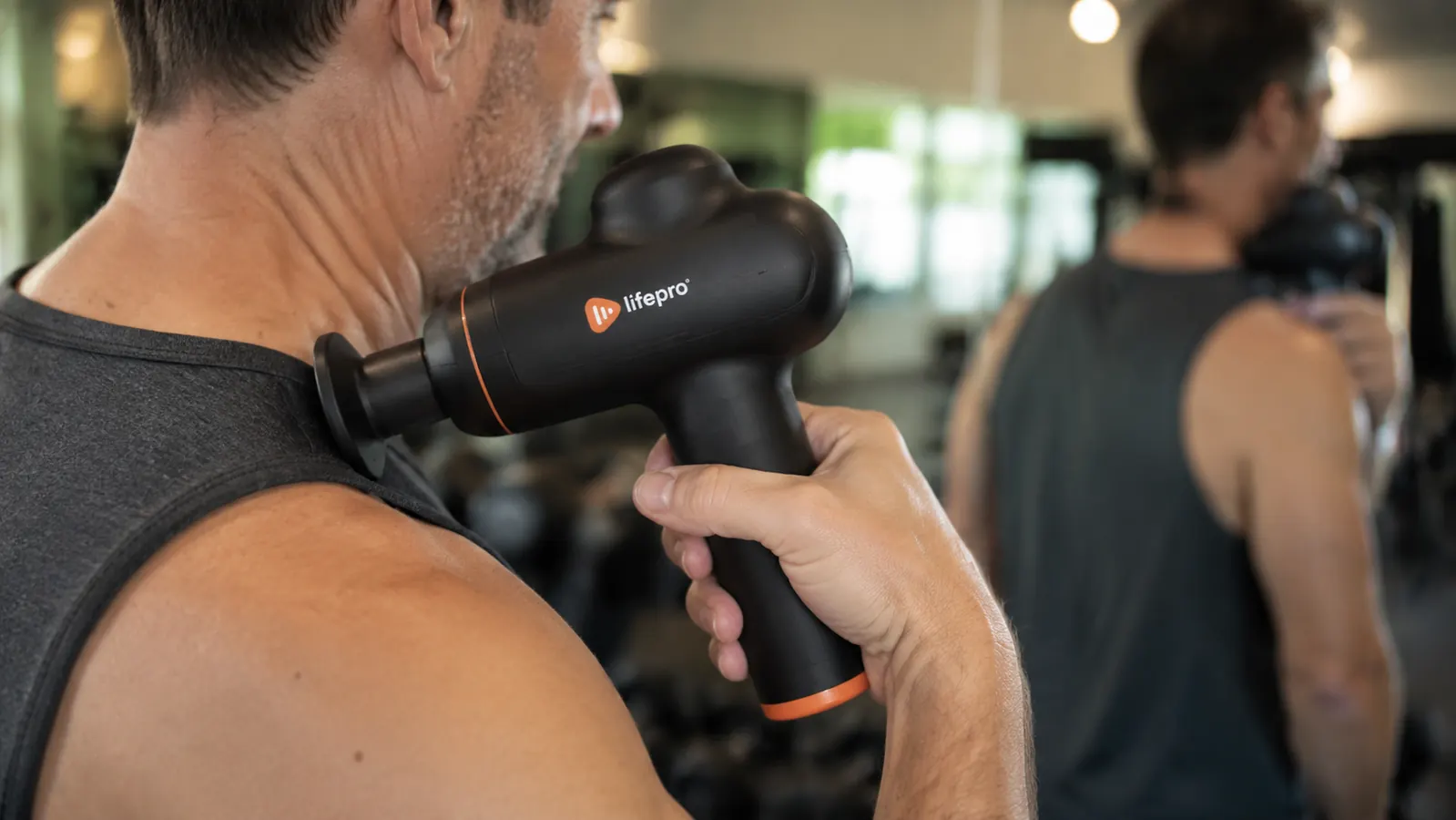
The Lifepro has 5 speed settings, and honestly I use maybe three of them regularly. Speed 1 and 2 are for anything bony or sensitive, like around my ankles after a long run or my forearms after a heavy grip session. Speed 3 is my default for general muscle work, the setting I reach for without thinking about it. Speeds 4 and 5 I save for my glutes and quads after heavy squat days, when nothing lighter even registers through the muscle.
Compared to a foam roller, which was my only recovery tool before this, the difference in how fast my soreness backs off is noticeable. I'm not going to claim it's magic. It's percussion therapy, it increases blood flow to the area and helps loosen up tight fascia, and for me that's translated into walking down stairs the day after leg day without wincing like I used to. It hasn't replaced stretching or a proper warm-up, and I don't think it should for anyone.
The stall force is decent for the price point. I've leaned into my quad pretty hard at speed 5 and it hasn't bogged down or stalled out on me, which was my biggest worry going in given how cheap it is next to the premium brands. A buddy of mine has a cheaper off-brand gun that stalls the second he applies real pressure, and that's the failure mode I was bracing for here. It never showed up.
Noise Level, Six Months In
This was actually my number one concern before buying, because my wife works from home and I didn't want to be the guy running a jackhammer next to her Zoom calls. At speed 1 through 3 it's genuinely quiet, more of a low hum than a buzz, the kind of sound you stop noticing after a minute. Speed 4 and 5 get noticeably louder, closer to an electric toothbrush turned up, but it's still not the dentist-drill sound some of the cheaper knockoffs put out that I tested at a friend's apartment.
Six months of use hasn't changed the noise profile at all, which tells me the motor bearings are holding up fine under the workload I've put on it. I was half expecting it to start whining or grinding by now given how often it gets used, but it sounds the same today as it did in January, sitting next to me on the couch right now as I type this.
The 8 Attachment Heads: Which Ones I Actually Use
It comes with 8 heads, and if I'm honest, I regularly use three of them. The flat head is my workhorse, it covers 80 percent of what I need across my back, chest, and quads. The fork head is great for either side of my spine and for my Achilles after runs, it straddles the tendon instead of pressing straight into it. The bullet head is for pinpoint spots, like the knot that lives permanently in my right traps no matter how much mobility work I do.
The other five, the cushion, the air cushion, the flat wide, and a couple of the smaller round ones, sit in the case untouched most weeks. That's not a knock on the product, having options is nice when you want them, but don't buy this expecting to rotate through all eight regularly. Most people I know who use these guns, including two training partners who bought their own after seeing mine, settle into two or three favorites within the first month.
Battery Life: The One Real Downside
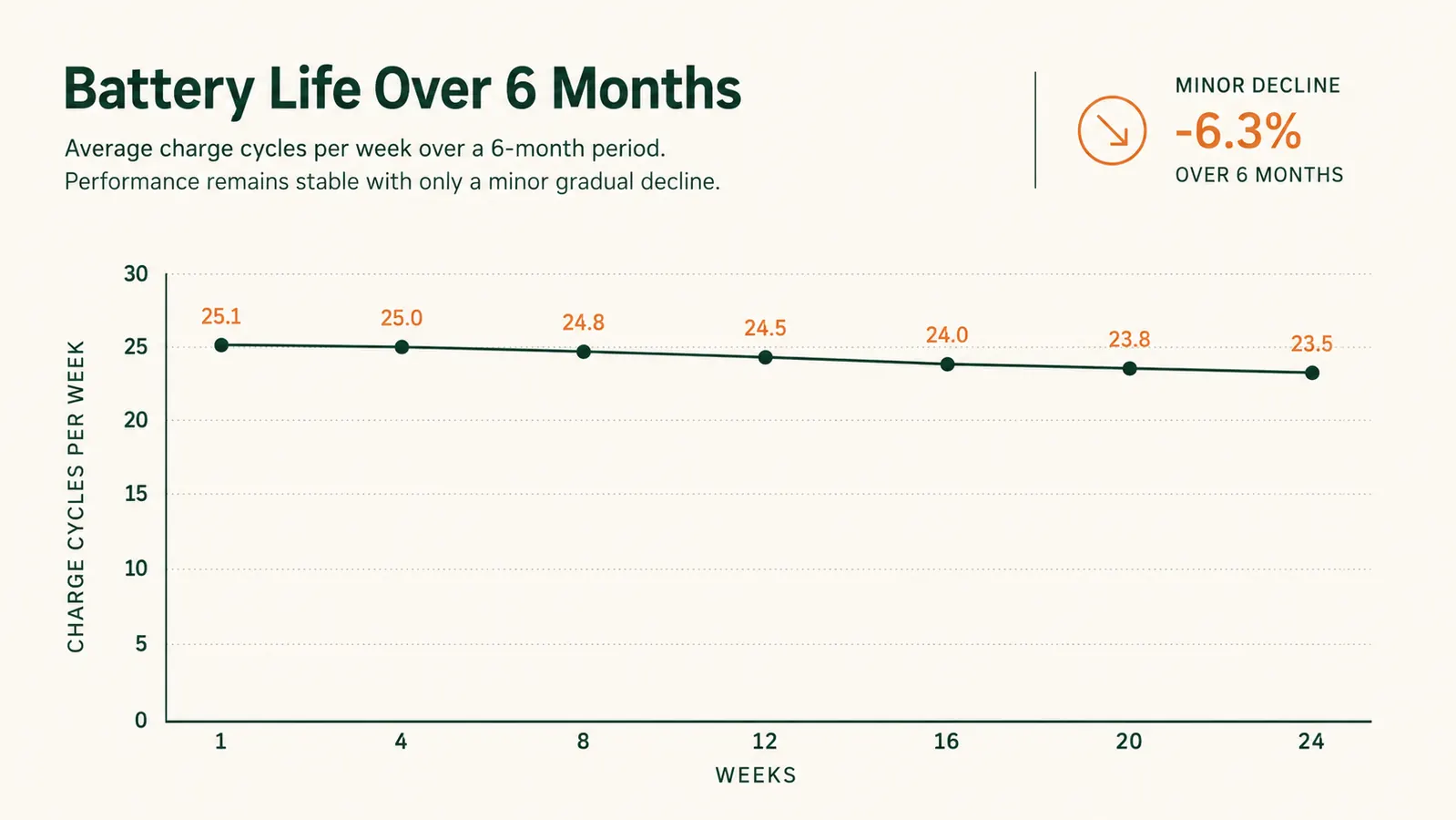
When I first got it, a full charge lasted through nearly two weeks of my daily routine before I needed to plug it back in. By month four, that had dropped to closer to nine or ten days. Now, at six months, I'm charging it about every six or seven days with my usage pattern. That's a real decline, and it's the main thing keeping this from being a five-star recommendation in my book.
To be fair, lithium batteries in any percussion gun degrade with heavy daily cycling, this isn't unique to Lifepro. But if you're comparing it to a $400 Theragun that's rated for similar longevity, it's worth knowing the battery is where the budget price shows up most. It still charges fully and holds a usable charge, it just doesn't stretch as far as it did on day one. I've adjusted by keeping the charger in the same spot near the TV so plugging it in is a habit, not a chore.
Performance Over Time: Month 1 vs Month 6
Month one felt like a novelty. I used it constantly because it was new, running it over almost every muscle group whether it needed it or not, just to see what all the attachments did. By month three, the routine had settled into something more purposeful, targeted spots after specific workouts instead of a full-body pass every night. That's when I actually started noticing the difference in how quickly my soreness faded compared to the months before I owned it.
By month six, it's less exciting and more like a tool I reach for the way I reach for my lifting belt or my running shoes. The motor still feels as strong as it did on day one at every speed setting, the housing has a few light scuffs from the garage floor drops but nothing structural, and the only real change I can point to with confidence is the battery drain I mentioned above. For a $60 tool that's been used almost daily for half a year, that's a track record I'm comfortable standing behind.
Alternatives I Considered Before Buying
Before I settled on the Lifepro, I looked hard at a Theragun and at one of the sub-$40 no-name guns from a marketplace ad. The Theragun felt better in hand and the app-guided routines were a nice touch, but I couldn't justify roughly seven times the price for a tool I'd be tossing in a gym bag. The no-name option worried me on durability, and after reading enough reviews about motors dying inside a few months, I passed.
The Lifepro landed in the middle, a known brand with real stall force and a case that's survived actual abuse, at a price that didn't feel like a gamble. Six months in, I think that middle-ground bet paid off. It hasn't given me any reason to regret skipping the premium option, and it's outlasted the durability concerns I had about the cheaper one.

Who This Massage Gun Is For
If you're a lifter or runner in your 30s, 40s, or 50s who wants a real recovery tool without spending premium-brand money, this fits well. It's also solid for anyone dealing with the kind of everyday tightness that comes from sitting at a desk all day and then trying to be active on top of it. My wife has started stealing it for her calves after her spin classes, which tells you it's not just a gym-bro tool. I've also lent it to two coworkers dealing with tech-neck and lower back stiffness from all-day sitting, and both ended up buying their own within a month, which is about as honest a recommendation as I can give secondhand.
What I Liked
- Held up to six months of near-daily use with zero mechanical issues
- Quiet enough at lower speeds to use next to someone on a work call
- Stall force handles quads and glutes at higher speeds without bogging down
- 3 attachment heads cover almost everything you'll actually need
- Price point makes it an easy entry into percussion therapy
Where It Falls Short
- Battery life has dropped by roughly a third since month one
- 5 of the 8 attachment heads go mostly unused
- Top speed setting is loud enough to notice in a quiet room
- No app or guided routines like some premium competitors offer
It sounds the same today as it did in January. The battery is the only thing that's aged.
Who This Is For
Everyday lifters, runners, and desk workers who want consistent muscle recovery without booking a massage therapist every week. If you train four or more days a week and deal with recurring tightness in your back, quads, or calves, this earns its spot in your routine fast. It's also a smart pick if you're recovery-curious but don't want to drop premium-brand money to find out if percussion therapy actually works for your body.
Who Should Skip It
If you need something whisper-silent at every speed for a shared thin-walled apartment, the top two speeds might bother a light sleeper in the next room. And if you're someone who genuinely wants eight distinct attachment use cases rather than three reliable ones, a higher-end model with more refined heads might justify the extra cost. For most everyday athletes, though, that's a small tradeoff against the price difference, and it's one I'd make again. And if your budget genuinely allows for a premium model with a companion app and guided recovery programs, that extra structure might matter more to you than it does to me, since I've never once missed having an app tell me where to point the thing.
Six months, still running, still on my nightstand.
I don't recommend gear I've stopped using. This one's still part of my daily routine. See today's price on Amazon before it changes.
Amazon Check Today's Price on Amazon →