
I'm 44, I lift four days a week, and I run when my knees let me. Somewhere around 40, my joints started sending me invoices my muscles never used to see. Stiff knees walking down stairs. A right shoulder that clicked on every overhead press. A grip that felt weaker by the end of a heavy pull day. None of that showed up on a scale or in the mirror, but it showed up in how I moved, and it showed up first thing in the morning before I'd even had coffee.
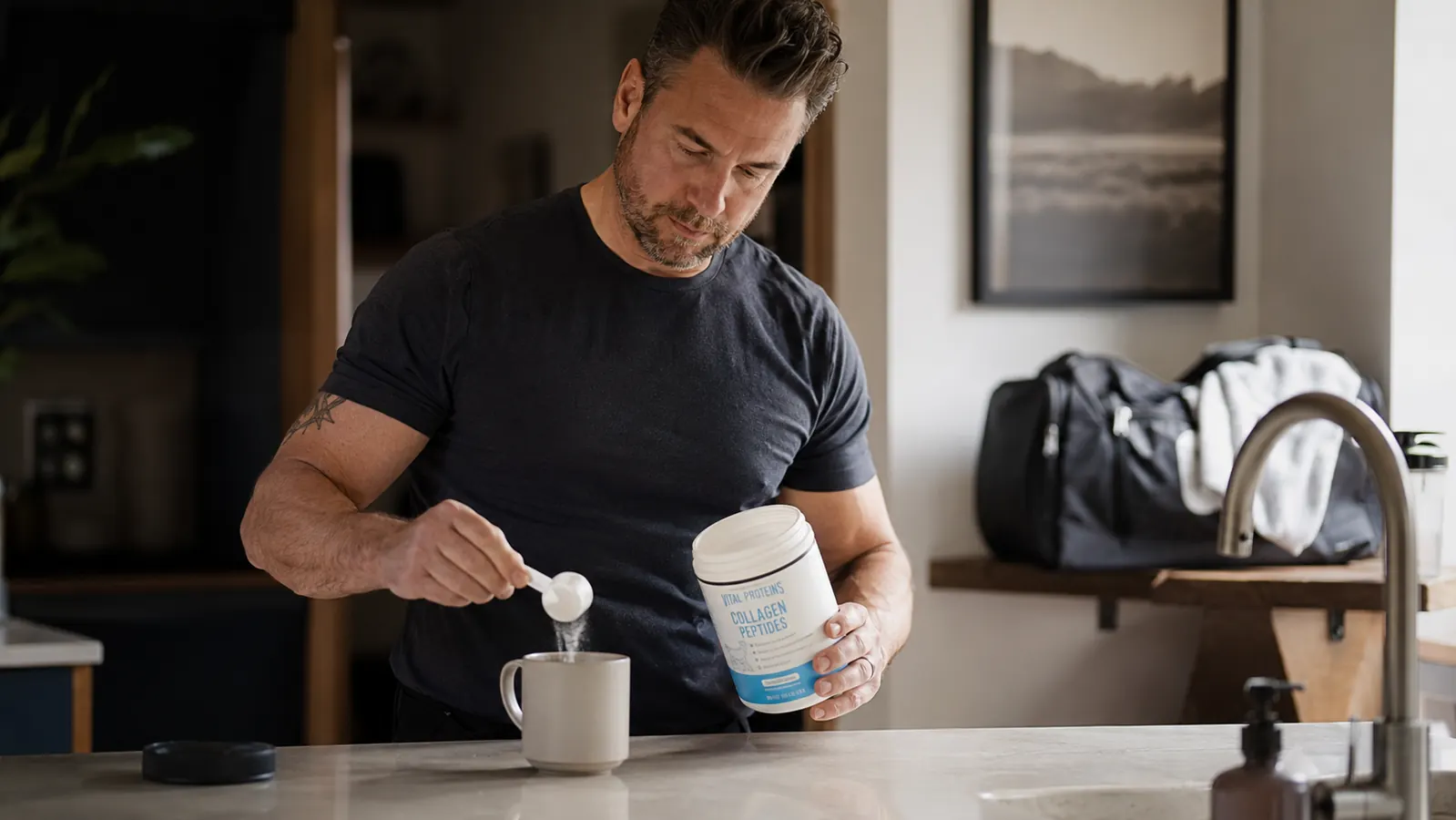
A training buddy who's a physical therapist told me the connective tissue around my joints, the cartilage, tendons, and ligaments, doesn't get the same attention my muscles do when I eat for recovery. Muscle protein synthesis gets all the whey-shake glory. Connective tissue is mostly collagen, and collagen production slows down with age and with the kind of repetitive load lifting and running put on it. That conversation is why I started using Sports Research Collagen Peptides every morning, and here are the ten reasons it earned a permanent spot in my routine after six months of actually paying attention to how my body responded.
The joint support most recovery stacks skip entirely
Protein powder rebuilds muscle. It does almost nothing for the cartilage and tendons holding your joints together. Sports Research Collagen Peptides targets that gap directly, unflavored and easy to add to whatever you already drink.
Amazon Check Today's Price on Amazon →It supplies the raw material cartilage is actually made of
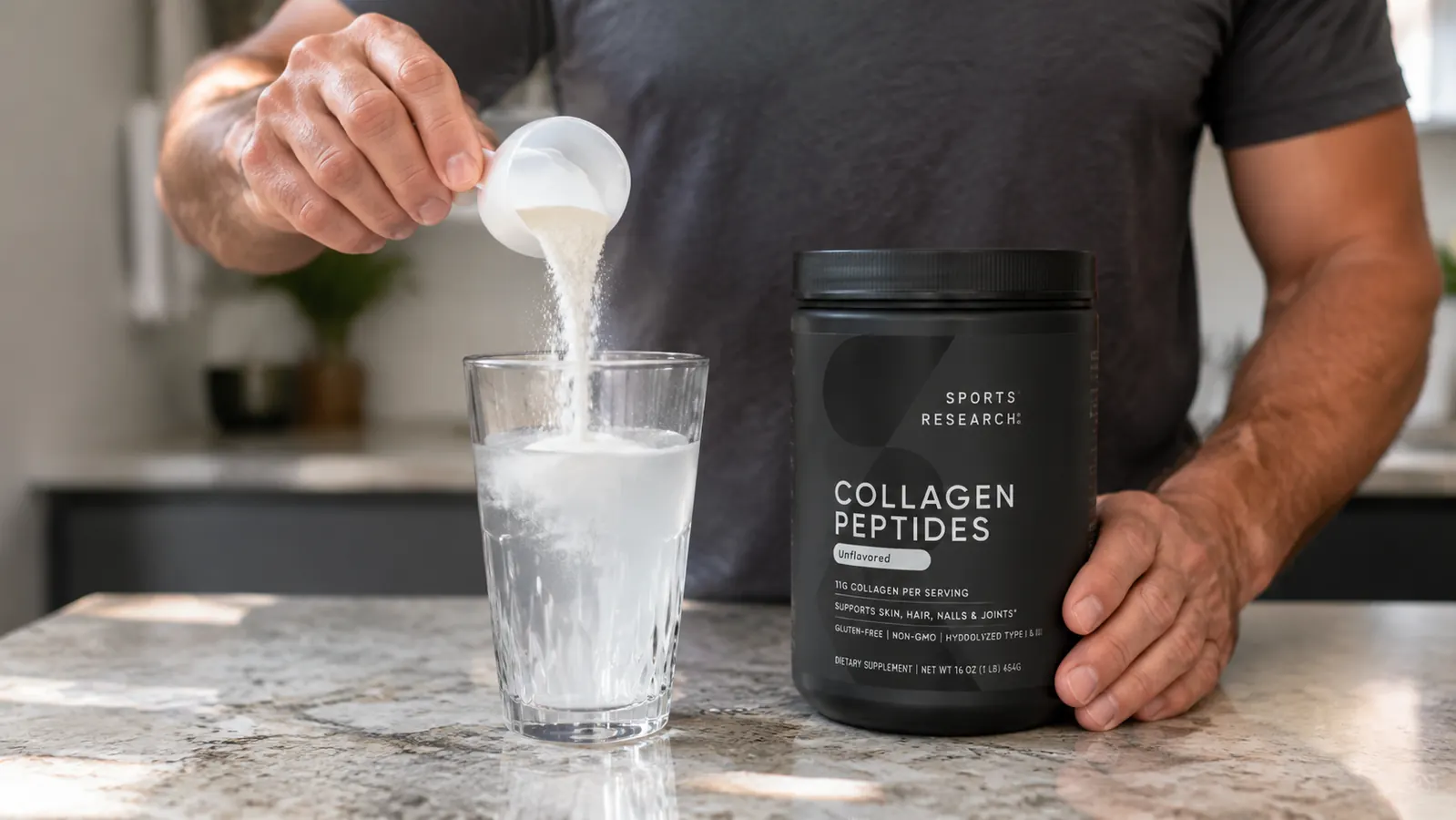
Cartilage is roughly 60 to 70 percent collagen by dry weight. When you're short on the amino acids that build it (glycine, proline, hydroxyproline) your body has less to work with when it repairs the wear and tear from squats, running, or just standing on concrete all day at work. Sports Research uses hydrolyzed Type 1 and 3 collagen, broken down into smaller peptides so your gut can actually absorb them instead of just passing the powder through. That distinction between whole collagen and hydrolyzed collagen is the whole reason this category exists, and it's worth knowing before you buy any brand of it.
It's unflavored, so it goes in anything without a fight
This mattered more to me than I expected. I've tried joint supplements that tasted like chalk dissolved in regret. This one disappears into black coffee, oatmeal, or a protein shake without changing the flavor. If a supplement tastes bad, you stop taking it by week three. This one I've kept up for six months because it's a non-event in my mug every morning, and my wife uses the same tub in her smoothies without either of us tasting it.
Tendons and ligaments respond to it too, not just cartilage
My shoulder click wasn't cartilage, it was the tendon around my rotator cuff getting cranky from years of bench and overhead pressing. Tendons and ligaments are also collagen-dense tissue, and they have notoriously poor blood supply, which is part of why tendon injuries heal so slowly compared to a pulled muscle. Feeding that tissue the amino acids it needs, consistently, is one of the few levers you actually control here, since you can't exactly increase blood flow to a tendon on command.
It pairs with vitamin C for better collagen synthesis
Vitamin C is a required cofactor for your body to actually build new collagen from the amino acids you're feeding it. Skip the vitamin C and a lot of that collagen just doesn't get put to use the way you'd hope. I started having my scoop with orange juice on days I skip coffee, and on lifting days I'll pair it with a piece of fruit. It's a small habit change that makes the supplement do what it's supposed to do instead of just sitting there unused.
It's a clean, minimal-ingredient option in a crowded category
A lot of joint products bury collagen inside a proprietary blend with a dozen other things at unclear doses, so you can never tell what's actually doing anything. Sports Research keeps it simple, hydrolyzed collagen peptides and not much else. When you're trying to figure out if something is actually working, fewer variables makes that easier to judge, and it's easier to layer in other things like glucosamine separately if you want them.
It mixes completely in cold liquid, no clumping
I've dealt with collagen powders that leave a gritty film at the bottom of the glass no matter how long you stir. This one dissolves in cold water in about 10 seconds with a spoon, no blender needed. Sounds minor until you're doing it every single morning for months. Friction kills habits, and this one has none, which is honestly half the reason I've stayed consistent with it longer than almost any other supplement I've tried.
It supports the skin and hair benefits people notice as a side effect
I didn't start this for my skin, but my wife noticed before I said anything. Collagen is a major structural protein in skin too, and hydrolyzed collagen has decent research behind improved skin elasticity. I mention it because it's a real, non-joint reason people stick with it long enough to actually feel the joint benefits, which take longer to show up than the skin changes do.
It's a reasonable daily habit financially, not a boutique supplement
At today's price, a tub lasts me a couple months at one scoop a day. Compared to what I was spending on topical creams and the occasional massage session, it's an easy one to justify keeping in the budget. I'm not claiming it replaces those things, but it's the cheapest lever in my whole recovery stack, and it doesn't require booking an appointment or clearing my calendar.
It works quietly alongside training, not instead of it
Collagen isn't going to fix a form problem or undo years of skipping mobility work. What it does is give your body better raw materials while you keep doing the things that actually load and strengthen the joint, like controlled eccentric work and proper warm-ups. I still stretch, I still warm up my shoulder before pressing. The collagen is the supporting cast, not the lead, and anyone selling it as a standalone fix is overselling it.
It's third-party tested, which matters if you compete or get tested at work
Sports Research runs their products through third-party testing, which mattered to me since I occasionally get drug tested for work and didn't want a surprise from a sketchy supplement filler. If you're going to add something to your daily routine long-term, knowing what's actually in the tub is worth the small premium over the no-name brands you'll find cluttering up the same search results.
What I'd Skip
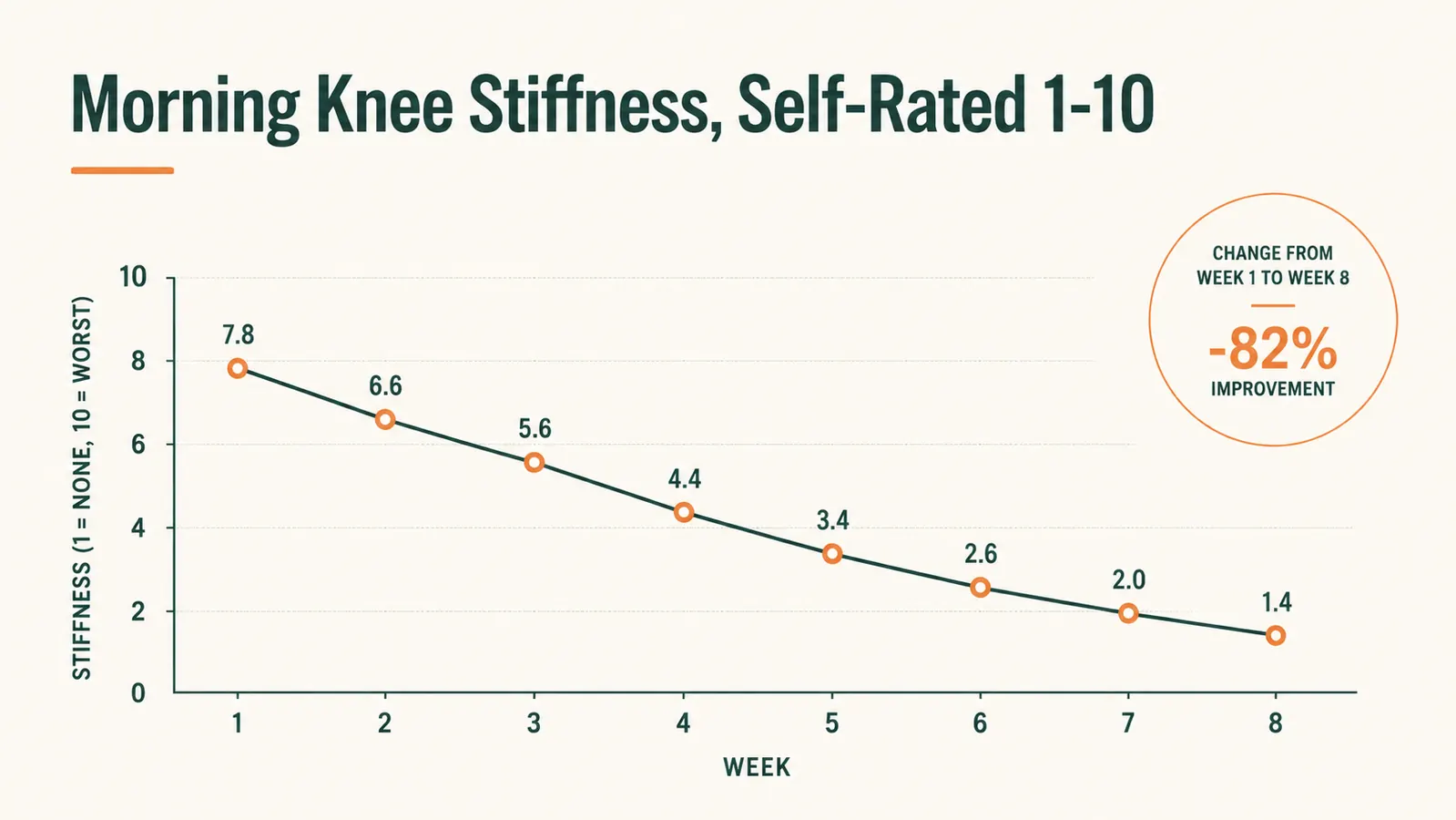
I'd skip the flavored versions if you're already particular about your coffee or shakes, added flavoring is one more thing that can clash with what you're mixing it into. I'd also skip expecting fast results. This isn't ibuprofen. My knees didn't feel different in week one, or even week three. It was closer to two months before the stair-climbing stiffness noticeably eased off. If you're chasing same-day relief, this isn't that product, and no honest review of a collagen supplement should tell you otherwise. Treat it like a long-term habit, not a quick fix, and set your expectations accordingly.
It wasn't a dramatic fix. It was my knees just quietly stopped complaining somewhere around week eight, and I only noticed because I stopped noticing them.
Give your joints the same attention you give your muscles
One unflavored scoop a day, mixed into whatever you're already drinking. No taste to fight, no clumping, third-party tested. It's the lowest-effort addition in my entire recovery routine.
Amazon Check Today's Price on Amazon →