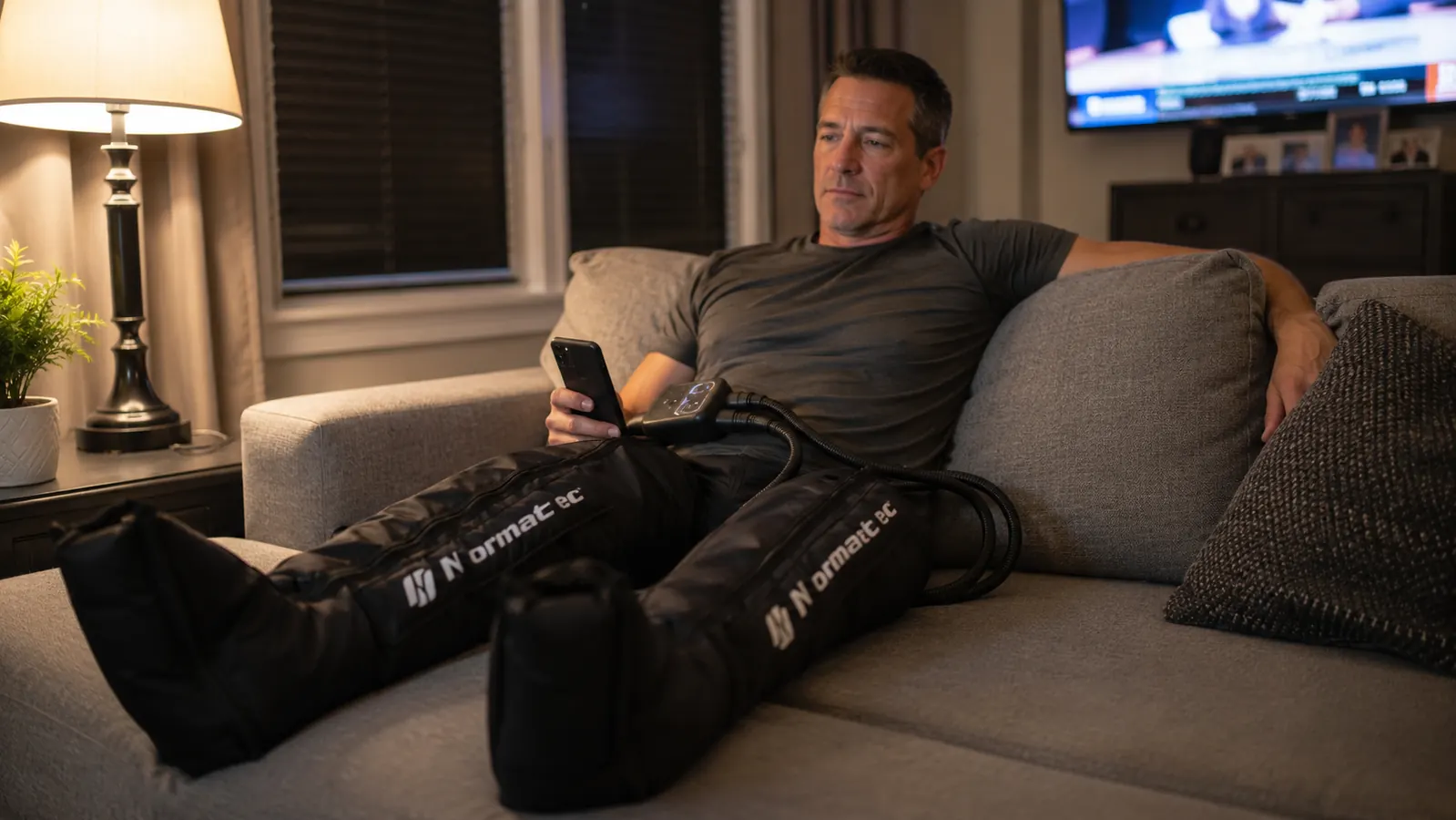
I bought the QUINEAR compression boots after a half marathon left my calves feeling like two bags of wet cement for three straight days. I'd seen the pros wearing them on Instagram for years and figured it was just recovery theater for people with sponsorship deals. Then I actually zipped into a pair after a 16-mile training run, sat through one 25-minute cycle, and stood up feeling like someone had drained two pounds of water out of each leg. That was enough to move them from novelty to nightly habit.
If you're weighing whether sequential compression boots are worth the investment, here are ten specific reasons they've earned a permanent spot next to my couch, based on what they've actually done for my legs over months of regular use, not just what the box promises.
The 25 Minutes That Replaced My Post-Run Dread
If your legs feel like dead weight the night after a long run or a heavy squat day, this is the fastest way I've found to reset them. Check today's price and see why it's become part of my routine.
Amazon Check Today's Price on Amazon →It Pushes Fluid Out of Swollen Lower Legs Fast
The sequential squeeze pattern moves from your foot up toward your hip, which mimics the way your body naturally pumps fluid back toward your heart, except a lot more efficiently than gravity alone. After a long run or a day standing on concrete at work, my ankles and lower calves visibly look less puffy after one cycle. That's not a subtle effect, it's the first thing I notice every single time. I keep an old tape measure in the bathroom drawer and checked my calf circumference out of curiosity one week, it was consistently a quarter inch smaller after a session than before, which lines up with how much less tight my compression socks feel afterward too.
It Speeds Up How Fast Soreness Fades the Next Day
I track this loosely by how my legs feel walking down stairs the morning after leg day. On weeks where I run the QUINEAR the night before, that first flight of stairs is noticeably less punishing than on weeks I skip it. The improved circulation seems to help flush out some of the metabolic waste sitting in the muscle, which is the whole point of active recovery, minus the part where you actually have to move. It's not a miracle fix, my legs still get sore after a genuinely brutal session, but the gap between how I expect to feel and how I actually feel on stairs has shrunk enough that I notice it every time I skip a night.
It Takes the Heavy, Achy Feeling Out of Your Legs Before Bed
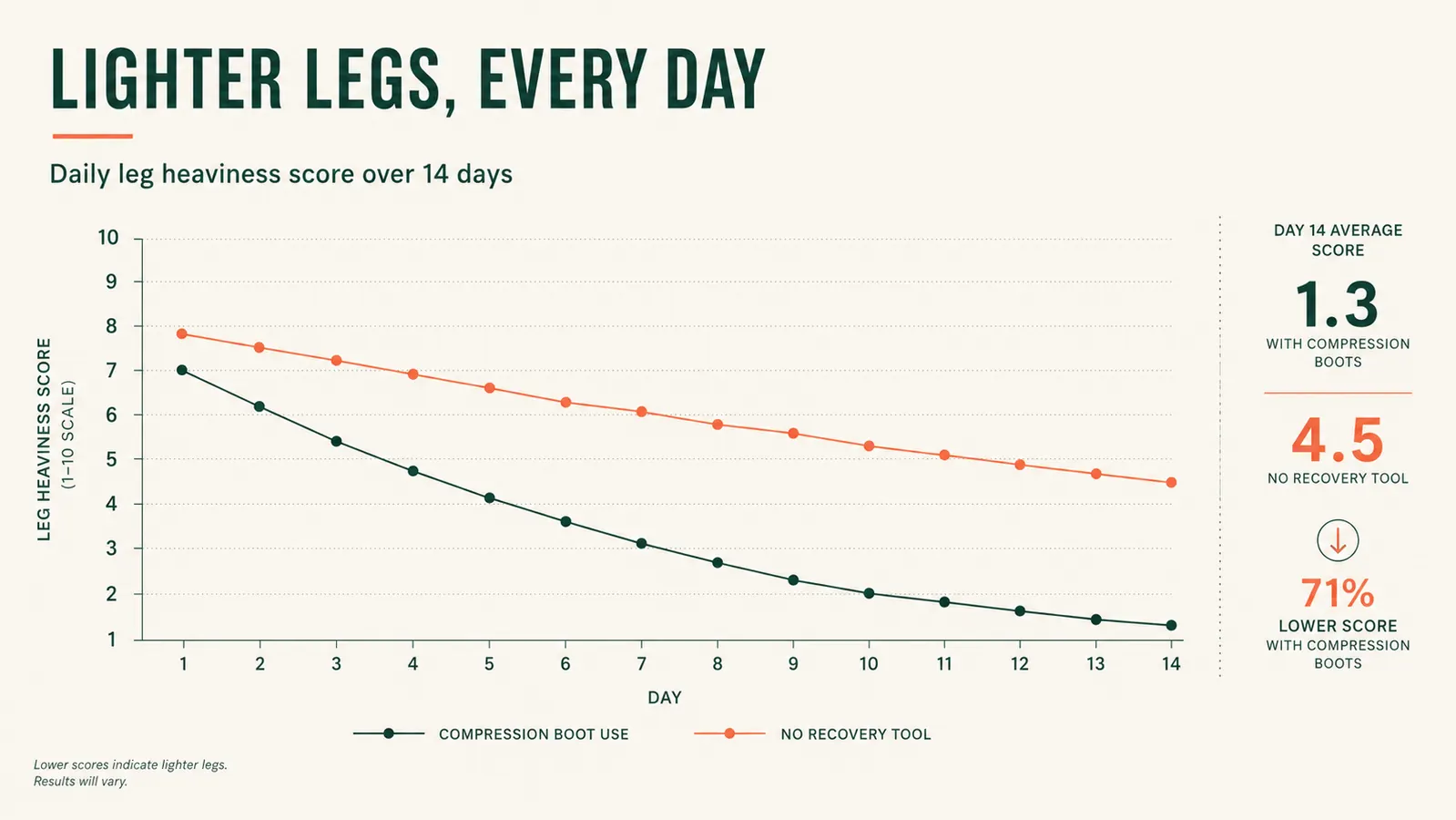
There's a specific kind of leg fatigue that hits after a long run, a deep, dull heaviness that no amount of stretching seems to touch. Twenty five minutes in the boots is the only thing I've found that reliably kills that feeling before I fall asleep. My wife noticed before I said anything, she said I stopped complaining about my legs on the couch every night during marathon training.
It Improves Sleep Quality on Hard Training Nights
I didn't expect this one going in. On nights after a long run when my legs are throbbing, I used to wake up two or three times shifting positions trying to get comfortable. Running the compression cycle before bed on those nights cut that down significantly. Less nerve irritation and less pooling fluid in the lower legs seems to translate directly into fewer 2am wakeups. I used to chalk restless legs up to just being a side effect of hard training, something you accept and push through, but running a cycle before bed on those nights turned out to be a simple fix I wish I'd tried years earlier.
It Targets Multiple Pressure Zones, Not Just a Blanket Squeeze
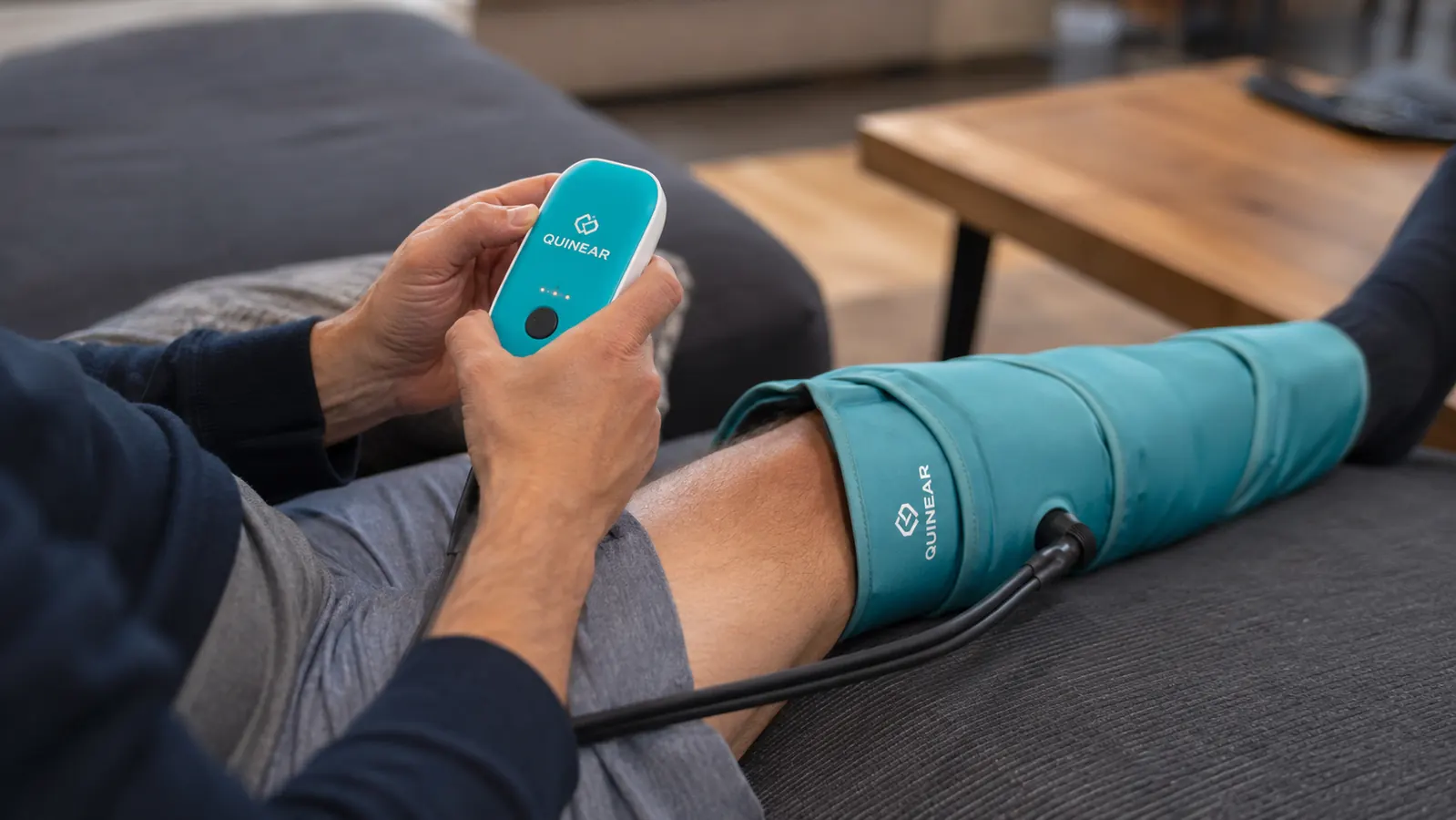
The QUINEAR has separate air chambers that inflate in sequence up the leg rather than one big cuff squeezing everything at once. That matters because your calf, your knee area, and your thigh all hold fatigue differently after a hard session. I run mine on the higher pressure setting for my calves after a run and drop it a notch for my thighs after a heavy squat day, since that area tends to be more sensitive for me.
It Requires Zero Effort, Which Means I Actually Use It
I own a foam roller and a lacrosse ball and both require me to get on the floor and do actual work after I'm already exhausted. The boots require me to sit on the couch, zip in, and hit start. On the nights when I'm too wiped to do anything else for recovery, this is the one tool that still gets used, because the bar for effort is basically on the floor. There's also no setup ritual to talk myself into, no finding floor space, no digging out a mat. I sit down where I already am and press one button, which sounds trivial until you realize that's exactly the kind of friction that kills most recovery habits within a month.
It Helps on Travel Days When Legs Sit Still for Hours
Long flights and long car rides do a number on circulation, especially in your 40s when your legs seem to swell just from sitting through a movie. I've packed the QUINEAR for two race trips now and used it the night before and the night after flying. It doesn't fix jet lag, but it noticeably cuts down the swollen, stiff feeling in my calves and ankles that used to follow every travel day.
It Lets You Recover While Doing Something Else
Foam rolling and stretching demand your full attention for at least part of the session. With the boots, I can watch film, answer emails, or scroll through next week's training plan while the compression cycle runs in the background. That hands-free quality is a bigger deal than it sounds, because it means recovery stops competing with the rest of my evening for time.
It Gives You Adjustable Pressure Instead of a One-Size Squeeze
Not every session calls for the same intensity. The night before a race I keep the pressure moderate, since I don't want my legs feeling worked over before I need them fresh. The night after a brutal training block, I turn it up and let it dig in more. Having that range built into the control unit means the same pair of boots works for a gentle flush or a deeper session depending on what my legs actually need that day. That flexibility is the reason the boots get used year round instead of just during peak marathon training, since a lighter maintenance session on an easy week still feels worthwhile instead of like overkill.
It's Become the Recovery Habit That Actually Sticks
The best recovery tool is the one you keep reaching for months later, not the one you were excited about for two weeks. I'm well past a year of on-and-off use now and the boots still come out three or four nights a week during heavier training blocks. That kind of staying power says more about a recovery tool than any spec sheet does, and it's the main reason I keep recommending them to training partners who ask what actually helped.
What I'd Skip
I wouldn't use compression boots on a leg with a suspected blood clot, active deep vein thrombosis, or a fresh, still-swollen injury that hasn't been checked out, that's a conversation for a doctor, not a recovery gadget. I'd also skip cranking the pressure to max right out of the box. I made that mistake my first week and ended up with pins-and-needles numbness in my left foot for a few minutes after the cycle ended. Start low, work up over a few sessions, and it stops being an issue. And if you're dealing with sharp pain rather than general tightness or heaviness, that's a signal to see someone, not a signal to squeeze harder.
The best recovery tool isn't the one that looks impressive in a highlight reel, it's the one you're still reaching for a year later on a random Tuesday night.
Ready to Stop Dreading Stairs the Morning After Leg Day?
This is the exact system I've used for a year of training blocks and race weekends. Check today's price on Amazon and see if it earns a spot in your living room too.
Amazon Check Today's Price on Amazon →