
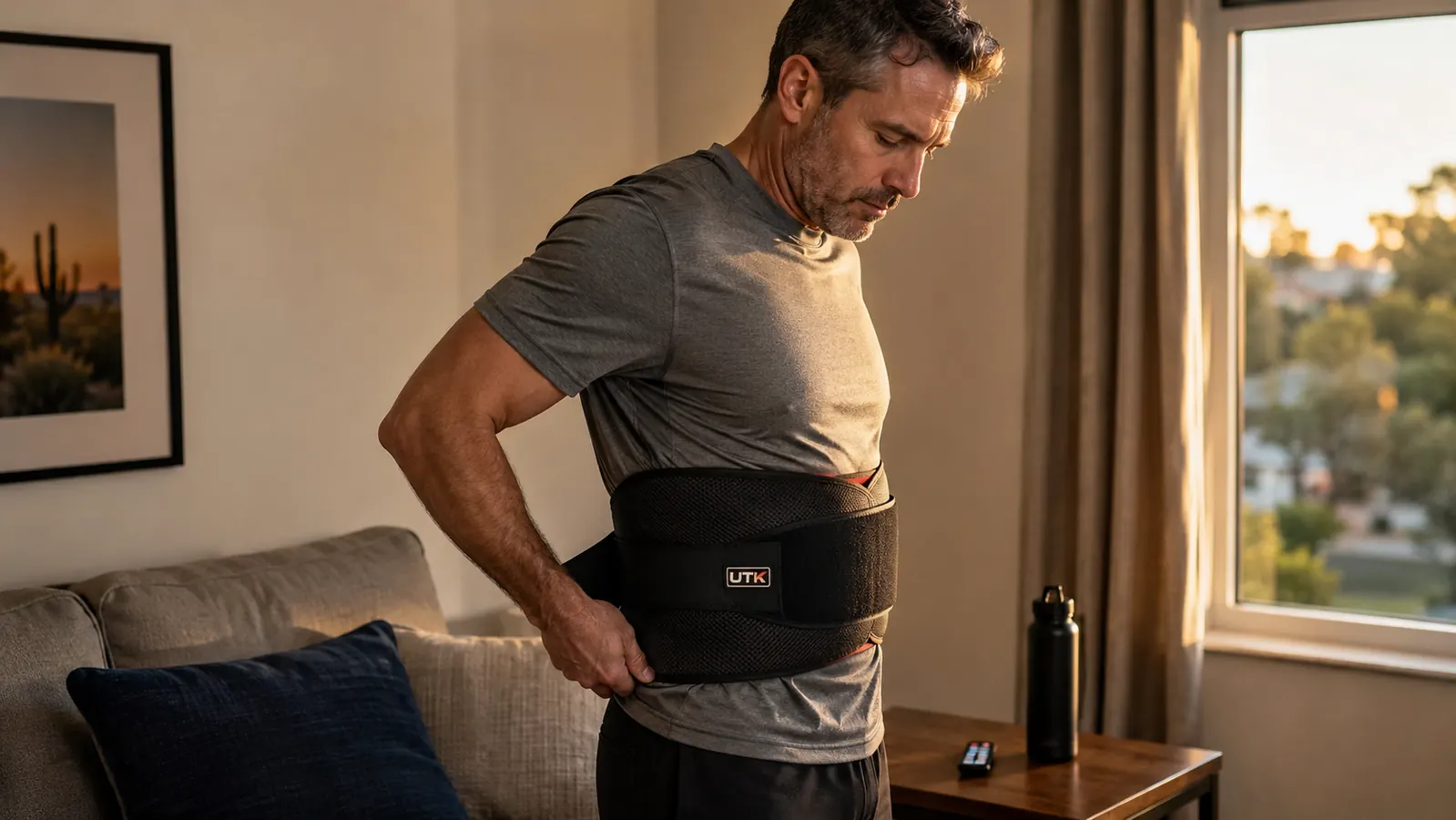
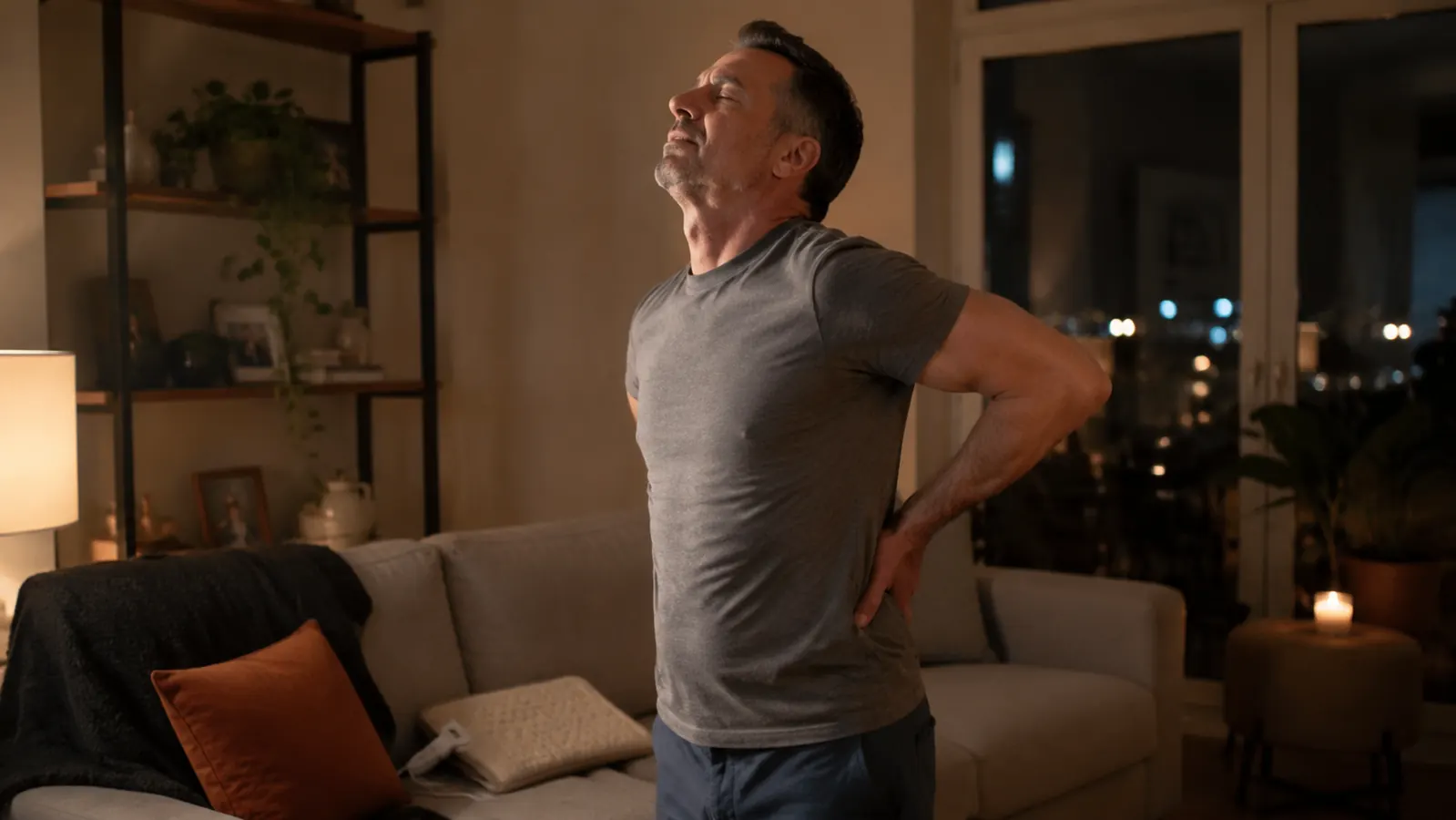
My lower back tells me exactly how my day went before I do. A long stretch at my desk, a heavy squat session, or just sleeping wrong on a Sunday afternoon nap, and by evening that same spot on my right side tightens up like it's trying to warn me off doing anything else. For years I treated it with whatever was closest, a drugstore heating pad, a hot shower, sometimes nothing at all. None of it did much. What actually changed things was learning to use far infrared heat correctly, not just owning the tool but running a real routine with it.
That distinction matters more than people think. I bought the UTK far infrared heating pad expecting it to work like every other heating pad, just hotter. My first few weeks with it were underwhelming because I was using it wrong, wrong placement, wrong timing, wrong intensity for the day. Once I fixed that, it became one of the most consistent tools in my recovery routine. Here's the exact process, step by step, the same one I still follow most nights my back is bothering me.
The Pad I Follow This Exact Routine With
Everything below is built around the UTK far infrared heating pad, the one I've used consistently for months on a lower back that's been cranky since a squat mistake in my 30s. Check today's price on Amazon before we get into the steps.
Amazon Check Today's Price on Amazon →Step 1: Time It Right, Not Just When It Hurts
The biggest mistake I made early on was only reaching for the heating pad after my back was already screaming, usually at 10pm after a full day of sitting and a rough attempt at yard work. By then I was chasing pain instead of managing it. Now I use it proactively, most evenings around 7 or 8pm regardless of how bad it feels that day, because consistency does more for chronic tightness than intensity does.
If your pain follows a pattern, mine flares hardest after long desk stretches or leg day, try to catch it before the tightness sets in fully. I now do a session the evening of any heavy squat or deadlift day as a preventive move, not just a reactive one. It's the difference between managing a fire and putting one out.
I also learned to pay attention to the days that don't feel obviously bad. Some of my worst flare-ups showed up two days after a hard leg session, not the same night, because the inflammation builds gradually. If I wait for the pain to peak before I do anything about it, I've already lost the easiest window to intervene. Now I treat the day after a heavy session the same as a bad-pain day, heat included, whether or not it's actually barking yet.
One exception worth flagging up front, don't use heat in the first 48 hours after a fresh, acute injury with visible swelling. That's an ice situation. This entire routine is built for chronic, recurring tightness, the kind that's been part of your life for months or years, not a brand new sharp injury.
Step 2: Set Up Your Spot Before You Turn It On
I used to just grab the pad and lie down wherever, which meant fumbling with the cord and controller for the first five minutes of every session. Now I set up a dedicated spot on the couch with the controller within reach on the side table, a water bottle nearby, and my phone charger close enough that I'm not tempted to get up mid-session and lose the heat buildup.
This sounds like a small thing but it's the reason I actually stick with the routine instead of skipping it on tired nights. Friction kills consistency. If getting set up takes two minutes instead of ten, you're far more likely to actually do it after a long day instead of talking yourself out of it.
Wear a thin layer, a t-shirt or light base layer, rather than bare skin against the pad. It doesn't block the infrared penetration in any meaningful way, and it protects your skin from direct prolonged contact, especially if you tend to fall asleep mid-session like I sometimes do.
I've also started dimming the lights and putting my phone somewhere I can't casually check it, mostly because I noticed I was rushing through sessions to get back to whatever I was scrolling. Treating the 20 to 30 minutes as actual downtime rather than something to multitask through changed how relaxed my back felt afterward, not just physically but in that low-grade tension you carry in your shoulders without noticing.
Step 3: Wrap It Snug, Not Loose, Directly Over the Lumbar Area
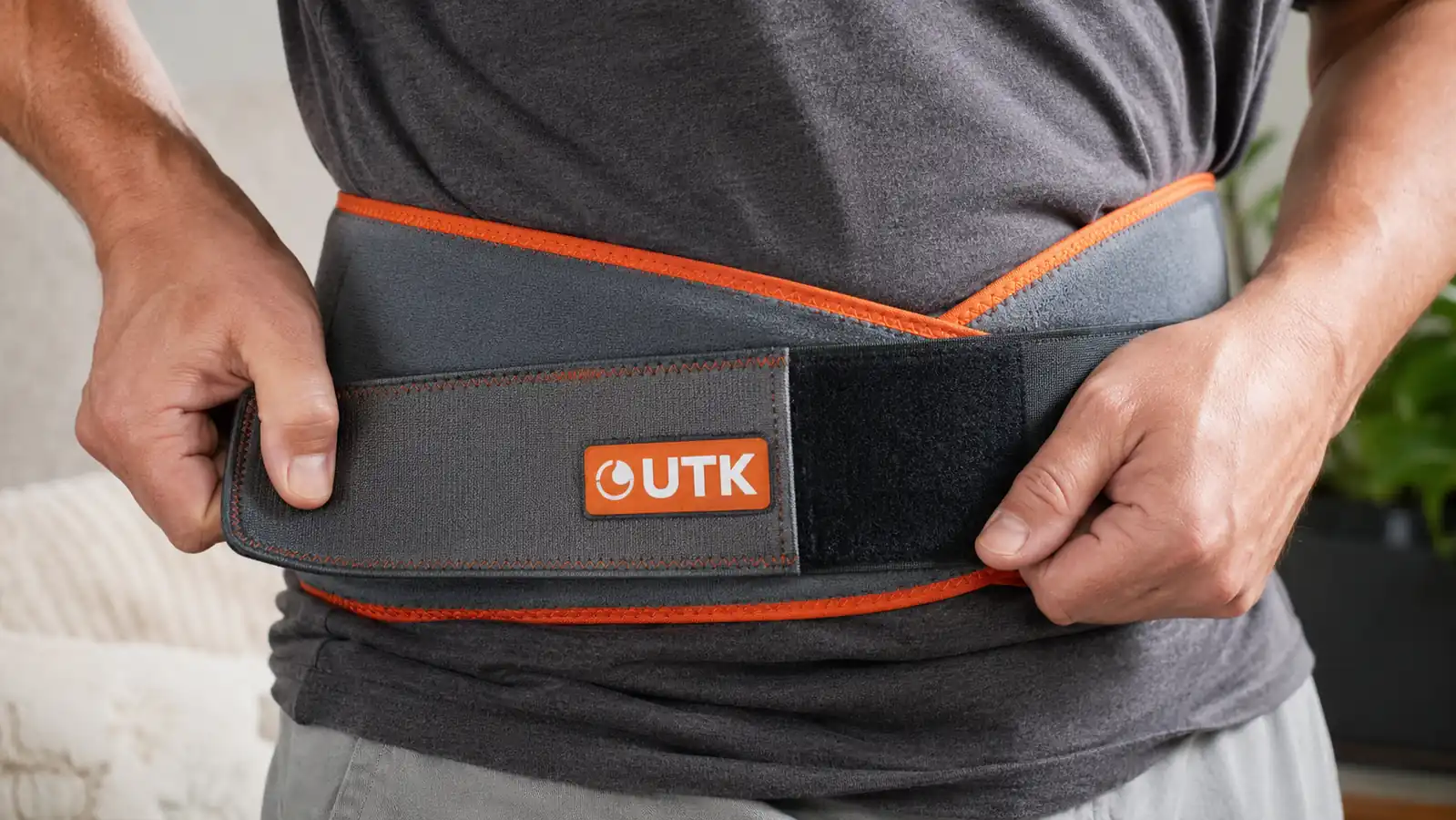
Placement makes a bigger difference than I expected. My old habit was draping the pad loosely across my lower back while lying flat, which meant it would slide off center within ten minutes and I'd end up heating the wrong spot without realizing it. The UTK pad has a strap specifically so you can wrap it snug around your torso at the level of your lumbar spine, right where that dull ache actually lives.
I stand up to wrap mine now instead of trying to position it while already lying down. Wrap the strap so it's secure but not restrictive, you should be able to breathe normally and shift position without it slipping. Once it's snug, that's when I lie back down or sit reclined, and it stays exactly where it needs to be for the whole session instead of migrating toward my hip or up toward my mid back.
For me specifically that means centering it slightly toward my right side, since that's where my old injury sits. Your own trouble spot might be centered or off to one side too. Pay attention to where the ache actually concentrates rather than just centering the pad on your spine by default.
I've also found it works sitting upright in a recliner, not just lying flat, which matters on nights when lying down actually makes my back feel worse. Whichever position you use, the goal is the same, keep the strap snug enough that the pad can't creep away from the lumbar area while you shift around watching TV or reading.
Step 4: Start on Low, Work Up Based on How the Day Went
This was the step that changed everything for me. I used to crank straight to the highest setting assuming more heat meant faster relief. On a day when my back is already inflamed from a hard training session, that's actually the wrong move, jumping straight to max heat on already-irritated tissue can feel like too much and makes me want to end the session early instead of settling in.
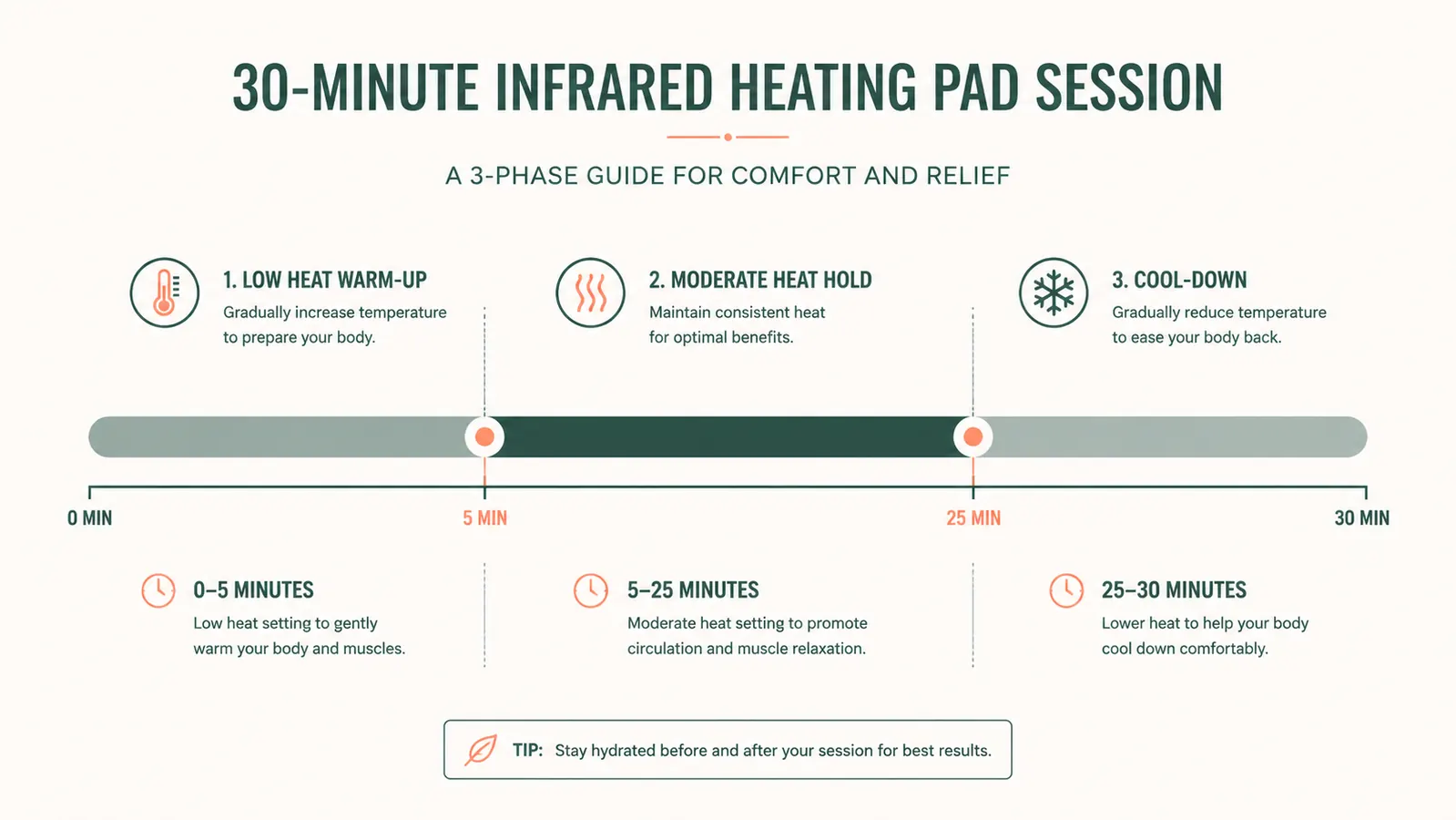
Now I start on the lowest setting for the first five to seven minutes, let the pad warm up and let my body adjust, then move up to a moderate setting for the bulk of the session. I only push toward the higher settings on days when my back is mildly tight rather than genuinely angry. That adjustable range is one of the features I use the most, because chronic back pain isn't the same intensity every single day, and treating it like it is either undertreats the bad days or overwhelms the mild ones.
A rough guide that's worked for me, mild stiffness gets a moderate to higher setting since I can tolerate it comfortably, while a genuinely flared-up day starts low and only climbs if it still feels manageable ten minutes in. Let how your back actually feels that day drive the setting, not a fixed routine.
It took me longer than I'd like to admit to stop treating the temperature dial like a scoreboard, where higher always meant a better session. Some of my most effective sessions have actually been on the lowest setting held for a full 30 minutes, especially the nights my back is more inflamed than tight. Slower, gentler heat over a longer stretch beats a quick blast of high heat almost every time for me.
Step 5: Hold for 20 to 30 Minutes, Then Let It Auto Shut Off
Early on I'd do quick 10-minute sessions because that's roughly how long a regular heating pad takes to feel like it's done something. Far infrared heat works on a different timeline. It's penetrating deeper into the tissue rather than just warming the surface, so it needs more time to actually loosen a muscle that's been guarding an old injury for years. I settled on 20 to 30 minutes as the sweet spot, long enough for the deep heat to do its work, short enough that it fits into an actual evening.
The auto shut-off timer is the feature that makes this routine sustainable for me. I don't trust myself to remember to turn a heating pad off, especially at 9pm when I'm half asleep on the couch scrolling my phone. Knowing it'll shut itself off means I can actually relax into the session instead of setting a mental alarm or worrying about it in the back of my mind. That single detail is the reason I use this consistently instead of the way I used to skip my old pad out of caution.
When the session ends, I don't jump straight up. I give it a minute or two, then stand and do a gentle standing back extension, hands on my hips, leaning back slightly. The muscle is warm and more pliable right after a session, and that brief stretch seems to lock in more of the loosening than standing up abruptly and heading straight to bed.
On nights I use it right before bed, I've noticed I fall asleep faster and stay asleep longer than on nights I skip it, which I chalk up to the combination of relaxed muscle tissue and just being warm and still for half an hour with nowhere to be. That secondary benefit wasn't why I bought it, but it's turned into one of the bigger reasons it stays part of the routine.
What Else Helps
Heat alone isn't a complete fix, and I don't pretend it is. On the days my back is worst, I pair the heating pad routine with basic hip and hamstring mobility work earlier in the day, since tight hips are part of what drags my lower back into trouble in the first place. Staying hydrated matters more than it sounds like it should, dehydrated tissue seems to hold tension longer regardless of heat. And on genuinely bad flare-ups, especially anything with swelling or sharp pain rather than dull tightness, ice in the first 48 hours followed by heat afterward has worked better for me than heat alone from the start.
I've also paid more attention to my desk setup since starting this routine, since no amount of evening heat fully offsets six hours of sitting hunched forward. A lumbar cushion in my office chair and standing up to walk around every hour cut down on how often my back gets bad enough to need a session in the first place. The heating pad handles recovery, but it works better alongside habits that reduce how much damage builds up during the day. If pain radiates down a leg or comes with numbness, that's a conversation for a doctor, not a routine for a heating pad, no matter how consistent you are with it.
The routine matters more than the tool. A great heating pad used carelessly does less than an average one used the same way, at the same time, every single night.
Ready to Build the Same Routine Into Your Evenings?
This is the exact heating pad I've followed this routine with for months of desk work and heavy training days. Check today's price on Amazon and see if it earns a spot on your couch too.
Amazon Check Today's Price on Amazon →