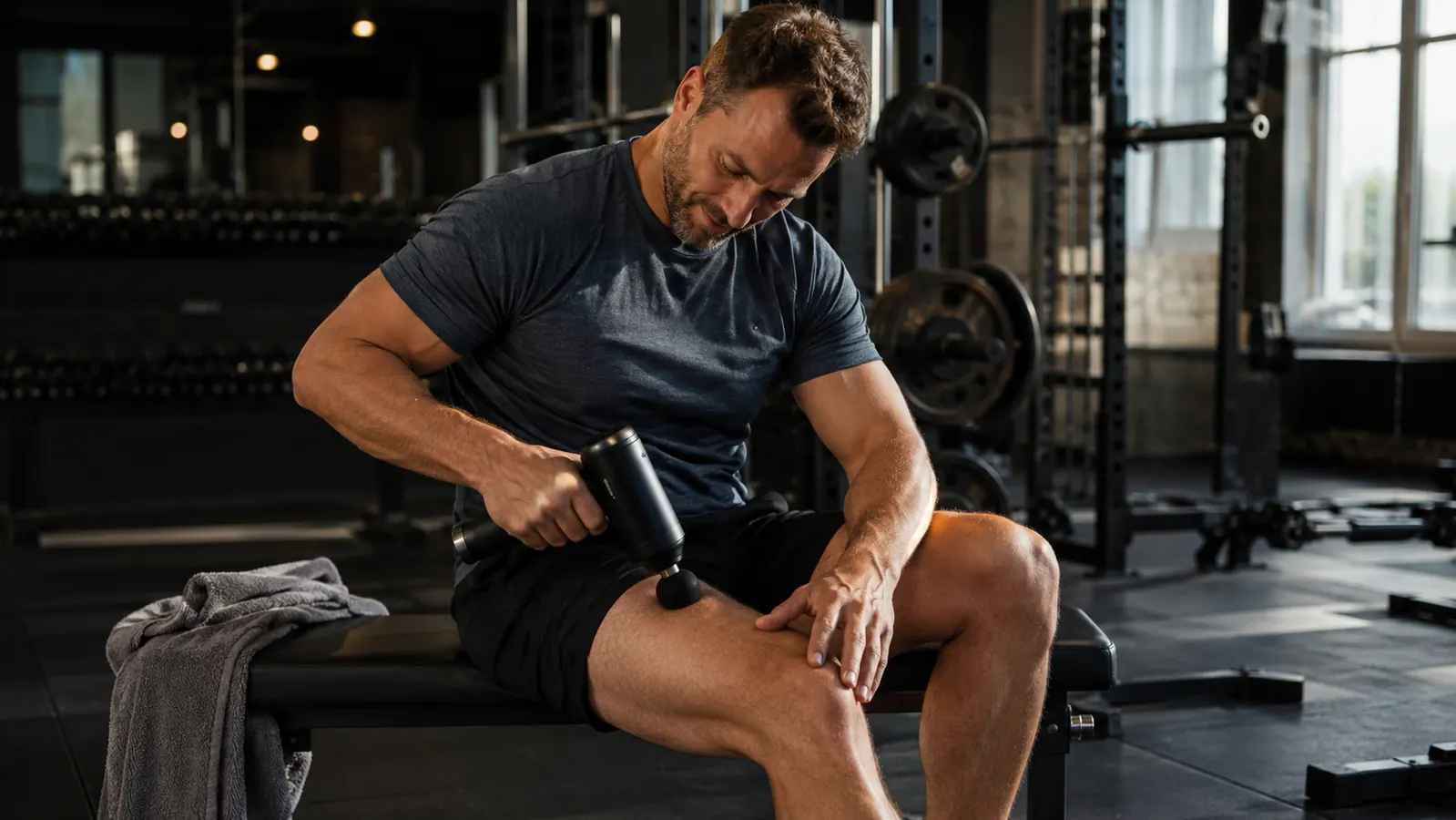
I'm 44, I lift four days a week, and I run when my knees let me. Which means I'm sore more often than I'd like to admit. For years my answer to soreness was just gritting through it, or on a good week, foam rolling until my forearm gave out before my quad did. Then I picked up a Lifepro massage gun after a buddy at the gym wouldn't shut up about his, and it changed how fast I bounce back between sessions. Not magic, just a tool used the right way, at the right time, on the right spot.
This is the exact process I use, broken into five steps. It's the same routine whether I'm dealing with post-leg-day quads, a stiff lower back from sitting at a desk all day, or calves that seized up after a long run on pavement. If you've got a percussion massage gun sitting in a drawer, or you're deciding whether to buy one, this will get you using it correctly instead of just aimlessly buzzing your shoulder for two minutes and calling it done.
None of this requires a physical therapy degree. What it does require is a little patience the first week, because most people quit on a massage gun before they've actually figured out how to use it. I certainly did the first time. I bought a cheaper one years ago, ran it on high speed straight over my IT band for three minutes, felt nothing but bruised the next day, and shelved it for a year. The routine below is what I wish someone had handed me back then.
The Tool That Makes This Routine Actually Work
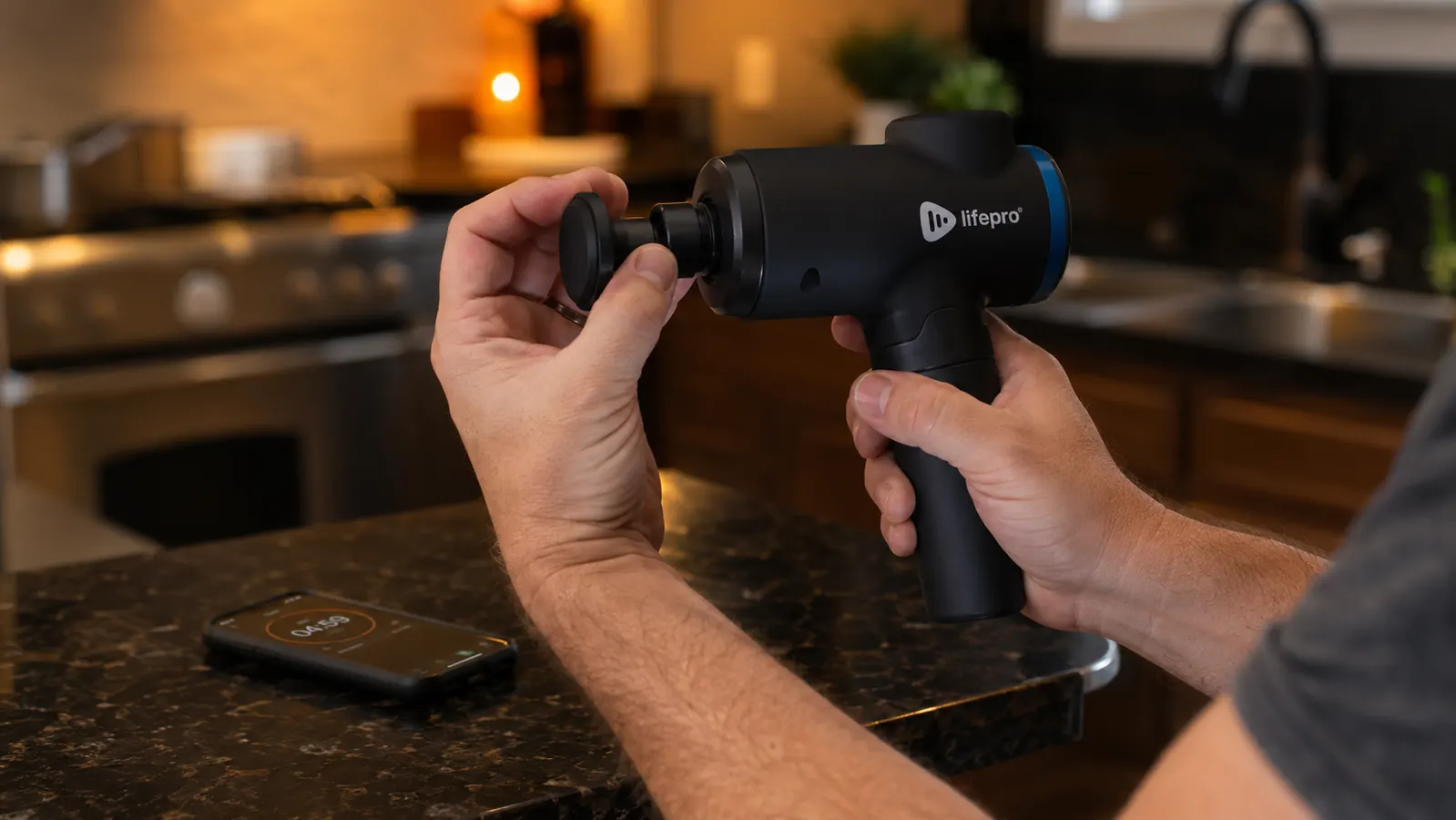
Everything below assumes you've got a percussion massage gun with a few speed settings and swappable heads. The Lifepro is the one I use daily, it's what's in the photos, and it's built to handle a real recovery routine without overheating or dying on you mid-session.
Amazon Check Today's Price on Amazon →Step 1: Time It Right, Not Just Whenever You Remember
The biggest mistake I made early on was treating the massage gun like an aspirin, only reaching for it once soreness had already fully set in two days later. It works better as part of your routine at two specific windows: right after your workout, while blood is already moving through the muscle, and again the next morning if you're still tight.
Post-workout, I give it 60 to 90 seconds per muscle group within about 15 minutes of finishing, before I've cooled down and showered. That's the window where it seems to do the most to keep things loose instead of letting the muscle tighten up as it cools. If I skip that window and only hit it the next day when I'm already stiff, it still helps, it just takes longer to feel the difference and I usually need two sessions instead of one.
I don't use it before a heavy lift, not on the muscle I'm about to train anyway. There's some evidence that percussion work right before lifting can temporarily reduce force output, and I've felt that myself on my quads before squats, like the first rep or two felt flat. Save it for after, or use it on a completely different muscle group than what you're about to train, like working your shoulders while your legs are still warming up for squats.
On rest days I do a shorter session in the evening, mostly to check in on whatever's been bugging me during the week. That might be a tight hip flexor from too many hours at my desk, or a calf that never quite loosened up from Tuesday's run. Rest-day sessions don't need to be long. Five to seven minutes total across two or three areas is usually enough to keep things from stacking up into a bigger problem by the weekend.
Step 2: Pick the Right Attachment Head for the Job
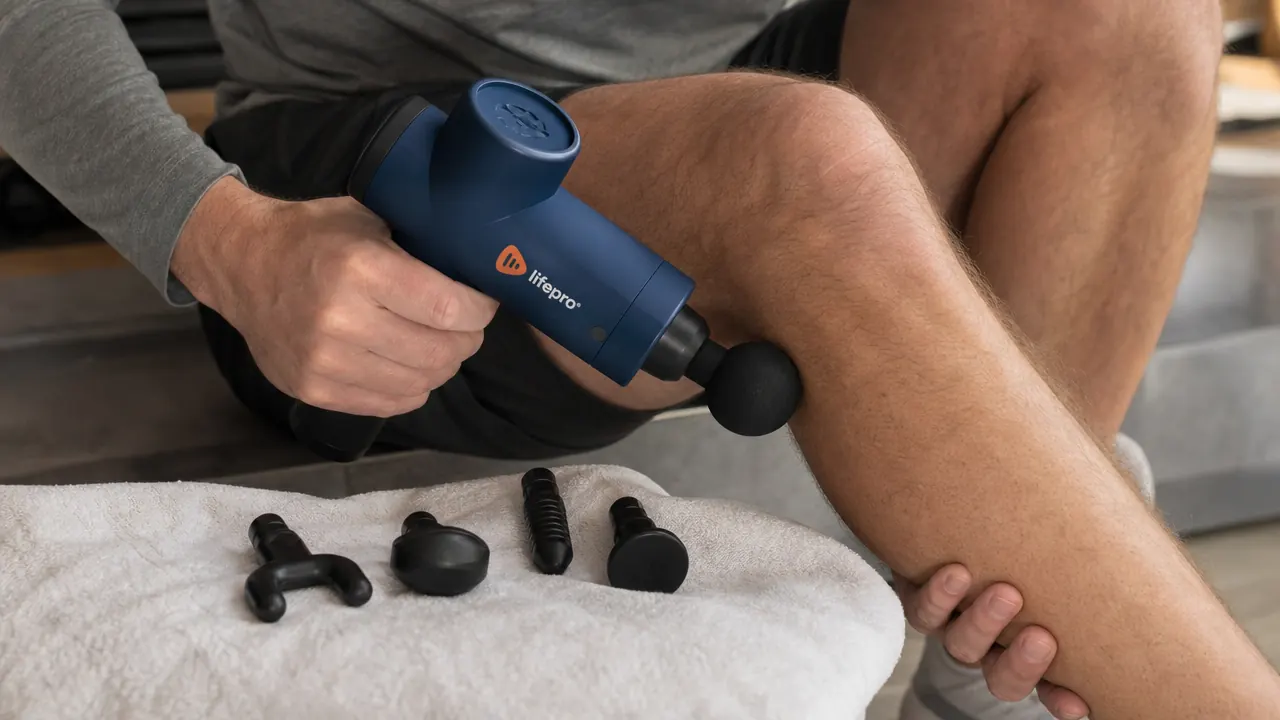
The Lifepro comes with eight heads and most people use one, the round ball, for everything. That's a mistake. The round ball is your general-purpose head for big muscle groups like quads and glutes. The flat head is gentler and better for smaller or more sensitive areas like your forearms or calves. The bullet or pointed head is for pinpointing a specific knot, like the spot in my right traps that flares up after every heavy pull day.
There's also a fork head, shaped like two prongs, that's built specifically to straddle the spine without ever pressing directly on it, which is the safest way I've found to work the muscles running alongside my lower back. And there's a cushioned air head that's soft enough for areas that are tender to the touch, like the outside of my hip after a long run when everything feels a little raw.
I keep three heads within reach most days: the ball for legs, the flat head for my back and shoulders, and the fork head for either side of my spine, never directly on it. If you've only ever used the default attachment, swapping heads based on the area is the single easiest upgrade to how effective a session feels. It took me embarrassingly long to figure out that the head matters almost as much as the technique.
Step 3: Move Slowly and Let the Muscle Do the Work
Percussion massage guns hit anywhere from 1,750 to 2,400 percussions per minute depending on the speed setting, so it's tempting to think faster is better. It isn't. What actually matters is dwell time and how slowly you move the device across the muscle. I glide it about an inch every couple of seconds, never dragging it fast across the whole muscle in one pass like I'm painting a wall.
I start on the lowest speed setting for the first 10 to 15 seconds on any new muscle, especially if it's already sore, then move up one or two speeds once the tissue warms up. Going straight to max speed on a cold, sore muscle is uncomfortable and doesn't actually get you a better result faster. It just makes you want to quit after 20 seconds, which is exactly what happened to me with that first cheap massage gun.
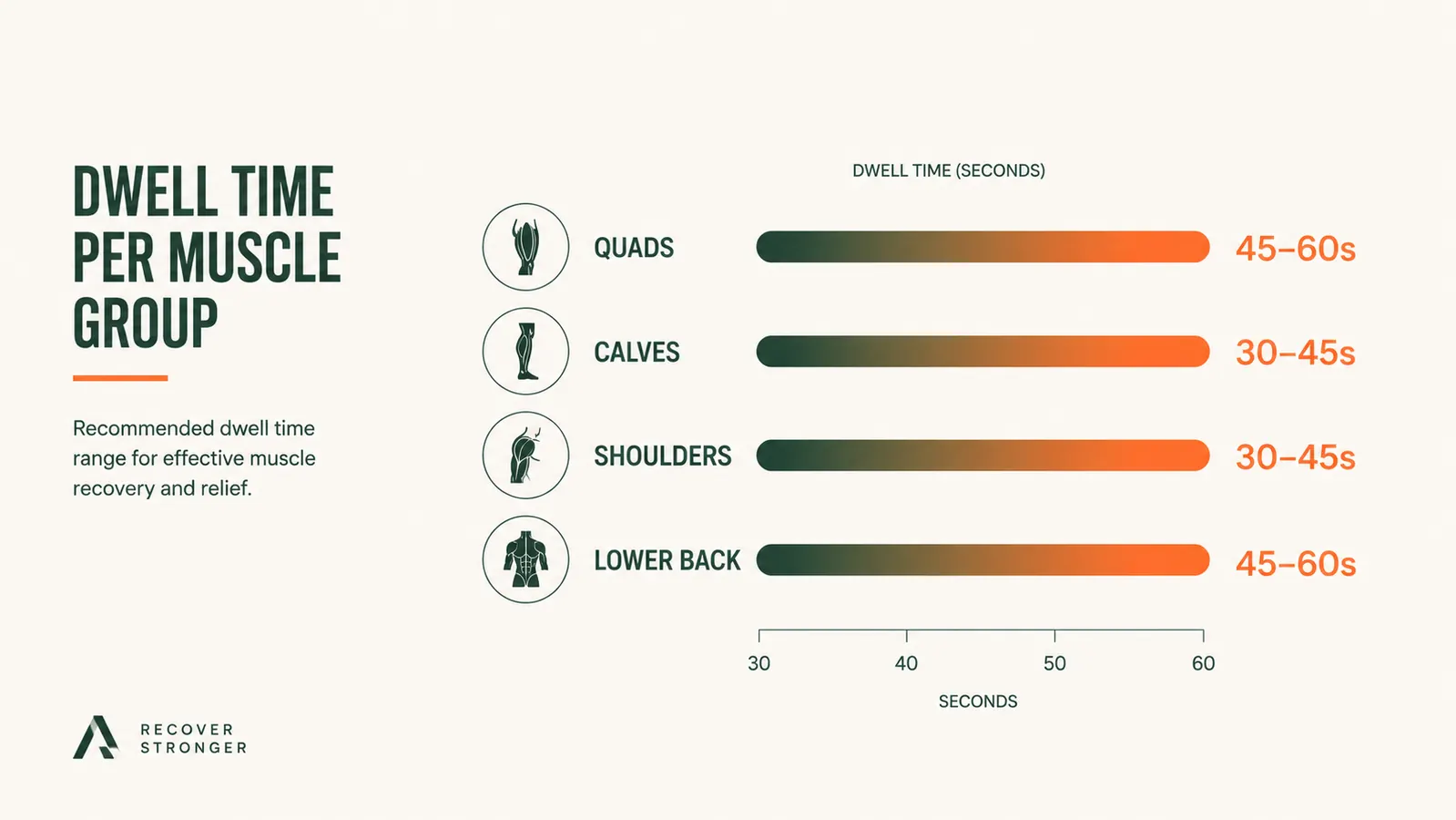
General rule I follow: 30 to 60 seconds per muscle group, moving the whole time, never parking on one spot for more than a few seconds unless I'm working a specific knot, and even then I cap it at 10 to 15 seconds before moving on and coming back to it later in the session. Parking too long in one place is how you end up with a bruise instead of relief, and it's the single most common mistake I see other guys at my gym make with theirs.
Breathing matters more than people expect too. I exhale slowly while the head is on a tender spot, the same way you'd breathe through a deep stretch. Holding your breath tenses the muscle you're trying to relax, which works against the whole point of the session.
Step 4: Avoid Bones, Joints, and Anything That Sends a Sharp Signal
This is the part people skip reading about and then wonder why their knee feels worse. Never run a massage gun directly over a joint, a bone, your spine, your neck's front side, or any area with a recent injury that hasn't been cleared by a doctor. Stick to the meat of the muscle, not the connective tissue around it.
For my lower back, I work the muscles on either side of my spine, never the spine itself. For my shoulders, I stay on the meat of the deltoid and traps, not directly on the joint capsule. If something feels sharp, electric, or just wrong instead of the deep-pressure ache of a good muscle release, stop. That's your body telling you it's a nerve or a joint, not a muscle, and a massage gun isn't the tool for that.
I also don't use it on my calves for more than about 30 seconds at a stretch since that area bruises easier than quads or glutes for most people, myself included after I got a little too aggressive early on. Shins are another spot I skip entirely, there's almost no muscle there to work, just bone right under the skin.
If you're on blood thinners, have a clotting disorder, or you're dealing with varicose veins in the area, talk to a doctor before using any percussion device there. Same goes for pregnancy, and for anywhere you've got broken skin, a rash, or a recent surgical site. None of that is a reason to avoid the tool entirely, it's just a reason to be specific about where you're using it.
Step 5: Build It Into a Repeatable Routine, Not a One-Off Fix
A massage gun used once when you're already limping around doesn't do nearly as much as one used consistently as part of your training week. My routine now looks like this: 60 to 90 seconds per major muscle group I trained that day, done right after the workout, plus a shorter 5-minute full-body pass on rest days focused on whatever feels tightest.
On leg day it's quads, hamstrings, and glutes. On push day it's chest, shoulders, and triceps. On pull day it's lats, traps, and forearms. I keep the Lifepro charged and sitting on the shelf by my bench so there's zero friction to using it, because the sessions I skip are always the ones where the device is buried in a drawer somewhere and I have to go dig for it.
I also log it, loosely, in the notes app on my phone. Not anything formal, just a quick line like calves tight again or right shoulder loosened up fast today. Over a few months that log tells you something useful, like which muscles are chronically tight and might need more than a massage gun, maybe a mobility drill or a look at your desk setup.
The difference between a massage gun that sits in a drawer and one that actually helps you recover isn't the device, it's whether you use it the same day, every time, without having to think about it.
What Else Helps
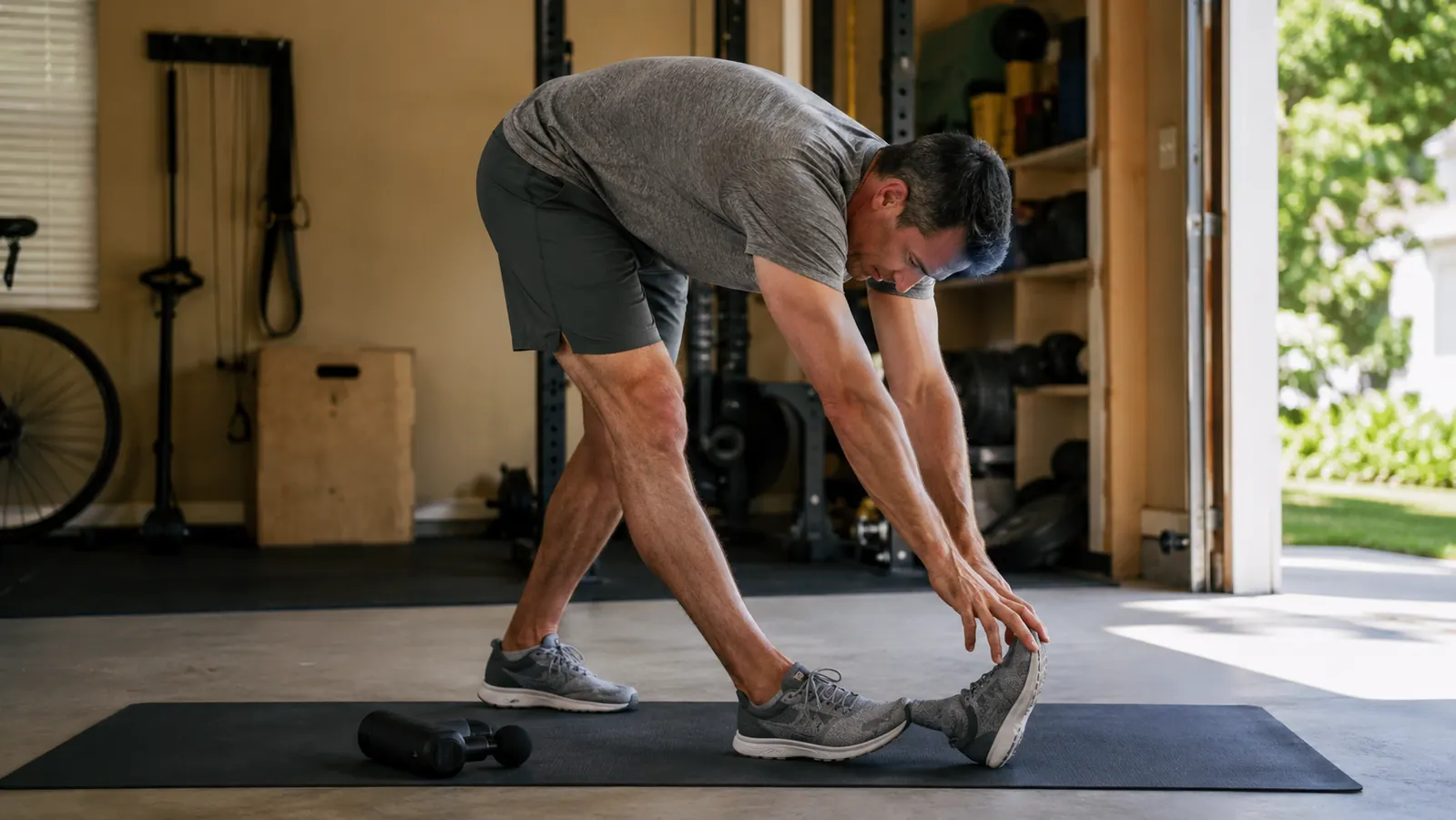
The massage gun isn't a replacement for the basics. I still stretch after every session, especially hamstrings and hip flexors, and I still drink more water than I want to on training days. Sleep matters more than any recovery tool I own, and no amount of percussion therapy makes up for five hours of sleep before a heavy squat day. Think of the massage gun as one piece that speeds up what your body is already trying to do, not a shortcut around the fundamentals.
A few other things I lean on alongside it: a lighter warm-up set before jumping into working weight, an actual rest day instead of a light cardio day when my body's asking for one, and paying attention to protein intake, which affects how sore I am the next day more than almost anything else I've tried. The massage gun handles the muscle tension. Everything else on that list handles the reason the tension showed up in the first place.
Ready to Build This Into Your Routine
If you've been putting off getting a percussion massage gun, or you're using an old one that barely has enough battery for one session, the Lifepro is the one I reach for every single day. Eight heads, five speeds, and it hasn't slowed down on me yet.
Amazon Check Today's Price on Amazon →