
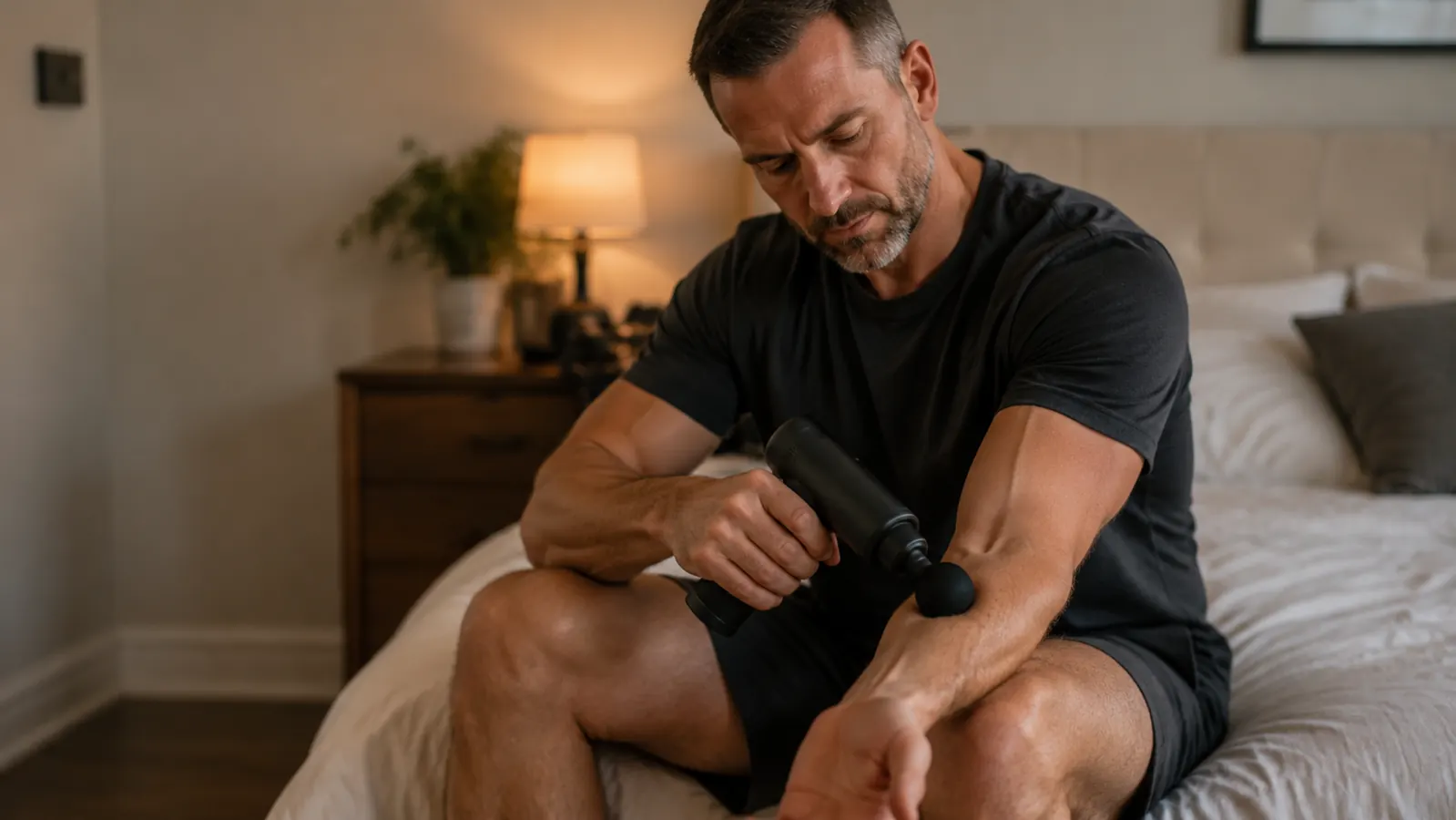
My brother-in-law Dave asked me about my Lifepro massage gun over the Fourth of July and I gave him the sales-pitch version. Quiet enough, powerful enough, holding up fine. Then he actually bought one, texted me two weeks later asking why his forearm had a bruise on it, and I realized I'd left out most of the stuff that actually matters when you're new to one of these things.
So this is the version I should have given him. I'm Rodney, 44, I've had this Lifepro gun since January, and I've watched three other people in my orbit buy one after seeing mine. This review is the stuff nobody puts in the marketing copy: the attachments that sit untouched in the case, how easy it is to overdo the pressure when you're new to percussion therapy, what the noise actually sounds like at full speed in a quiet house, whether a $60 gun is genuinely good enough or just good enough for now, and the durability question that six months of ownership genuinely can't answer yet, no matter what any review tells you.
The Quick Verdict
Solid value and genuinely useful for recovery, but only if you learn proper technique and accept that most of the attachment heads are filler.
Amazon Check Today's Price →Before you buy one, know the two mistakes almost everyone makes with these things.
It's not the gun's fault when people bruise themselves or feel underwhelmed. It's technique. Once you know what to avoid, this is one of the better values in recovery gear right now.
Amazon Check Today's Price on Amazon →How I Tested It Honestly
I didn't just use this on myself. I let my wife try it, I handed it to Dave for two weeks before he bought his own, and I brought it to a Sunday pickup basketball run so a couple of guys on my team could mess with it after games. Watching other people, especially people who'd never used a percussion gun before, use it wrong taught me more about this product than six months of using it correctly myself ever did.
The mistakes were consistent. People crank it to the highest speed immediately because that feels like it should work best. People hold it in one spot and lean their full body weight into it instead of gliding it slowly across the muscle. People go straight for the pointed bullet head on a big muscle group because it looks aggressive and effective. Every one of those is a way to either bruise yourself or waste the gun's actual value, and none of it is obvious from the box or the instruction card that comes tucked inside it.
I also paid attention to what people said after using it for the first time versus what they said a week later. The first reaction is almost always about the buzzing sensation, something like 'whoa, that's intense.' The week-later reaction is the one that actually matters, and it split into two camps. People who'd figured out a light touch on the right settings said their soreness backed off noticeably. People who kept muscling through it at max pressure said it felt like 'just a vibrating stick,' which tells you the gap here is almost entirely technique, not hardware.
The Attachment Heads Nobody Actually Uses
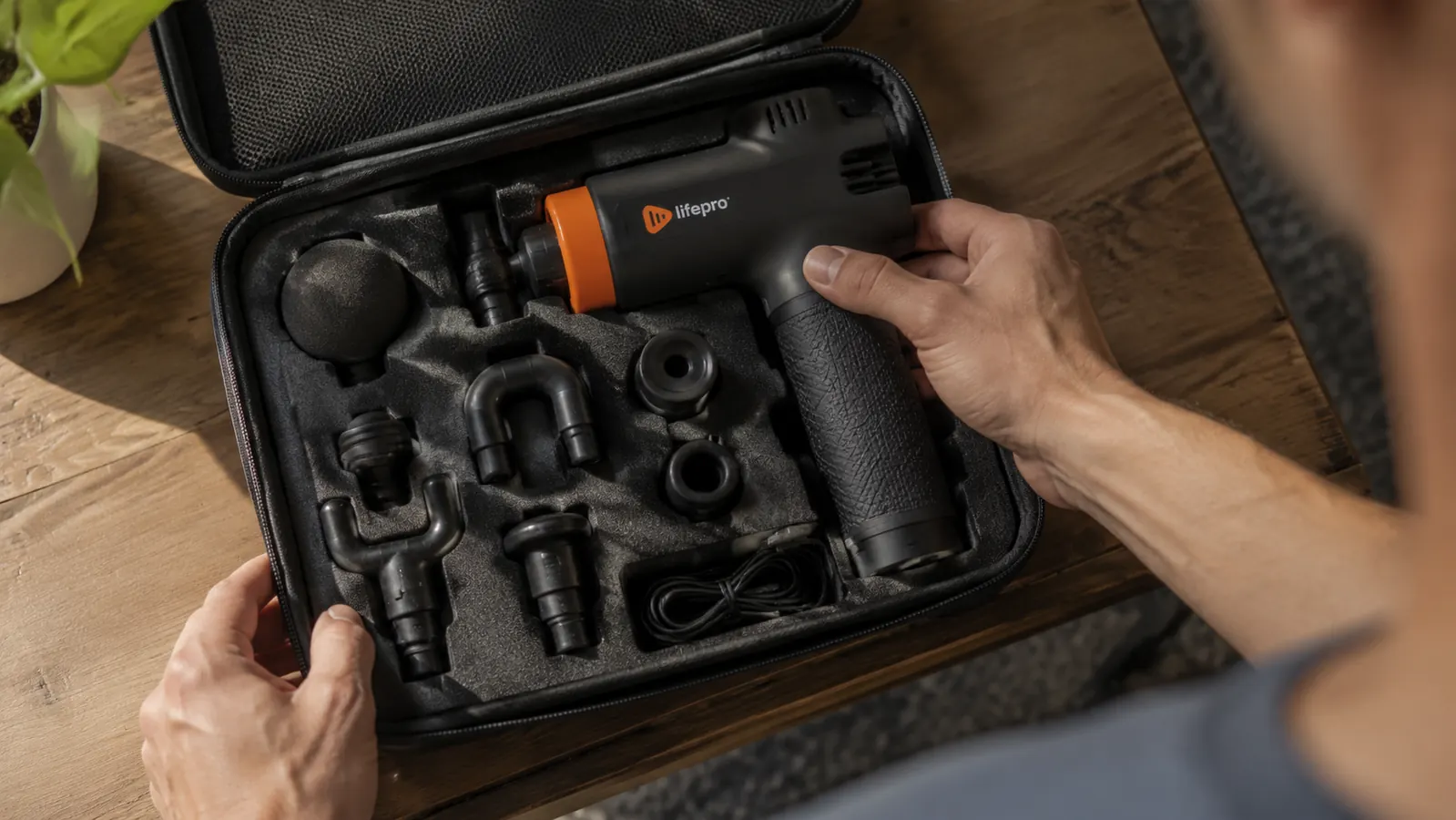
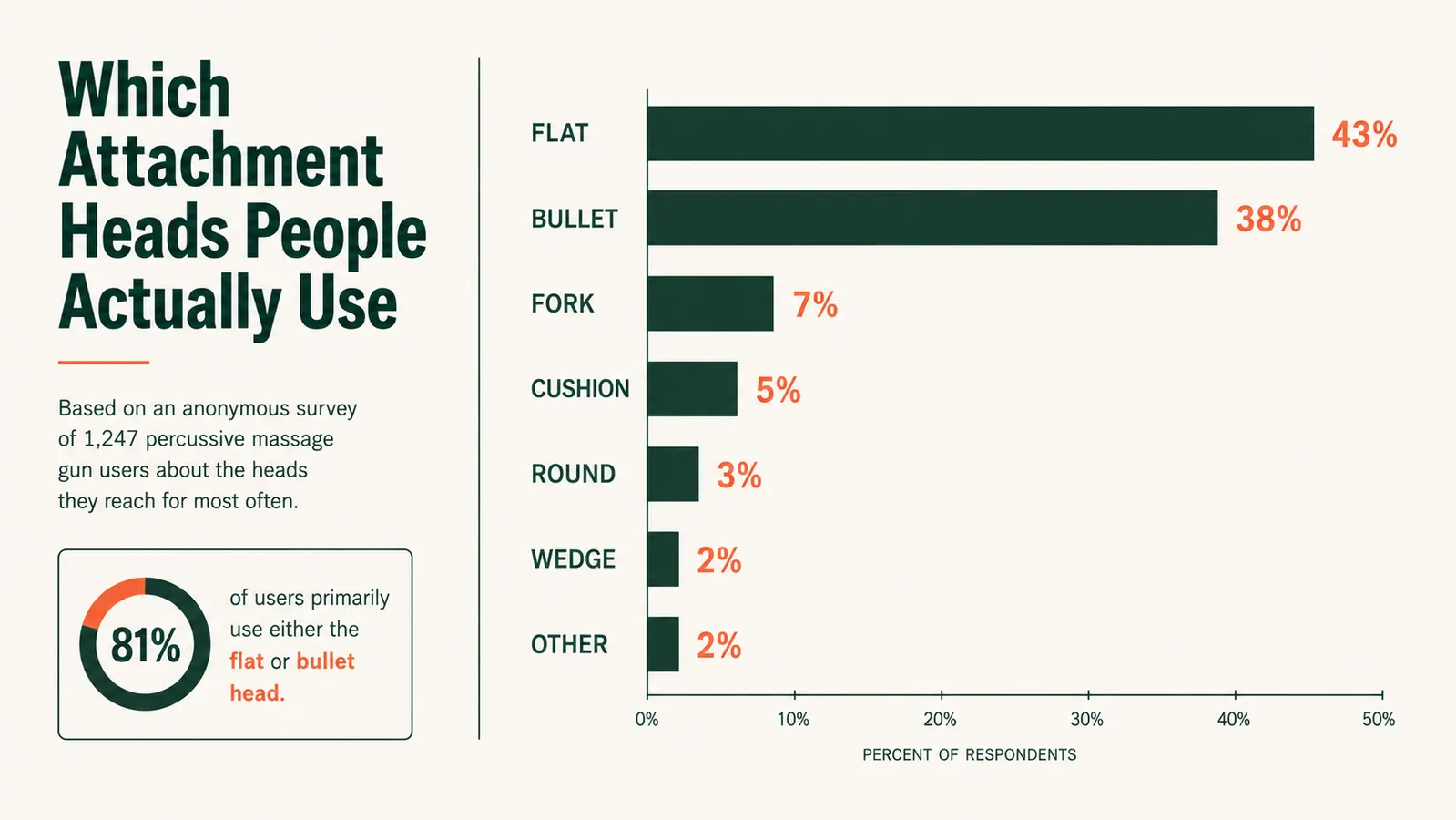
The Lifepro ships with 8 heads and I want to be straight with you: I use two of them regularly. The flat head does probably 70 percent of my sessions because it works on almost any muscle group without needing to think about it. The fork head, the one shaped like two prongs, is my second most used because it's built for the spine and neck area, which is where Dave's wife has the most tension after a day of hunching over a laptop.
The other six sit in the case. The cushion head I've used maybe four times total, mostly on my shins after a long run when the flat head felt like too much. The bullet head, the pointed one people reach for first because it looks like it means business, I've genuinely used it fewer than ten times in six months, and honestly most of those were mistakes. It's meant for small, specific trigger points like the arch of your foot or a tight spot between shoulder blades, not for hammering your quad.
If you're buying this expecting to rotate through all 8 heads like a toolkit, you probably won't. Realistically you'll land on one or two favorites within the first week and the rest becomes case filler. That's not a knock on Lifepro specifically, every brand overloads the box with attachments because it looks good on the packaging, but it's worth knowing going in so you don't feel like you're missing something by ignoring six of the eight. If anything, having fewer heads and a slightly lower price would be a more honest product, but that's not how this category gets marketed anywhere, budget or premium.
One thing worth mentioning: the case itself is decent, a zippered hard-shell with foam cutouts for each head, and it travels well. I've thrown it in a gym bag and a suitcase without worrying about the heads rattling loose or the gun getting scratched up. That's a small thing, but for a product you're going to be tossing around constantly, it matters more than it sounds like it should.
Yes, You Can Bruise Yourself With This
This is the part that almost nobody mentions in reviews, and it's the reason Dave texted me a photo of a purple mark on his inner forearm. Percussion guns are not a press-as-hard-as-you-can tool. There's a real learning curve to dwell time, which is how long you hold the head in one spot, and to how much pressure you actually need to feel a benefit without doing damage.
The rule I gave Dave, and the one I wish someone had given me back in January, is this: keep the gun moving. Two to three seconds max in any one spot, then glide to the next area. Let the weight of the gun do the work instead of pushing it into your skin. And skip anywhere bony, like your shins, spine, or the outside of your ankle, entirely. I learned that one the hard way on my own shin about a month in and had a bruise for a week.
Once you dial in the technique, the bruising risk basically disappears. But it's a real risk for someone brand new to this, especially if they're the type of person who thinks more pressure equals more results. It doesn't. It equals a bruise and a sore spot that takes longer to recover from than if you'd never used the gun at all. If you're on blood thinners or bruise easily for any reason, this is worth mentioning to a doctor before you start using percussion therapy regularly, not because the gun itself is dangerous, but because the margin for error is smaller for you than it is for someone like me.
What I Liked
- Genuinely strong value at its price point
- Flat and fork heads cover almost every real use case
- Battery lasts multiple sessions between charges
- Compact enough to travel with
- Sturdy carrying case that actually protects the heads
Where It Falls Short
- 6 of the 8 attachment heads go mostly unused
- Easy to overdo pressure if you're new to percussion therapy
- Top speed setting is genuinely loud in a quiet room
- Plastic housing feels a step below premium brands
- No long-term data on motor life past year one
It's not that the gun is loud, it's that it's loud enough to end a phone call. That's the honest version nobody puts in the bullet points.
The Noise Reality at Top Speed
I want to separate two things here because I think a lot of reviews blur them together: how loud it is on the lower speeds versus how loud it gets at the top. On speeds 1 through 3, it's genuinely quiet enough to use while watching TV or on a video call without anyone commenting. I've done both plenty of times. Nobody's noticed, including on a work call where I had it on my forearm the whole meeting.
Speed 5 is a different story. It's a mechanical buzzing that carries through a wall. My wife has asked me to stop using it on the highest setting after 9pm because she can hear it through our bedroom door from the living room. If you live in an apartment, or you're planning on using this while your kids are asleep down the hall, know that the max speed is not a whisper. It's fine, it's not obnoxious, and it's nowhere near as loud as the cheapest off-brand guns I've heard at the gym, but it's audible enough that it will interrupt a quiet room. If noise at full power is a dealbreaker for your living situation, plan on living at speeds 2 through 4 most of the time, which honestly covers the vast majority of real use cases anyway.
Is a Budget Gun 'Good Enough' or Are You Wasting Money?
This is the question I actually get asked most, usually by guys at the gym who see me using it between sets. Is a $60 gun good enough, or should you save up for something like a Theragun that runs several times the price?
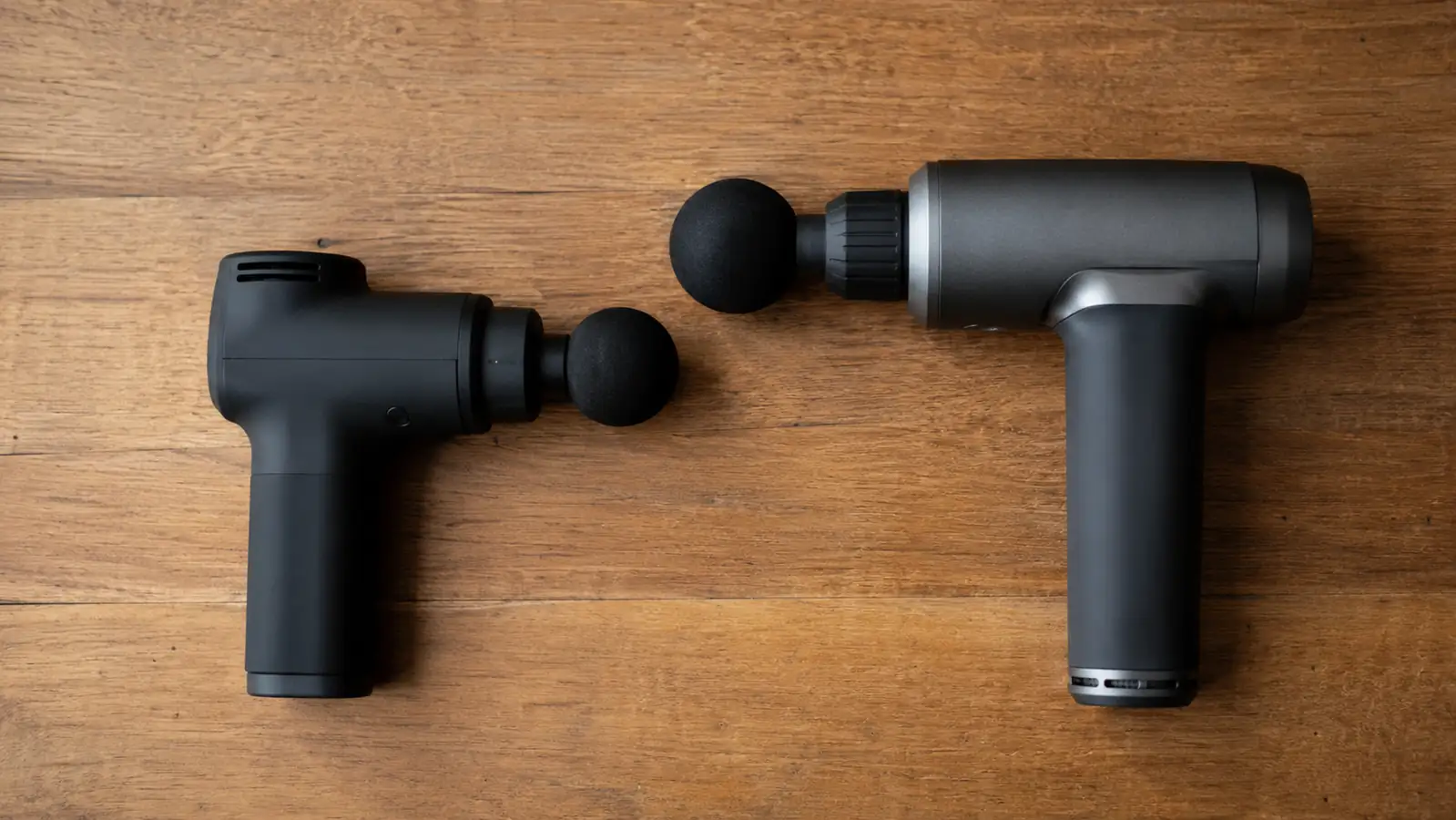
My honest answer, after using both a friend's premium gun and my own side by side, is that for the average person doing recovery work two to five times a week, the budget gun does the job. The core mechanism, percussive pressure increasing blood flow and loosening tight fascia, works basically the same whether you paid $60 or $400. Where the premium guns pull ahead is in stall force under heavy pressure, app connectivity for guided routines, and build materials that feel more refined in your hand, along with a quieter motor at comparable speeds.
If you're a serious athlete doing multiple recovery sessions a day, training for something specific like a marathon or a powerlifting meet, the stall force difference might actually matter to you. Leaning hard into a tight glute or hamstring is where cheaper motors start to bog down, and the premium guns just push through it. For everyone else, and that's most of us, you're paying for polish and brand name more than a meaningfully different recovery outcome. I don't regret not spending more, and neither does Dave, who asked me point blank before he bought his whether he'd regret going cheap. Six weeks in, he hasn't.
The Durability Question Nobody Can Answer Yet
Here's where I have to be honest about the limits of my own experience. I've had mine six months and it's held up fine. But six months isn't long enough to answer the question that actually matters to most buyers, which is whether this thing is still running in year two or three. Motors in percussion guns are the most common failure point across every brand, cheap or expensive, and that failure usually shows up well past the return window, somewhere between month 10 and month 20 based on what I've seen in owner threads and reviews from other buyers who've had theirs longer than I have.
I can't promise you this thing survives three years of daily use, because I don't have three years on mine yet. What I can tell you is that at six months in, there's no rattling, no loss of power, and the housing shows zero cracks despite two drops on concrete. That's a good sign, not a guarantee. If long-term durability past year one is your main concern, that's a legitimate reason to consider a brand with a longer warranty period, even if the day-to-day performance is comparable right now. I'd rather tell you the honest limits of what six months of ownership can prove than pretend I've stress-tested this thing for a lifetime, because I haven't, and nobody reviewing this at the six-month mark has either.
Who This Is For
This is for the person who wants real recovery benefits without spending premium-brand money, and who's willing to spend the first week learning proper technique instead of assuming max pressure and max speed is the goal. If you lift, run, or just carry tension in your shoulders and back from a desk job, this covers that ground well using mostly two attachment heads, not all eight. It's also a solid fit if you're buying your first massage gun and don't yet know whether you'll use it enough to justify a premium price tag down the road.
Who Should Skip It
Skip this if you live somewhere with thin walls and plan on using it late at night regularly, since the top speed will carry. Skip it if you're chasing the full 8-attachment experience, because realistically you'll use two. Skip it if long-term durability past the one-year mark is a dealbreaker for you right now, since I genuinely don't have the data yet to promise that, and neither does anyone else with six months on the clock. And if you're a competitive athlete who needs serious stall force under heavy pressure daily, the premium options are probably worth the extra cost for your specific use case, even though most people reading this aren't in that category.
Know what you're getting into and this is a smart buy.
Learn the pressure and dwell time basics, stick to the flat and fork heads, and this gun does what it needs to do without the premium price tag. Check today's price before it changes.
Amazon Check Today's Price on Amazon →