
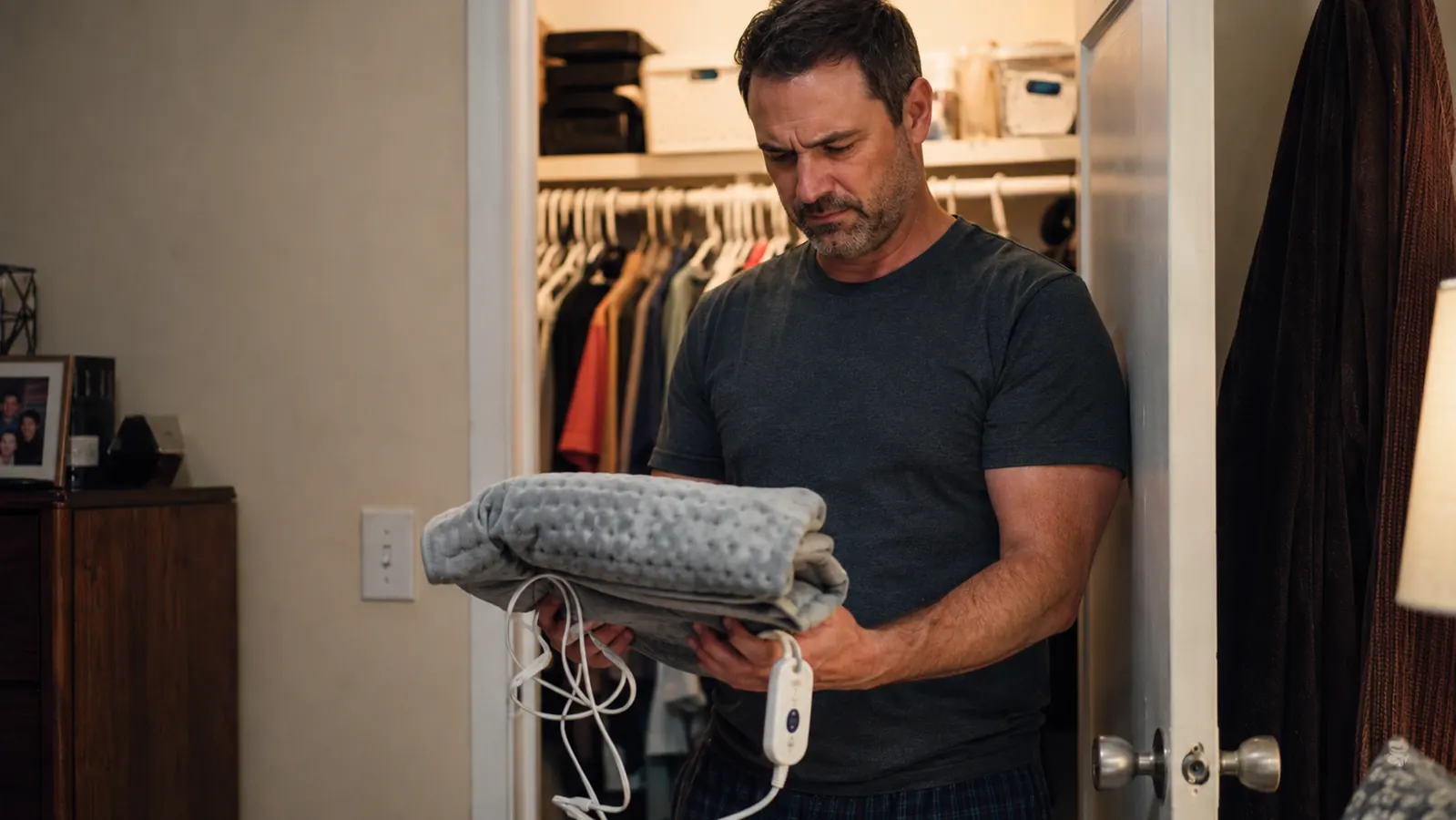
I almost returned my UTK far infrared heating pad in the first two weeks. Not because it didn't heat up, it did, plenty. It was the stuff nobody mentions in the five-star reviews: a 6-pound pad that needs its own shelf, a corded controller that ends up jammed under my hip every single time I lie on my stomach, and an auto shut-off that cut my session short more nights than I want to admit before I figured out how to work around it. I'm Rodney, I'm 44, I lift and manage a warehouse crew, and I've had this thing long enough now to tell you the parts that don't make it into the glowing reviews.
This isn't going to be the review that tells you jade and tourmaline stones are some kind of miracle mineral, because I don't buy that framing and I don't think you should either. It's also not going to tell you this pad is a waste of $144, because it isn't. Both of those things are true at once, and that's exactly the nuance I think gets lost when every review in this category reads like it was written by the brand itself.
The Quick Verdict
Real, deep heat that beats a drugstore pad for chronic tightness, but it's heavier, bulkier, and more annoying to live with day to day than any review prepared me for.
Amazon Check Today's Price →Before you spend $144 on jade and tourmaline, here's what actually matters.
This isn't a hype review. It's the cord placement, the weight, and the shut-off timer stuff that determines whether you'll actually use this thing in six months. Check today's price and read the honest breakdown below.
Amazon Check Today's Price on Amazon →How I've Actually Used It
I didn't jump straight to a $144 heating pad. I'd already burned through two basic electric pads from the drugstore, the kind with a flat foam controller and three heat settings, and a microwaveable rice bag that lives in my kitchen drawer to this day. None of it held heat long enough to matter once I was actually lying still for half an hour, so I went looking for something that would, and the UTK kept coming up in lifting forums as the one that lasts. That's the honest starting point, because I think a lot of buyers skip the cheap stuff entirely and go straight for the expensive infrared pad, then get annoyed when it doesn't feel ten times better than a $20 option. It's better, but not in a way that ten times the price implies.
Since then I've used it on and off for a few months, mostly evenings after a hard training day or a long stretch at my desk. I'm not going to claim I use it every single night, because I don't, and I think the every-night-without-fail claims in most reviews set an unrealistic bar. My honest average is somewhere around four or five nights a week when I'm training normally, dropping to maybe two when work gets chaotic or I'm traveling for the warehouse job. That's a real pattern, not the idealized one, and it's the number that actually matters if you're trying to decide whether this fits your life.
The Jade and Tourmaline Marketing, Minus the Hype
I want to be straight about this because it's the thing that made me hesitate before buying. The product listing leans hard into the stones, jade this, tourmaline that, like they're some ancient healing mineral doing something a wire element can't. They're not. Jade and tourmaline are just dense materials that hold heat well and radiate it evenly once warmed by the pad's internal heating elements. That's thermal mass, not magic, and it's the same basic principle as a hot stone at a spa. I'd have appreciated a listing that said that plainly instead of leaning into vague wellness language, because the actual mechanism is legitimate and doesn't need the dressing up.
Where the stones do earn their keep is heat retention and evenness. A bare-wire pad gets hot fast and cools fast the second it's off your skin. This one stays warm for a couple minutes after I unplug it, and I haven't found a cold spot anywhere across the pad after months of use. So the stone claim isn't nonsense, it's just oversold. If a listing tells you jade heals inflammation on some cellular level, ignore that part. If it tells you the stones hold and distribute heat more evenly than a standard element, that part is true and it's the part that actually matters for your back.
The Weight and Bulk Nobody Warns You About
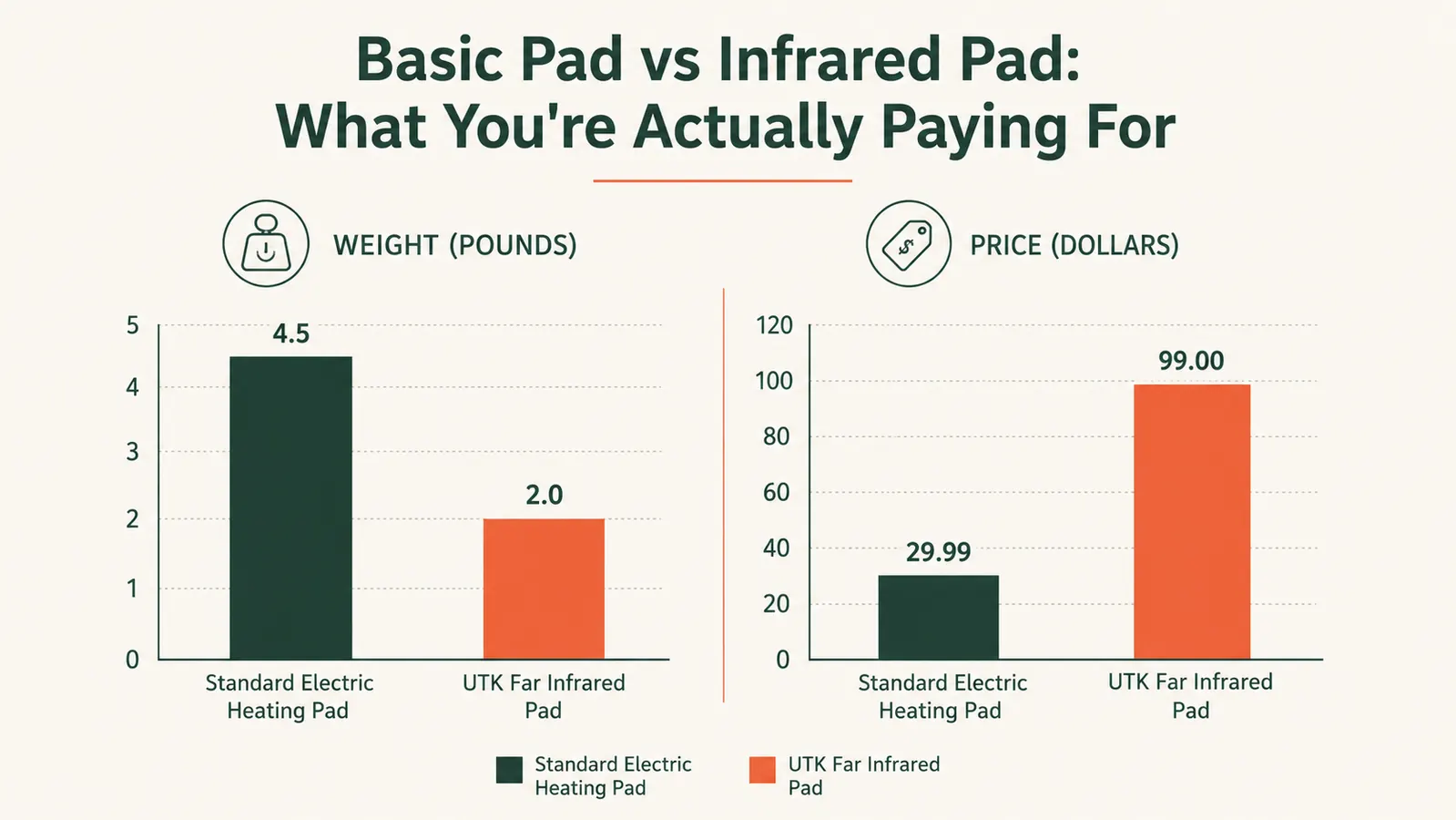
Here's what genuinely surprised me and the reason I almost sent it back. This pad is heavy, close to 6 pounds for the standard back-and-lower-body size, which is a lot more than the product photos communicate. A basic drugstore pad weighs next to nothing and you can leave it draped over a chair without thinking about it. This one, if you toss it somewhere without planning, ends up as a lump on the couch that everyone in the house notices and nobody wants to move.
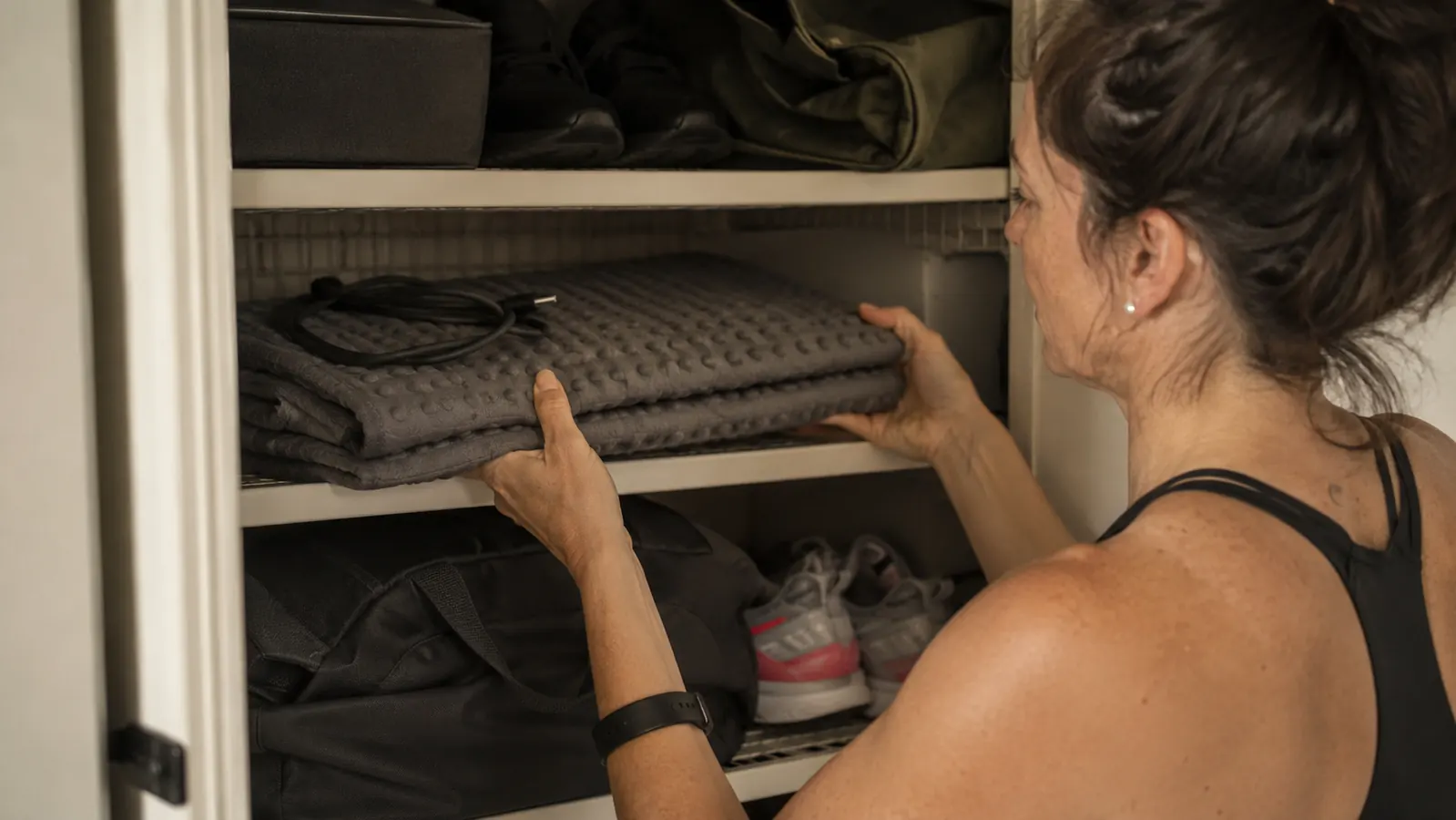
It took me about three weeks to settle on a permanent spot for it, folded on a shelf near the couch, because carrying it room to room daily got old fast. If you've got a spare drawer or a dedicated shelf, this is a total non-issue. But if you're in a smaller space where every surface is already claimed, factor in that this isn't something you're tucking behind a pillow. It stays wherever you put it because moving it is its own small chore.
The weight is also part of why it works, to be fair. That thermal mass is exactly what makes the heat penetrate deeper and last longer, so I'm not saying it's a design flaw. I'm saying nobody mentions it before you buy, and then you're surprised when a heating pad feels like it belongs in a gym bag rather than a nightstand drawer.
The Cord and Controller Problem, Every Single Night
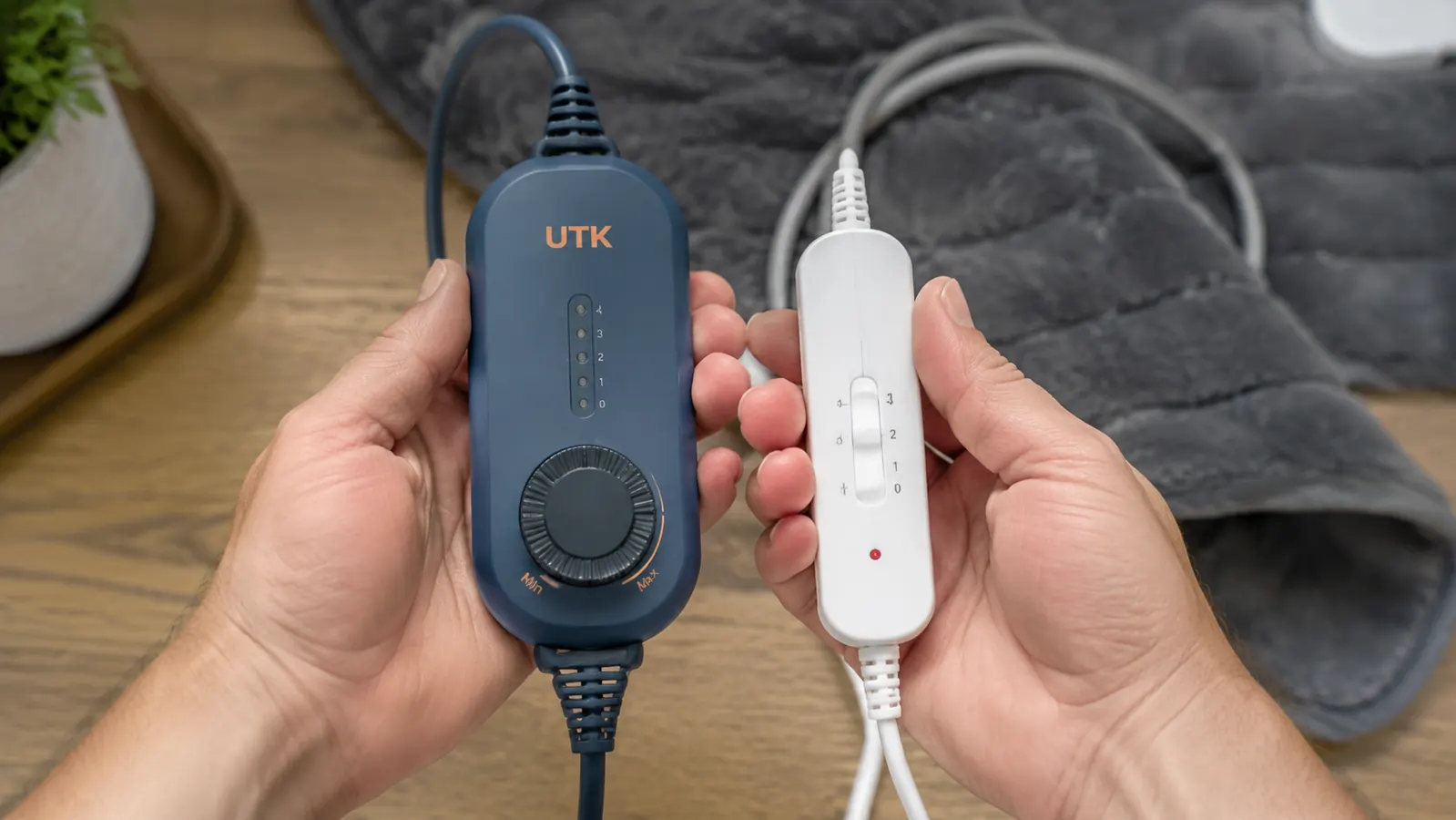
This is my single biggest complaint and it comes up literally every time I use the thing. The controller sits at the end of a fairly short, thick cord, and when I'm lying face down with the pad across my lower back, that controller ends up wedged somewhere near my hip or ribs. If I want to bump the temperature mid-session, I'm fumbling behind me half-blind to find a small rotary dial I can't see. A basic drugstore pad's controller is thin, flat, and light enough to just tuck under a pillow. This one is a chunky plastic box with a digital display, and it doesn't tuck anywhere comfortably.
I eventually adapted by setting my temperature before I lie down and just leaving it alone for the session instead of trying to adjust on the fly, which mostly solves the problem but isn't how I'd have designed it. If you're someone who likes fiddling with settings mid-session the way you'd adjust a car seat, this will annoy you. If you're the set-it-and-forget-it type like I eventually became, it's a minor issue you work around in the first week and then stop noticing.
The Auto Shut-Off, and Why It Frustrated Me at First
The default auto shut-off is 20 minutes, and for the first two weeks I kept getting caught off guard by it. I'd settle in, start to feel my back actually loosen around minute 15, and then the pad would click off right as it was working. I assumed something was broken the first time it happened. It wasn't, it's just a conservative default safety setting, and once I realized I could manually extend the timer up to 45 minutes to an hour depending on the pad's specific settings, the frustration mostly went away.
But here's the honest part most reviews skip: you have to remember to change that setting every time, or at least until it becomes muscle memory, and on nights I forgot, I got the exact same annoying 20-minute cutoff I hated in week one. I also wish the maximum extended setting went longer than an hour, because on my worst nights I want it running while I fall asleep, and the manufacturer's own guidance is clear that longer sessions than that aren't really the intended use anyway. So the safety feature is reasonable, but it does mean this isn't a pad you mindlessly flip on and forget about. It requires a small amount of active management every single time, which gets old faster than the marketing suggests.
Is Infrared Actually Worth It Over a Cheap Heating Pad
This is the question I get asked most when people see me using it, and I want to answer it honestly instead of just defending my own purchase. For casual, occasional soreness, a $15 drugstore pad is genuinely fine. It heats fast, it's light, it's easy to store, and for a sore neck after a bad night's sleep, it does the job. I still keep one in a drawer for exactly that.
Where infrared actually earns the price gap is chronic, deep tightness you're dealing with several nights a week over months, not once in a while. The heat genuinely goes deeper into the muscle rather than sitting on the skin, and it holds that heat longer after you turn it off. If your soreness is occasional, you're paying nearly ten times the price for a benefit you won't use often enough to justify. If it's a nightly or near-nightly routine, the math starts making more sense, because you're getting a materially different result, not just a fancier version of the same thing.
I'll also say plainly that I don't think the difference is as dramatic as some reviews claim. It's not night and day. It's meaningfully better for deep, chronic tightness, and basically the same as a cheap pad for a quick five-minute warm-up before you stretch. Know which one you actually need before you spend the extra money.
Who's Actually Wasting Their Money on This
I think a chunk of buyers see this in a lifting forum, assume it'll fix a real injury, and end up disappointed. It won't. If you've got an acute strain or anything a doctor should actually evaluate, heat isn't automatically the right move, infrared or otherwise, and this pad isn't a substitute for getting checked out. If your soreness is occasional and mild, save your money, a basic pad or a rice bag covers that fine and you won't notice much of a gap. And if storage space is tight in your home and a 6-pound pad with a bulky controller sounds like a problem before you even read the rest of this review, trust that instinct, because it will be.
Where it earns its keep is with people who have a real, recurring tightness problem, the kind that shows up several nights a week, and who have a shelf or drawer where a heavier item won't be a daily hassle. That's a narrower group than the five-star reviews suggest, but if you're in it, the value case holds up.
What I Liked
- Heat genuinely penetrates deeper than a basic electric pad for chronic tightness
- Even heat distribution, no cold spots found after months of regular use
- Holds warmth for a couple minutes after shutoff thanks to the stone thermal mass
- Adjustable timer once you learn to extend it past the default 20 minutes
- Held up structurally with no dead spots after extended use
Where It Falls Short
- Heavy at roughly 6 pounds, needs a dedicated storage spot most cheap pads don't require
- Corded controller is bulky and gets in the way lying face down, hard to adjust mid-session
- Default 20-minute auto shut-off cuts sessions short until you remember to extend it manually
- Jade and tourmaline marketing oversells what's actually just heat-retentive minerals
- Not meaningfully better than a cheap pad for quick, occasional soreness
It's not night and day better than a cheap pad. It's meaningfully better for deep, chronic tightness, and basically the same thing for a quick five-minute warm-up.
Who This Is For
People dealing with real, recurring tightness, the kind that shows up most nights rather than once a month, and who train hard enough or sit long enough that a shallow, fast-cooling pad isn't cutting it anymore. It's also a good fit if you've got a reasonable spot to store something heavier and you're the type who'll actually build a nightly routine around it rather than letting it sit in a drawer after week two.
Who Should Skip It
If your soreness is occasional, if closet or shelf space is already tight, or if the idea of fumbling for a controller behind your back every night sounds more annoying than mildly inconvenient, skip it and save the difference for a basic pad. And if you're hoping jade and tourmaline stones are doing something more than holding and radiating heat evenly, they're not, so don't pay a premium chasing a claim that isn't really there. Buy this for the heat retention and depth, not the marketing around the stones.
Still worth it, once you know what you're actually signing up for.
No hype here, just the real tradeoffs on weight, cord placement, and the shut-off timer. If your tightness is a nightly problem, this earns its price. Check today's price on Amazon before deciding.
Amazon Check Today's Price on Amazon →