

I'm 43, I lift four days a week, and I've been running on and off for two decades. My right knee started sending me a daily reminder somewhere around 40, a stiff, creaky feeling first thing in the morning that took ten minutes to shake loose. A training partner who's a physical therapist suggested collagen peptides, not as a miracle fix, but as a way to give my connective tissue more raw material to work with. I picked up a tub of Sports Research Collagen Peptides in January, and it's still on my counter.
What I didn't expect was how much the timing, dose, and consistency mattered. I wasted the first month doing it wrong, tossing a random scoop into whatever I was drinking, some days skipping it entirely. Once I built an actual system around it, that's when I started noticing a difference. This is that system, broken into five steps, the same one I still use every day almost seven months later.
None of this requires you to overhaul your diet or add a supplement cabinet full of pills. It's one powder, added in the right amount, at the right time, next to a couple of things that help your body actually use it. That's the whole system. What trips most people up isn't the supplement itself, it's treating it like an afterthought instead of a habit with a few specific rules attached.
Skip the trial and error I went through the first month
Everything below assumes you're using an unflavored, hydrolyzed collagen that mixes clean and doesn't fight with your coffee or shake. Sports Research Collagen Peptides is the one I've used every day since January, it's what's in the photos, and it's the reason this routine works without adding friction to my morning.
Amazon Check Today's Price on Amazon →Step 1: Get Your Dose Right Before Worrying About Anything Else
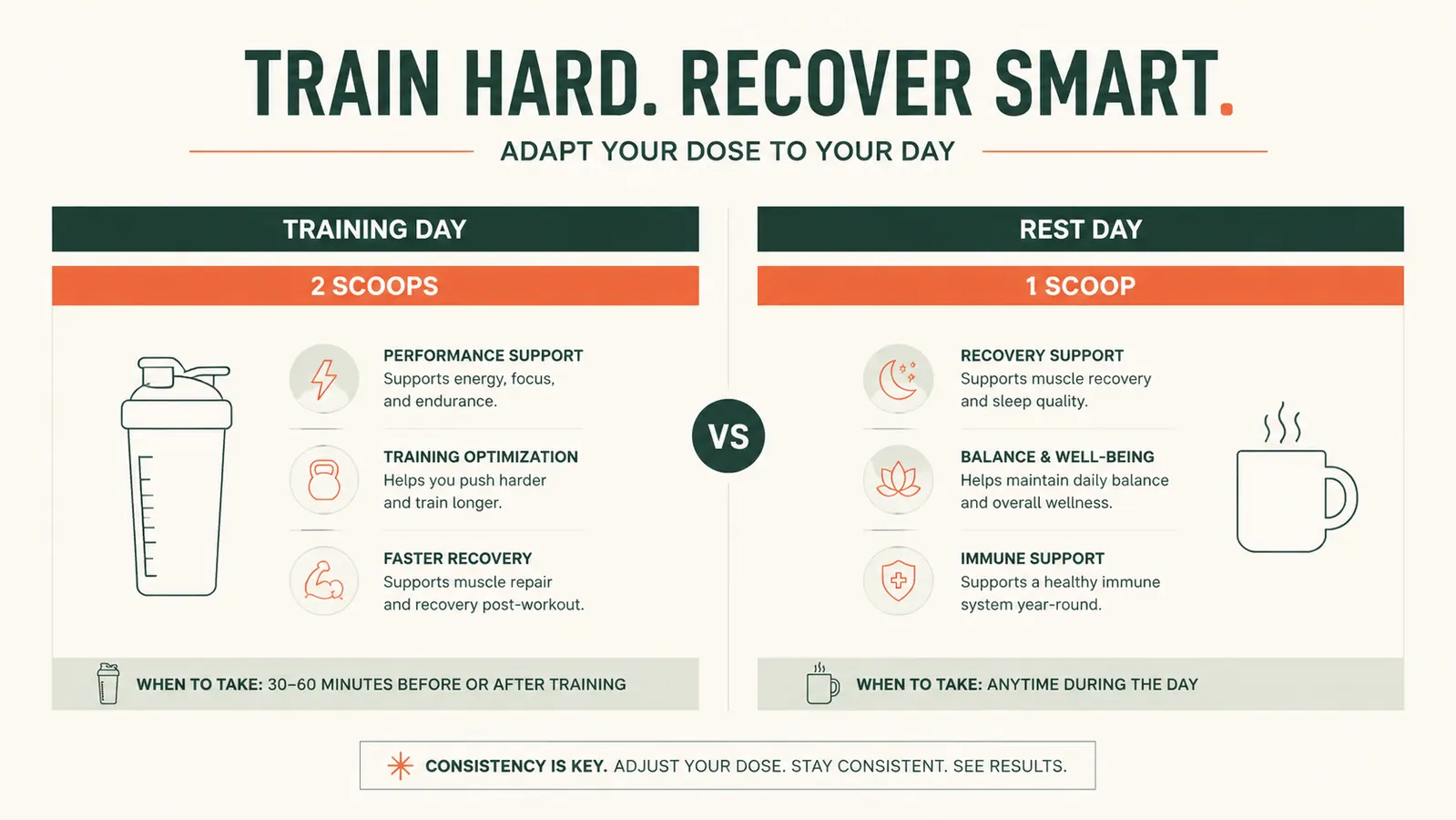
Most of the research behind collagen and joint or connective tissue support lands somewhere between 10 and 20 grams a day, which for this product works out to one to two scoops. I settled on two scoops, about 20 grams, on days I train, and one scoop on full rest days. That's not a rule handed down from a lab, it's what I've landed on after watching how my knee responded over several months, and it lines up with what I've read about dosing in most of the studies people cite for this stuff.
The mistake I made early on was being inconsistent with the amount, a heaping scoop one day, a light one the next, sometimes skipping the second scoop on heavy training days when I actually needed it most. Pick a number and stick with it. I now keep the scoop that comes in the tub as my only measuring tool, no eyeballing, because eyeballing is how you end up under-dosing without realizing it.
If you're over 200 pounds or training hard five or six days a week, you might land closer to the higher end of that range, 20 to 25 grams daily. If you're smaller or training more moderately, 10 grams might be plenty. Start at two scoops for two to three weeks, see how your body responds, and adjust from there instead of guessing at the start.
I also don't split my dose into three or four small servings through the day the way I've seen some people suggest online. There's no strong evidence I've come across that spreading it out matters more than just getting the total amount in consistently. Two servings, morning and post-workout, is enough moving parts for me to actually stick with long term. More steps in a routine is usually where habits go to die.
Step 2: Pair It With Vitamin C, Not Just Coffee
This was the single biggest change I made after the first month, and it came from actually reading past the marketing copy instead of just trusting the tub. Vitamin C is a required cofactor for collagen synthesis, meaning your body needs it to actually build new collagen from the amino acids you're feeding it. Take collagen peptides with zero vitamin C around and a chunk of that supplement is arguably going to waste.
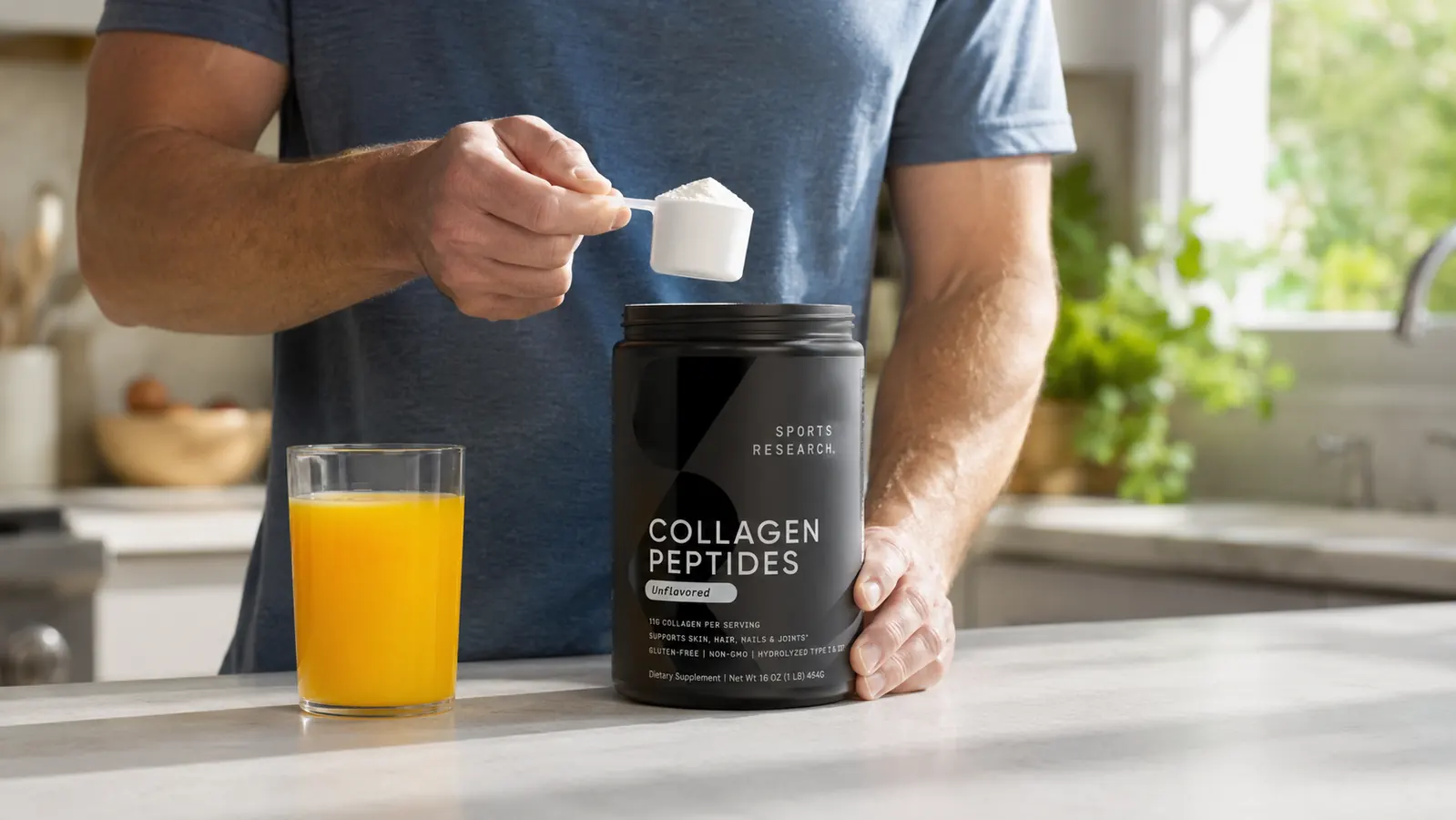
Coffee has essentially none. So on mornings when my only delivery method was black coffee, I was likely leaving benefit on the table without realizing it. Now I either have my scoop with a glass of orange juice instead of coffee two or three mornings a week, or I'll eat a piece of fruit, usually an orange or some strawberries, within the same hour I take my dose. I'm not measuring milligrams here, I'm just making sure vitamin C shows up somewhere near the collagen instead of nowhere at all.
If you're someone who takes a multivitamin already, this step might be a non-issue for you. I wasn't, and once I started being deliberate about pairing the two, it felt like the missing piece I'd overlooked for the first several weeks. It's a small adjustment, but it's the one part of this whole routine I'd tell someone not to skip.
You don't need a supplement to solve this either. A handful of strawberries, half a bell pepper on a salad, or a small glass of orange juice covers more vitamin C than you'd think. I'd rather get it from actual food most days and save a vitamin C tablet for the mornings I'm rushing out the door with nothing but a coffee cup in hand.
Step 3: Mix It Somewhere It Actually Dissolves
This product dissolves cleanly in hot liquid, coffee especially, with just a few stirs and zero grit at the bottom of the mug. Cold liquid is a different story if you're just stirring with a spoon. I learned this the hard way the first week, stirring a scoop into a glass of cold water and ending up with small undissolved clumps floating on top no matter how long I stirred.
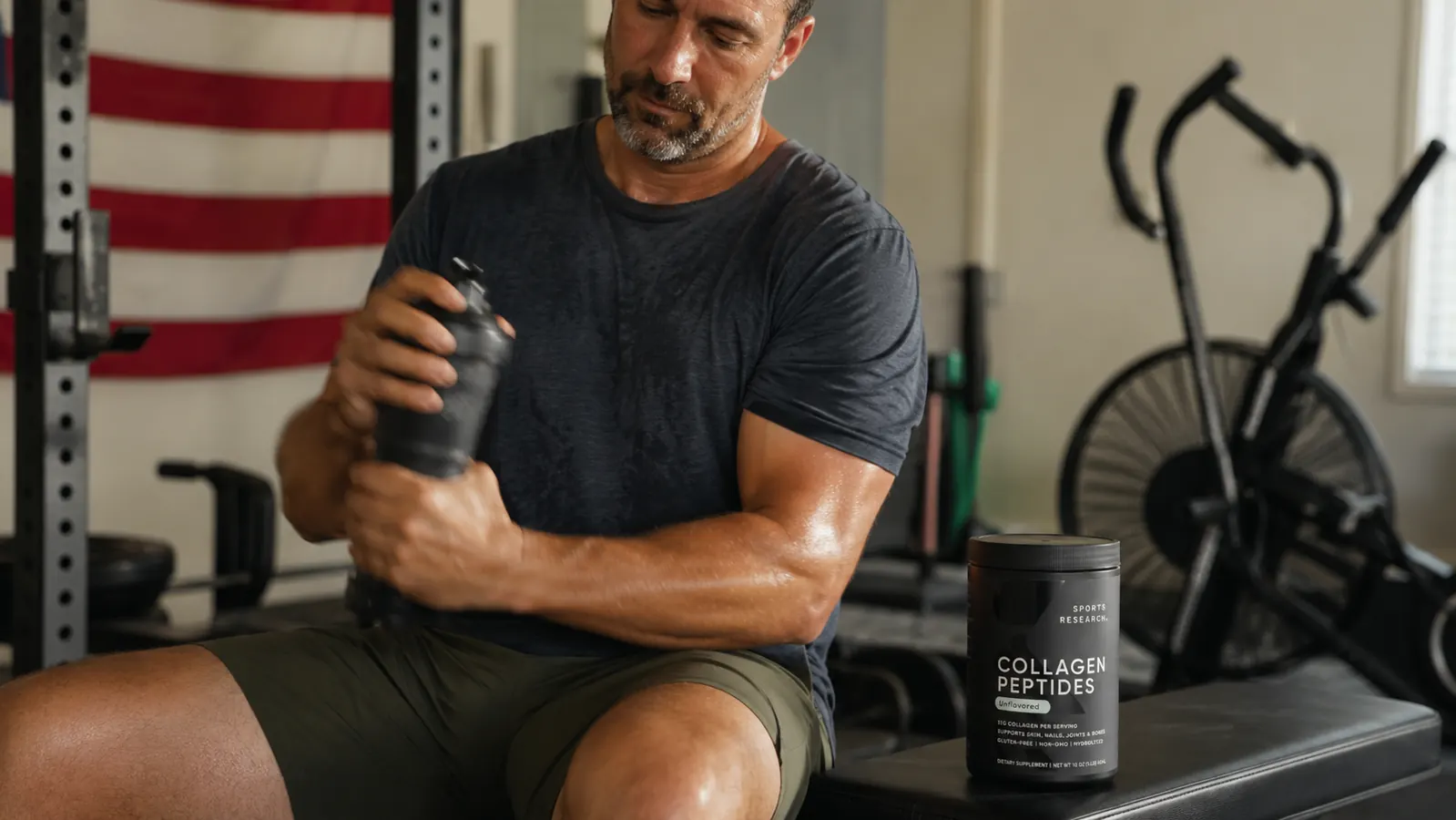
The fix is simple. For hot liquids, coffee or tea, a spoon and a few stirs is all you need. For cold liquids, orange juice, a protein shake, or plain water, use a shaker bottle instead of a glass and spoon. The agitation from shaking breaks it down completely in about ten seconds. I keep a cheap shaker bottle by the tub specifically for this, and it's eliminated the clumping issue entirely.
On training days I usually mix my second scoop into my post-workout shake, right alongside my whey protein, in the same shaker bottle I'm already using. Two scoops of unflavored collagen doesn't change the taste or texture of a whey shake at all in my experience, so there's no reason to keep them separate if you're already shaking one anyway.
Oatmeal is another delivery method worth trying if coffee and shakes aren't your thing. I've stirred a scoop into a bowl of oatmeal on a slow Sunday morning and couldn't tell it was in there. It won't dissolve visibly the way it does in liquid, but the texture doesn't change enough to notice once it's mixed through, and it's an easy option on the mornings I'm not making coffee at all.
Step 4: Stack It Around Training, Not Randomly Through the Day
My routine now has two fixed windows. First scoop in the morning, before or with breakfast, mixed into coffee. Second scoop, on training days only, in my post-workout shake within about 30 to 45 minutes of finishing my session. That second window matters more than I expected, since that's roughly when your body is already primed to use amino acids for repair, whether they're coming from whey or from collagen peptides.
On rest days I skip the second scoop entirely and just take the one morning dose. I don't take it right before a heavy lifting session on an empty stomach either, mostly because I'd rather my pre-workout digestion be focused on something with more immediate fuel value, a banana or oatmeal, not a protein-heavy powder. Collagen's job here is repair, not pre-workout energy, so I treat the timing accordingly.
If you train in the evening instead of the morning like I do, flip the windows. Morning dose stays the same either way, but move your second scoop to right after your evening session instead of trying to force it into a lunchtime slot that doesn't line up with anything. The point isn't a rigid clock time, it's tying the second dose to the actual recovery window after you train.
On the days I do both cardio and lifting, a long run in the morning followed by a lifting session in the evening, I've experimented with adding a small third dose after the second session. I don't do this every week, mostly on the heaviest training days of the month, and it's more of a gut call than something I can back up with hard data. Most weeks, two doses is plenty.
Step 5: Give It Six to Eight Weeks Before You Judge It
This is the step people skip, and it's the reason a lot of folks quit on collagen supplements after two weeks and call them useless. My knee felt exactly the same for the entire first month. Nothing. I kept going mostly because I'd already bought a second tub and didn't want to waste it. Somewhere around week seven or eight, I noticed I'd stopped doing my usual slow shuffle to the bathroom first thing in the morning.
Set a calendar reminder for six weeks out if you have to. Don't judge whether this is working for you based on the first ten or fourteen days, because that's simply not enough time for your body to build and lay down new collagen in connective tissue, based on everything I've read and everything I've personally felt. Track something specific, morning stiffness on a 1 to 10 scale, grip strength, how your knee feels on stairs, so you're not relying on vague impressions two months from now.
I use the notes app on my phone, one line every few days. Not a spreadsheet, just quick entries like knee felt normal today or stiff again after leg day. Looking back at six weeks of those notes was more convincing to me than any single day ever was, because the trend line mattered more than any one morning.
I also learned not to bail during a short stretch where I ran out and didn't reorder fast enough. Missing four or five days early on made me think it had stopped working, until I restocked and the stiffness settled back down within a week or so. That gap taught me more about whether it was actually doing something than any single good morning ever did, since it showed the effect fading and then coming back.
The routine that actually worked wasn't a different supplement, it was the same supplement used on a schedule instead of whenever I remembered.
What Else Helps
Collagen isn't doing this alone, and I'd be lying if I said otherwise. I still stretch after training, still prioritize sleep over almost everything else in my recovery stack, and still make sure I'm getting enough total protein through the day, not just the collagen. If your joint pain is coming from a form issue in your squat or a warm-up you're skipping, no amount of collagen fixes that root cause.
A few other things that stack well alongside this routine: a proper warm-up set before working weight, actual rest days instead of another light cardio session when your body's asking for a break, and staying consistent with total protein intake across the whole day, not just around your workout. Collagen handles the connective tissue piece. Everything else on that list handles the load you're putting on it in the first place.
If you've been dealing with joint stiffness for years and none of this is moving the needle after two full months of consistent use, that's worth a conversation with a doctor rather than another month of guessing. Collagen is a support tool, not a diagnosis, and it's not going to override a structural issue that needs actual medical attention.
Build the Same Routine Into Your Mornings
If you've been meaning to add collagen to your recovery stack but haven't figured out the timing or dose, this is the exact one I use every single day, unflavored, dissolves clean, and mixes into whatever you're already drinking.
Amazon Check Today's Price on Amazon →