
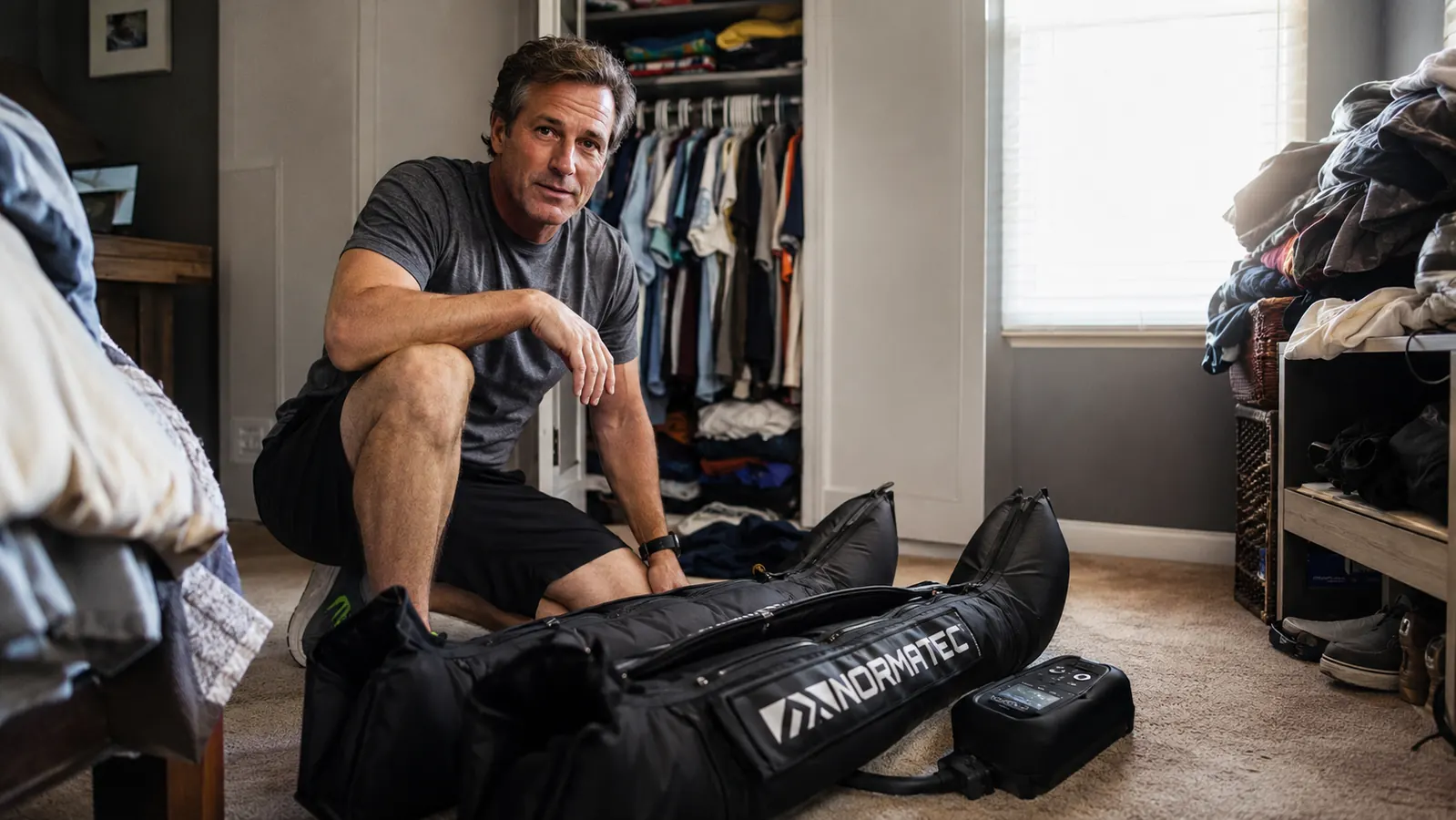
I almost returned my QUINEAR compression boots twice in the first month. Not because they didn't work, they did, but because I kept running into the stuff nobody mentions in the glowing five-star reviews: where do you actually put a bag this size in a one-bedroom apartment, how long does it really take to get the hang of the settings, and is $360 actually defensible next to a $14 pair of compression socks that do maybe 60 percent of the job. I'm Rodney, I'm 44, I run and lift most weeks, and I've now owned these long enough to answer those questions honestly instead of hyping the thing up like it changed my life overnight.
This isn't going to be a review that tells you it's flawless, because it isn't, and I don't think honest reviews get written enough in this category. Compression boots have become one of those products where every review reads like a script, five stars, life-changing, no complaints. I've got real complaints. I also still use mine regularly, and both of those things are true at once, which is exactly the kind of nuance I think buyers actually need before dropping this kind of money.
The Quick Verdict
A well-made, genuinely effective compression system that's worth it for frequent trainers, but the price, bulk, and setup curve are real friction points most reviews gloss over.
Amazon Check Today's Price →Before you spend $360, here's what I wish someone had told me first.
This isn't a hype review. It's the stuff that actually matters when you're deciding if this is worth the money for your training load. Check today's price and read the honest breakdown below.
Amazon Check Today's Price on Amazon →How I've Actually Used It
I didn't buy these on a whim. I'd already been through a $14 pair of graduated compression socks, a $60 foam calf sleeve set, and a brief, slightly embarrassing phase of just lying with my legs propped up the wall for 15 minutes after hard runs. None of it was doing enough, so I did the thing I usually try to avoid and spent real money on recovery gear. That's the honest starting point for this review, because I think a lot of people jump straight to the $360 option without trying the cheap stuff first, and then wonder why they're not blown away.
Since then I've used the boots on and off for a few months, mostly after long runs and heavy leg days, sometimes just on a random Tuesday when my legs feel flat for no clear reason. I'm not going to pretend I use it every single night like some reviews claim, because I don't, and I think expecting perfect daily use from any piece of recovery gear sets people up to feel guilty about their own equipment. Some weeks it's three sessions. Some weeks, when travel or work gets chaotic, it's zero.
I want to be upfront that I don't track this with a spreadsheet or a fitness app. My honest average is somewhere around two to three sessions a week when I'm training normally, dropping closer to one a week during lighter training blocks or when life just gets in the way. That's a real usage pattern, not the idealized every-night-without-fail version you see in most reviews, and I think it's the more useful number for anyone trying to decide if this fits their actual life instead of an imagined one.
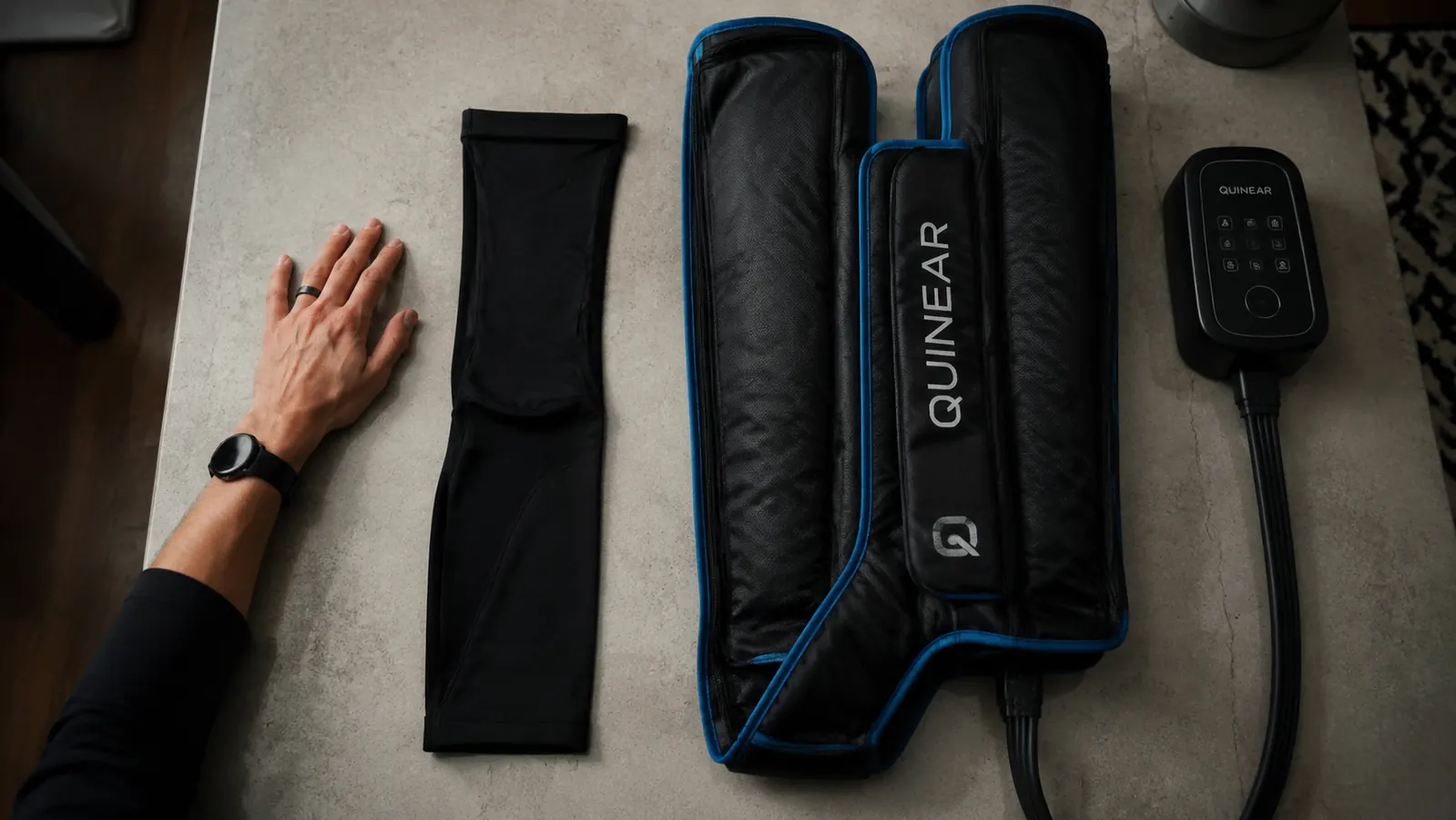
The Price Question Nobody Answers Honestly
Let's talk about the number first, because it's the thing everyone actually wants to know before they read another word. At its current price point, this is not an impulse buy. It costs roughly what a decent pair of running shoes and a month of gym membership would run you combined. I went back and forth on it for close to three weeks, comparing it against just booking recurring sessions at a local recovery studio that offers compression boot time by the visit.
Here's the math that actually convinced me, and it's worth doing yourself before you buy. The studio near me charges around $25 per 20-minute compression session. If I used the boots even twice a week at home, I'd break even against studio pricing in under four months, and every session after that is essentially free. If you're the kind of person who'd realistically use this once a month, that math falls apart fast and you're better off just paying per visit somewhere or sticking with a cheap sleeve. Be honest with yourself about your actual usage pattern before you spend this kind of money, not the usage pattern you imagine you'll have.
There's also a psychological trap worth naming here. Once you've spent this much on a recovery product, there's real pressure to convince yourself it was worth it regardless of how often you actually use it. I felt that pull myself in the first few weeks, forcing sessions I didn't really need just to feel like the purchase was justified. That's not a healthy way to evaluate whether something belongs in your routine, and I'd rather you go in clear-eyed about the cost than talk yourself into daily use you won't sustain.
The Storage Problem Nobody Mentions
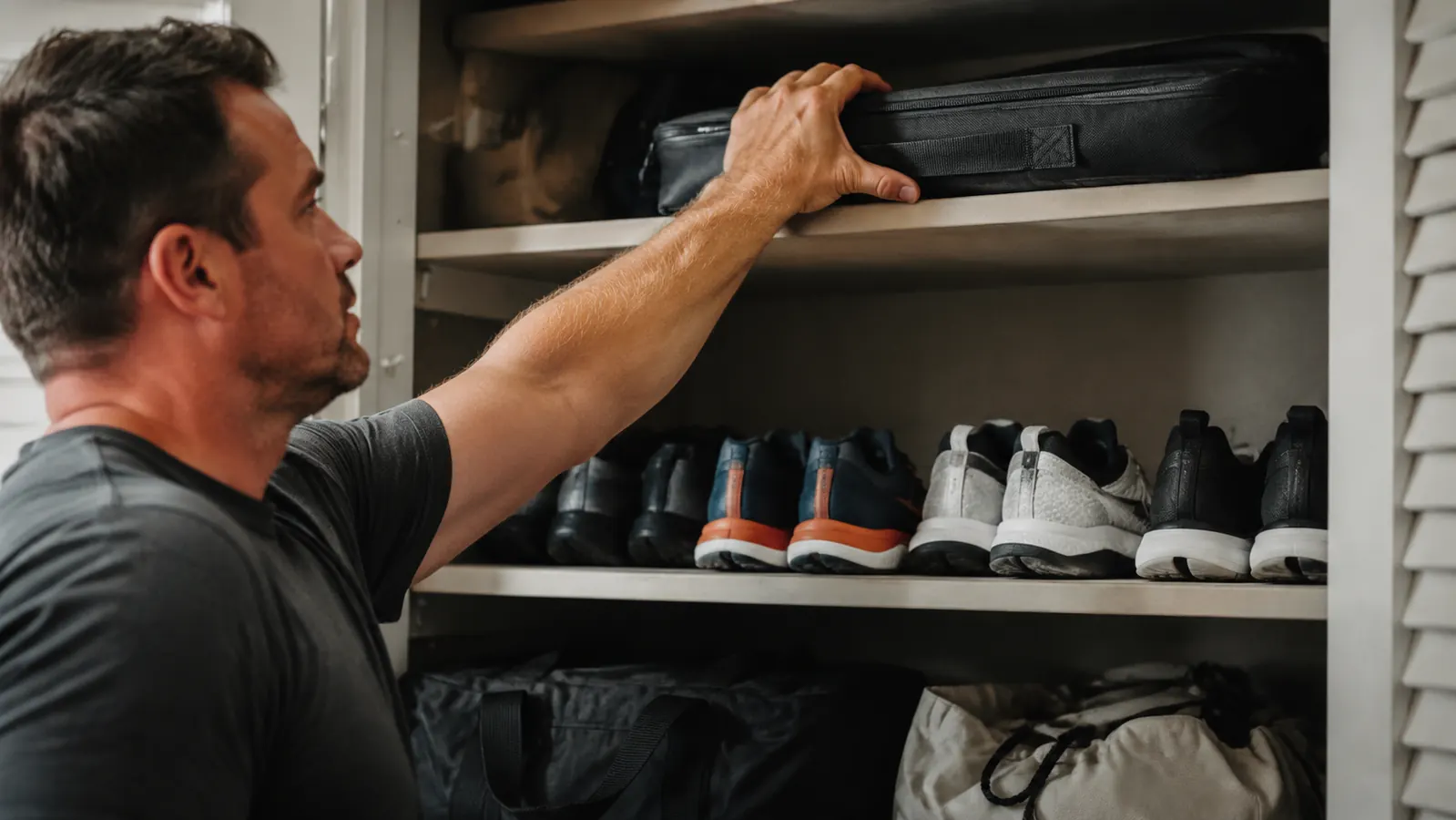
This is the part that genuinely surprised me and the reason I almost sent mine back in week two. The boots, hose, and controller unit pack into a bag that's noticeably bigger than I expected from product photos, closer to the size of a small duffel than a shoebox. I live in a one-bedroom apartment, and finding a permanent home for it took some real trial and error. It lived on my living room floor for the first ten days, which my wife was not thrilled about, before I finally cleared a shelf in the closet.
If you've got a garage, a spare room, or just more closet space than a city apartment offers, this is a total non-issue and you can skip this section entirely. But if you're tight on space like I am, factor this in before you buy. It's not a dealbreaker, I found a spot for it and it's worked fine ever since, but the marketing photos make it look a lot more compact than it is sitting in your actual living room.
The hose is the other piece that catches people off guard. It's not detachable in a way that lets you fold the whole thing into a flat package, so however you store it, you're working around a coiled tube alongside the boots and controller. I ended up buying a $15 storage bin just for this, which is a small extra cost that never shows up in any of the marketing copy but is worth budgeting for if your space is limited like mine.
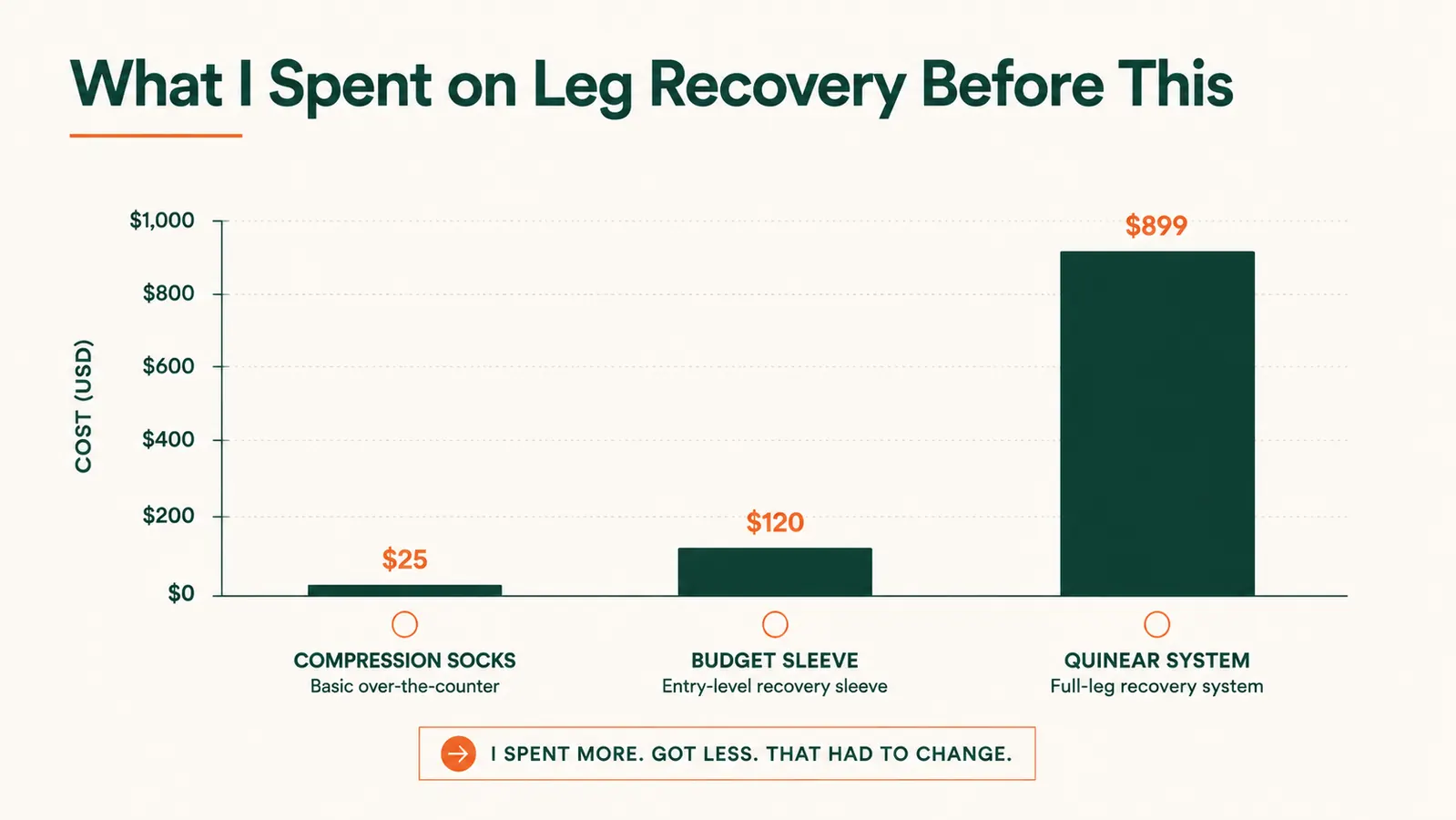
The Setup Learning Curve, Week One vs Now
My first session took almost 20 minutes just to get the boots zipped correctly, the hoses connected without a kink, and the controller set to a pressure level that felt right instead of alarming. I remember thinking, honestly, that I might have made a mistake, because a $14 pair of socks doesn't require a setup phase at all. There's a real learning curve here that the marketing doesn't prepare you for, and if you're expecting to unbox this and be fully relaxed in five minutes on day one, adjust that expectation now.
By session four or five, it clicked. Zipping the boots and connecting the hose now takes me under two minutes, and dialing in a pressure level I like is second nature. So the learning curve is real, but it's short, roughly a week of mildly annoying setup before it becomes routine. I just wish more reviews mentioned that first week honestly instead of acting like it's effortless from the first use.
One thing that helped me get past that early frustration was accepting I didn't need to use every zone and every setting right away. I started with a single default preset, the same pressure level every time, for about two weeks before I even bothered experimenting with the zone emphasis controls. If you're someone who gets overwhelmed by too many options on day one, do the same. Pick one setting, stick with it until it's automatic, then start exploring the rest of what the controller can do.
Where the Cheaper Options I Tried First Actually Fell Short
I want to be fair to the cheap stuff, because it's not useless. The compression socks are genuinely fine for mild, everyday tightness, and I still wear them on flights and long car rides because they're easy and cheap. The $60 calf sleeves helped a little after easier runs. But neither one touched the deep, heavy feeling I'd get in my whole leg, thigh included, after a hard 12-mile effort or a heavy squat day. Flat, even pressure just isn't the same as sequential compression that moves from your foot up through your calf and thigh in a wave.
That difference is where the QUINEAR earns the price gap, at least for the kind of training load I put my legs through. If your soreness is mild and occasional, I'd genuinely tell you to save your money and stick with socks or a foam roller. This only makes sense once you're dealing with the kind of leg fatigue that a $14 sock can't touch.
I'll also say the calf sleeves I tried had a durability problem the QUINEAR hasn't shown so far. The foam inside them started compressing and losing effectiveness after about two months of regular use, which I didn't notice until I compared a fresh pair side by side with mine. The QUINEAR's air bladders don't have that same wear-down mechanism since there's no foam to break down, just fabric and internal air chambers, and so far that's held up without any noticeable drop in how firm the compression feels.
Who's Actually Wasting Their Money on This
I think a decent chunk of buyers pick this up after seeing an influencer use it once and end up disappointed, and I'd rather talk you out of it than sell you on something that'll sit in a closet. If you train lightly, walk a few times a week, and rarely deal with real soreness, this is overkill and the studio pay-per-visit model or a cheap sleeve will serve you better. If you're tight on living space and storage genuinely stresses you out, that bag is going to bother you every time you see it. And if you're buying this hoping it'll fix a real medical circulation issue on its own, that's not what this is, talk to a doctor first.
Where it earns its keep is with people training hard and often enough that the cost per session actually pencils out, and who have somewhere reasonable to store it. That's a smaller group than the marketing suggests, but if you're in it, the value case is real.
I'd also add a subtler category of person who wastes their money here, the buyer who's hoping a recovery tool will paper over bigger training mistakes. If you're chronically undersleeping, skipping warmups, or ramping up mileage too fast, no amount of sequential compression is going to offset that. I learned this the hard way during a stretch where I was running through fatigue I should have respected, and the boots helped my legs feel better without actually addressing why I was so beat up in the first place. Treat this as a recovery accelerant on top of good training habits, not a replacement for them.
What I Liked
- Sequential compression genuinely outperforms flat-pressure sleeves for real post-training heaviness
- Cost per session gets reasonable fast if you use it a couple times a week
- Quiet enough to use while watching TV or on a call
- Well built, no leaks or seam issues after months of use
- Setup becomes fast and automatic after the first week
Where It Falls Short
- Storage bag is bigger than product photos suggest, a real issue in small living spaces
- First-week setup learning curve is more annoying than any marketing admits
- Price only makes sense if you'll actually use it regularly, not occasionally
- Not a fix for mild, infrequent soreness, cheaper options cover that fine
- Hose doesn't detach or fold flat, adding to the overall storage footprint
I almost returned these twice, not because they didn't work, but because nobody warned me about the closet space or the first-week learning curve.
Who This Is For
Runners, lifters, and anyone training hard enough, often enough, that flat compression socks stopped being enough months ago. It's also a solid fit if you're already paying for recurring compression or cryo sessions somewhere and have done the math on breaking even at home. If you've got the space to store it without it becoming a household argument, and the training volume to actually use it, the price stops feeling steep pretty quickly.
Who Should Skip It
If your soreness is occasional, if you're tight on storage space, or if you're buying this hoping it'll replace effort you're not otherwise putting into training, recovery, or sleep, save your money. A $14 pair of compression socks and a foam roller will cover most casual needs. And if the idea of a week-long setup learning curve sounds annoying rather than mildly interesting, that's a real signal this might sit unused more than it gets worn. Be honest about your own habits here, this only pays off with consistent use.
Still worth it, once you know what you're actually getting into.
No hype here, just the real tradeoffs. If your training load justifies it, this earns its price. Check today's price on Amazon before deciding.
Amazon Check Today's Price on Amazon →