

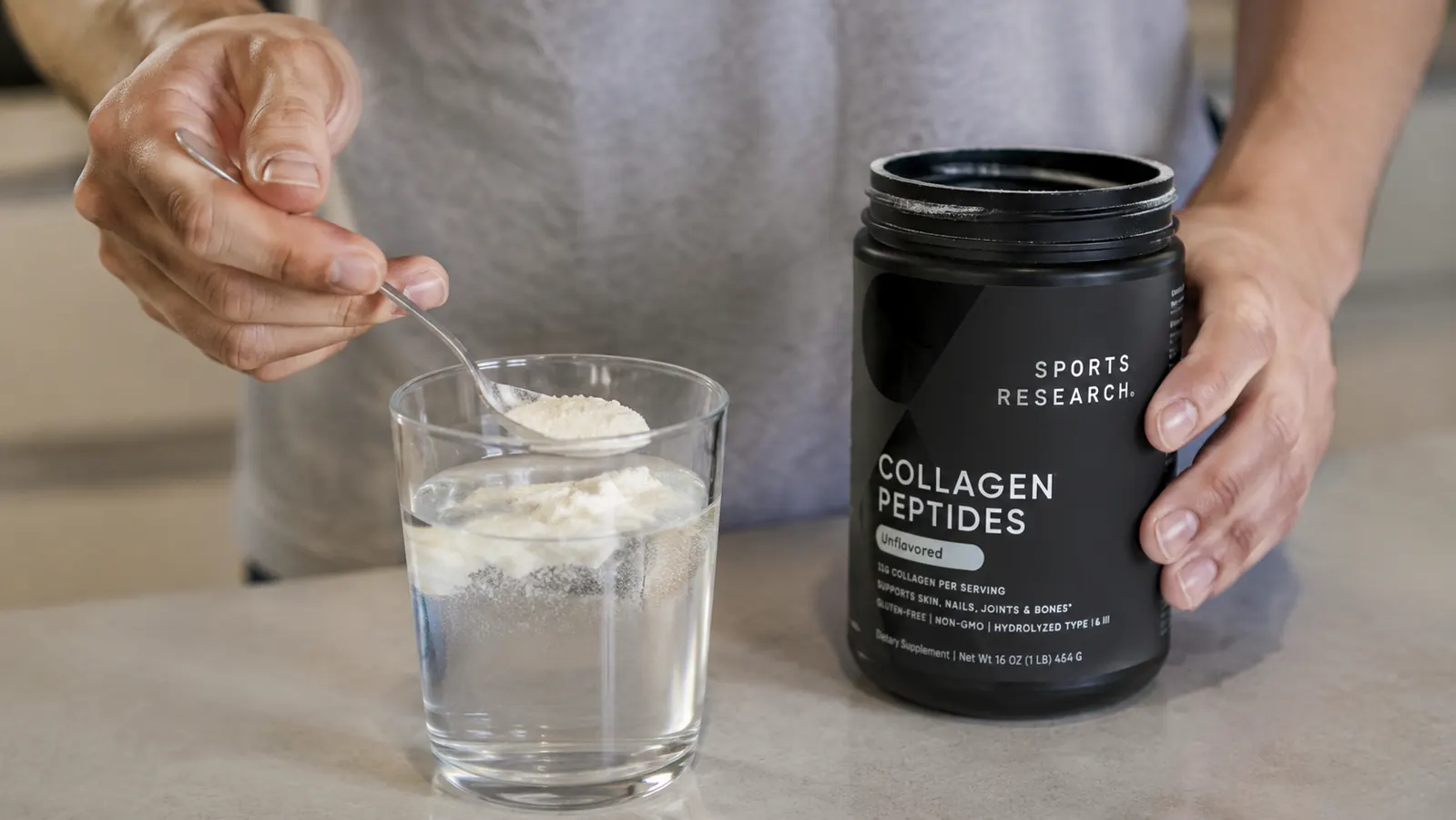
I bought my first tub of Sports Research Collagen Peptides after reading a stack of reviews that all promised roughly the same thing: better joints, better skin, better everything, in a few weeks flat. I'm Rodney, I'm 44, I lift and run most weeks, and I'm also the guy who reads the actual research before I buy into a supplement trend. So before I stirred in my first scoop, I spent an evening looking into whether hydrolyzed collagen peptides even survive digestion in a form your body can use for joint tissue. The honest answer is complicated, the marketing on the tub doesn't mention that complication, and I think you deserve to know it before you spend your money.
This isn't going to be a review that tells you collagen is a scam, because I don't think it is, and I've kept using the Sports Research collagen for months. But it's also not going to be the breathless five-star review that treats a protein powder like a miracle. I want to walk through what the science actually says, what I noticed in my own body and what I probably imagined, where this product clumps and underdelivers, and whether it's actually worth the money compared to just eating more protein or buying a jar of plain gelatin from the baking aisle.
The Quick Verdict
A well-made, genuinely flavorless collagen powder that mixes cleanly in hot liquids, with real questions around absorption science and a patience requirement most reviews don't mention.
Amazon Check Today's Price →Before you buy another joint supplement, read the fine print on absorption.
This isn't a hype review. It's the science, the clumping, and the real timeline nobody puts on the label. Check today's price and read the honest breakdown below.
Amazon Check Today's Price on Amazon →How I've Actually Used It
I've been taking this on and off for about four months now, mostly stirred into coffee in the morning, sometimes into a post-workout shake, the Sports Research scoop dissolving cleaner in cold liquid than I expected on heavier training days. I say on and off honestly because I've missed stretches, a work trip in March where I forgot to pack it, a two-week break in April where I just wanted to see if I noticed a difference either way. I think a lot of reviews pretend to a perfect, unbroken daily streak that doesn't match how most people actually live, and I'd rather tell you the real, slightly inconsistent version.
My honest average is close to five or six mornings a week when I'm in a normal routine, dropping to maybe two or three during a busier stretch. That inconsistency matters for this review specifically, because it turns out timing and consistency are a bigger deal with collagen than they were with, say, my pre-workout or my daily multivitamin. More on that below.
Does Collagen Even Absorb? The Question the Label Doesn't Answer
Here's the part I think matters most and that almost no review I read before buying actually addressed. Collagen is a protein, and like any protein you eat, your digestive system breaks it down into individual amino acids and small peptide fragments before it gets absorbed into your bloodstream. Your body doesn't route "collagen" directly to your knee cartilage the way the marketing copy on some tubs implies. It gets broken down into building blocks, and your body decides where to send those building blocks based on what it needs at the time, not based on where you hoped they'd go when you bought the tub.
The research on hydrolyzed collagen peptides specifically, the kind in this product, does show some evidence that certain small peptide fragments can survive digestion intact and show up measurably in the bloodstream, which is different from a lot of intact proteins. That's the actual selling point of hydrolyzed collagen over just eating more chicken skin or bone broth, the peptides are pre-broken-down into a size that's more likely to get absorbed as-is rather than fully disassembled into generic amino acids. But there's real debate in the research about how much of that ends up specifically at your joints versus just becoming general amino acid raw material your body uses wherever it wants.
I'm not a biochemist, and I'm not going to pretend I can settle a debate that actual researchers haven't fully settled. What I can tell you is that the label on this tub, like most collagen products, doesn't mention any of this nuance. It just says collagen peptides support joints and skin, full stop, no asterisk about absorption pathways or the fact that your body treats it more like a flexible protein source than a GPS-guided joint repair kit. If you're buying this expecting it to work like a targeted medication, adjust that expectation now.
The Clumping Problem Nobody Mentions
"Unflavored" gets used as a selling point on this tub, and mostly that's accurate, it doesn't add a taste to my coffee. But unflavored doesn't mean invisible, and it definitely doesn't mean it behaves the same in every liquid. In hot coffee, it dissolves clean, no complaints there. In cold water or a cold shaker bottle without enough agitation, I've gotten small floating clumps more than once, especially if I dump the scoop in and only give it a lazy stir instead of a proper shake.
The first time it happened I assumed I'd gotten a bad batch. It happened again with the second tub, so now I know it's just how this powder behaves in cold liquid without real agitation, not a manufacturing defect. If you're someone who mixes protein into a glass with a spoon instead of a shaker bottle, budget for some clumping in anything that isn't hot. I've since switched to always using my shaker bottle for cold applications and reserving the spoon-stir method for hot coffee only, and that's solved it completely. But that's a workaround I had to figure out myself, not something the tub tells you upfront.
It's a minor annoyance in the scheme of things, but I think "unflavored" gets sold as synonymous with "disappears into anything effortlessly," and that's not quite true. It disappears into hot liquid with a basic stir. Everything else takes a little more effort than the marketing implies.
The Patience Problem: Why Most People Quit Too Early
I want to be honest about something that I think kills this product's reputation for a lot of buyers who leave one-star reviews after two weeks. Collagen doesn't work fast. If you're expecting the kind of immediate effect you'd feel from a pain reliever or even a strong pre-workout, you're going to be disappointed and probably return it before it has a real chance to do anything.
The stretches where I was consistent, five to six mornings a week for a month or more, I did eventually notice something, a little less morning stiffness in my right knee, hands that felt less dry in the winter. The stretches where I was inconsistent, missing days here and there, I honestly couldn't tell you if it was doing anything at all. That's not a scientific study, it's one guy's anecdotal pattern, but it lines up with what actual research on collagen supplementation suggests, benefits show up over eight to twelve weeks of consistent daily use, not days.
If you're the kind of person who tries a supplement for ten days and moves on if you don't feel a dramatic difference, save your money on this one specifically. It's not built for that kind of trial. It's built for people willing to treat it like a boring daily habit, closer to brushing your teeth than taking an ibuprofen, and to not expect a receipt of proof until you're a couple months in.
Marketing Claims vs What I'd Actually Call Realistic
Look at any collagen product page and you'll see claims about joint support, skin elasticity, hair and nail strength, gut health, sometimes even claims that edge toward anti-aging territory. Some of that has decent research behind it, particularly the joint and skin elasticity claims in studies using doses similar to what's in a couple scoops of this. Some of it, especially the broader gut health and hair growth claims, is thinner than the marketing suggests, resting on smaller studies or extrapolation from how collagen behaves in a lab rather than robust, repeated human trials.
My honest read after months of use and a fair amount of reading: this is a reasonable, low-risk way to add more collagen-specific amino acids to your diet, and there's real signal that it can help with joint comfort and skin elasticity over months of consistent use. It is not a guaranteed fix for chronic joint pain, it's not going to visibly transform your skin in a way strangers will comment on, and if a product page implies either of those things happens reliably and quickly, that's marketing outrunning the science. I'd rather set your expectations at "modest, gradual, plausible benefit" than let a label set them at "dramatic transformation," because the second one is setting you up to feel ripped off.
Collagen vs Just Eating More Protein or Gelatin
This is the question I think more people should ask before buying, and almost nobody does. Could you get a similar effect from just eating more protein generally, or from a $6 jar of plain unflavored gelatin from the baking aisle, which is essentially collagen that hasn't been enzymatically broken down into smaller peptides?
Honest answer: gelatin is a legitimately cheaper source of the same basic amino acid profile, and some people do just fine using it instead. The tradeoff is that gelatin gels in cold liquid, which makes it far less convenient for a coffee or a cold shake, and hydrolyzed peptides like this product are specifically processed so they stay liquid and mix into anything without turning into Jell-O. You're paying a real premium for that convenience and for the hydrolyzed form that has slightly better evidence behind cross-digestive-tract absorption. Whether that premium is worth it to you depends on how much you value not having a lumpy glass of gelatin water every morning.
As for just eating more protein generally, whole food protein sources like chicken, eggs, or a solid whey shake will do more for muscle repair and overall protein needs than collagen will, since collagen is missing some essential amino acids that make it an incomplete protein on its own. I don't take this as a replacement for my regular protein intake, whey included. I take it as an addition, specifically for the joint and connective tissue angle, on top of a diet that already has plenty of complete protein in it. If you're not already eating enough protein day to day, fix that first, it'll do more for you than any collagen tub will.

The Real Cost Over Time
One tub lasts me roughly six to seven weeks at a daily two-scoop dose. Do that math out over a year and it adds up to a real recurring cost, not a one-time purchase you forget about. It's noticeably cheaper per month than the joint supplement stack I tried the year before, which had three separate bottles and a bigger daily pill count, but it's also not nothing, and I think buyers should go in knowing this becomes a permanent line item in a supplement budget if it actually works for you, not a single tub you buy once and you're done.
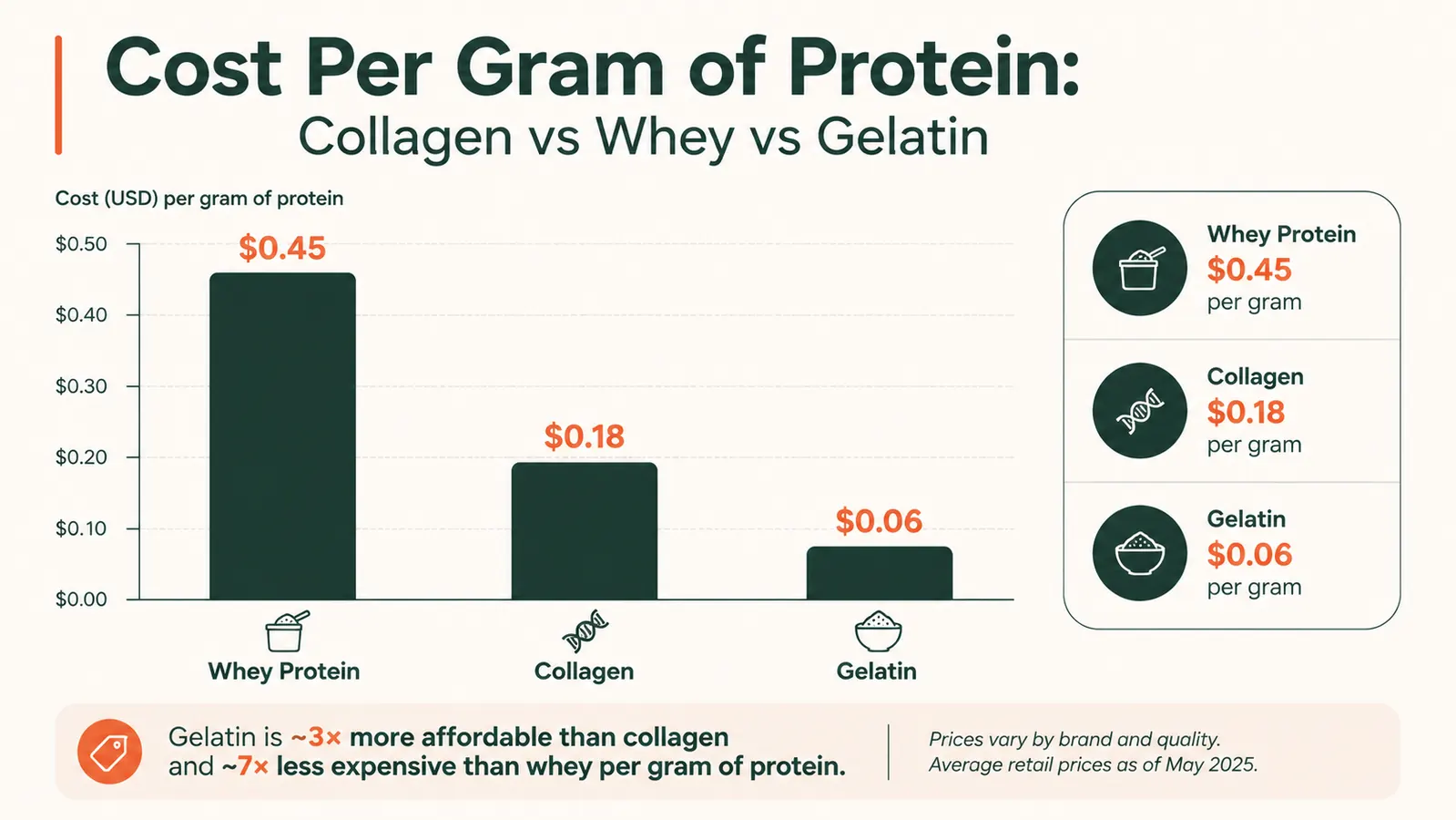
I've started comparing my cost per gram of actual protein against whey and against plain gelatin, since that's the fairest apples-to-apples way to judge whether the premium is worth it. Whey wins on pure cost per gram of protein, gelatin comes in cheaper than this hydrolyzed version too. This product wins on convenience and mixability, not on being the cheapest way to get amino acids into your body. If your budget is tight, that's worth knowing before you commit to it as a permanent habit.
Buying in bulk when it's on sale has helped me some, and I don't let myself run out completely before reordering anymore, since the two times I did that early on, I noticed the stiffness creeping back within the gap. That's anecdotal, not proof, but it's the kind of pattern that's kept me buying it despite the ongoing cost.
What I Liked
- Genuinely dissolves clean in hot coffee with just a basic stir
- Zero digestive side effects across months of use
- Reasonable evidence behind joint comfort and skin elasticity with consistent long-term use
- Cheaper per month than a multi-bottle joint supplement stack
- Convenient liquid form compared to gelatin, which gels in cold liquid
Where It Falls Short
- Clumps in cold water or a lazy stir, needs real shaking to dissolve fully
- Absorption science is more nuanced than the label suggests, it's not a targeted joint repair delivery system
- Takes eight to twelve weeks of consistent use before most people notice anything
- More expensive per gram of protein than whey or plain gelatin
- Incomplete protein, doesn't replace your regular protein intake
If you're expecting this to work like a pain reliever, you're going to be disappointed and probably return it before it has a real chance to do anything.
Who This Is For
People who already eat enough protein day to day and want to add a specific, well-researched joint and connective tissue supplement on top of that, and who are genuinely willing to commit to eight to twelve weeks of daily use before judging results. It's also a good fit if you specifically need something that mixes into hot coffee without a taste, and you're willing to shake rather than stir it into anything cold. If you understand going in that this is a slow, modest-benefit supplement and not a fast fix, it's a reasonable one to try.
Who Should Skip It
If you're looking for something you'll feel within a week or two, this isn't it, and no collagen product honestly is. If you're on a tight supplement budget and haven't nailed down your basic protein intake yet, fix that first with whole food or whey, it'll move the needle more. And if you're the type who wants hard, settled science before you spend money on something, know going in that the absorption research, while promising, isn't fully settled, and you should treat any joint-specific claims on the label with a healthy amount of skepticism rather than certainty.
Realistic expectations, not hype. Here's where it stands.
No miracle claims here, just what the research actually says and what I noticed after months of consistent use. Check today's price on Amazon before deciding.
Amazon Check Today's Price on Amazon →